 listicle
Professional Security for Retail Stores: 7 Services That Work
Table of Contents
- Why Professional Security for Retail Stores Matters
- 1. Licensed Security Guards and Mobile Patrols
- 2. 24/7 Alarm Response and Incident Management
- 3. CCTV Surveillance and Remote Monitoring
- 4. Access Control and Inventory Protection
- Retail Loss Prevention Strategies Australia
- Retail Store Risk Assessment Checklist
- Conclusion
- Frequently Asked Questions
Last Updated: August 7, 2026
Why Professional Security for Retail Stores Matters
Retail theft and loss cost Australian businesses billions annually. The problem isn't just external shoplifters, internal shrinkage, organised retail crime, and security gaps in your physical infrastructure drain margins faster than most operators realise. Professional security for retail stores addresses these vulnerabilities with licensed personnel, monitored systems, and documented loss prevention strategies that actually work.
At Tupper Security, we've worked with retail operators across South-East Queensland who initially thought basic CCTV would solve their problem. It doesn't. Footage alone doesn't prevent theft or reduce shrinkage. What does work is layered protection: trained security guards conducting visible foot patrols, 24/7 alarm response, access control systems that audit who's moving inventory, and remote surveillance that catches incidents in real time rather than reviewing them after the fact.
The retail environment presents unique security challenges. You're managing customer safety, staff protection, and asset protection simultaneously. A security incident, whether it's a slip-and-fall, a confrontation with a shoplifter, or a break-in at 3 AM, can expose your business to liability, operational disruption, and reputational damage. Professional security solutions mitigate these risks by creating documented incident response protocols, reducing response times from hours to minutes, and ensuring your security infrastructure scales with your business.
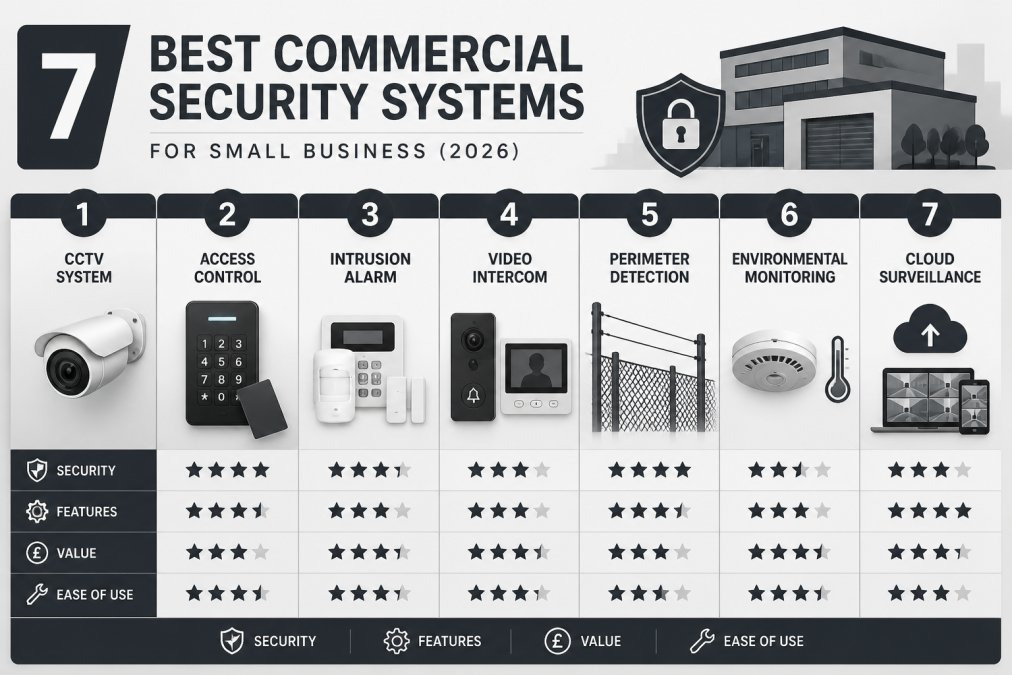
Below, we'll walk you through seven professional security services that actually reduce loss and protect your retail operation. Each one addresses specific vulnerabilities. Together, they create a security posture that deters criminals, protects staff, and gives you measurable control over what happens on your premises.
1. Licensed Security Guards and Mobile Patrols
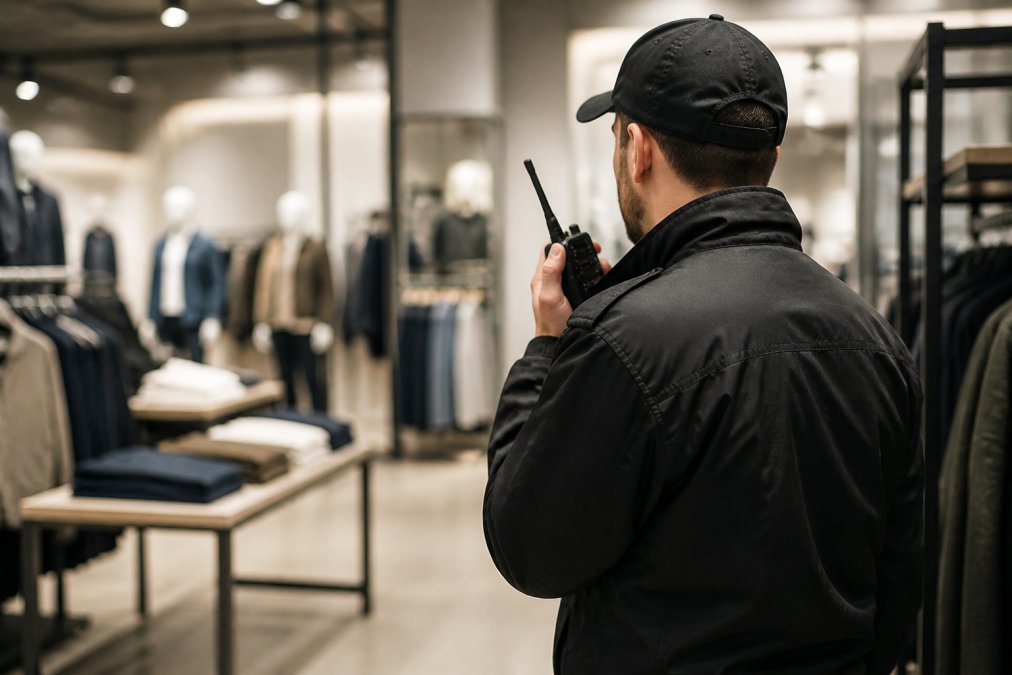
The most visible form of professional security for retail stores is the presence of trained, licensed security personnel. A uniformed guard conducting regular foot patrols through your store floor deters opportunistic theft, provides immediate response to incidents, and creates a documented record of site conditions.
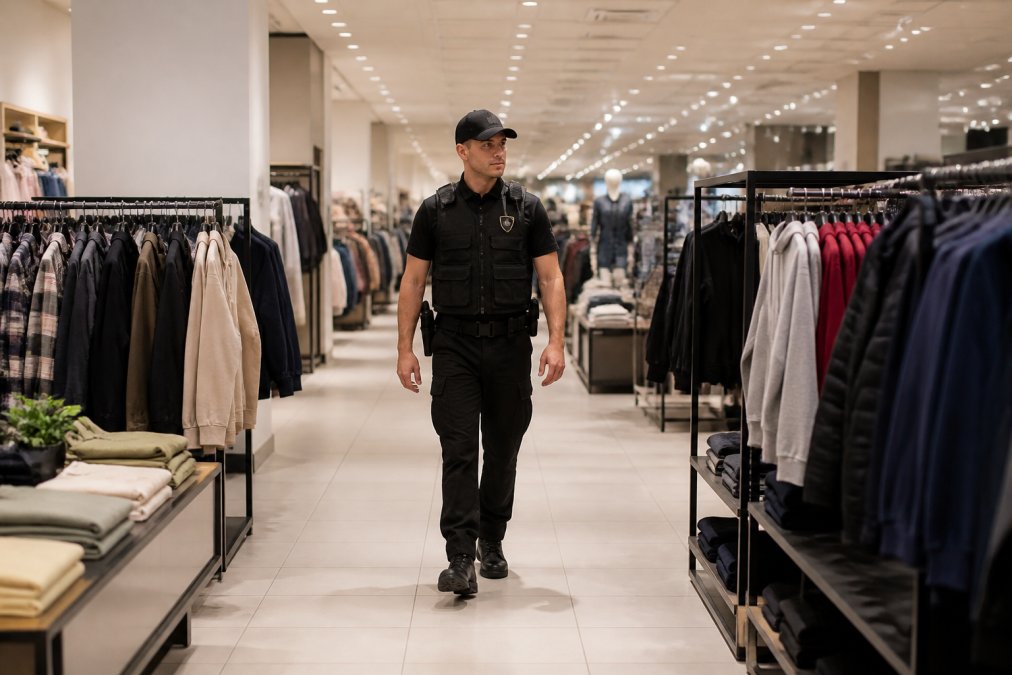
Mobile patrols extend this further. Rather than stationary guards at a single location, mobile patrol teams rotate through multiple sites, conducting visual inspections, checking entry points, and responding to alarms or security concerns. For retail operators managing multiple locations across South-East Queensland, mobile patrols provide consistent security coverage without the cost of dedicated on-site staff at each location.
What matters here is licensing. In Queensland, security guards must hold a current security licence issued under the Queensland Security Providers Act. Tupper Security employs multi-class licensed operators, meaning your security personnel are trained in conflict de-escalation, incident response, and legal liability management. This matters when a situation escalates. A poorly trained guard can turn a shoplifting incident into a lawsuit. A licensed professional documents the incident, follows proper procedure, and protects your business legally.
Foot patrols also serve a secondary function: they provide immediate eyes-on-ground intelligence. A guard can spot a broken window latch, a customer slipping on a wet floor, or suspicious behaviour that CCTV alone would miss. They can intervene before a situation becomes a loss or a liability claim.
For small to medium retail stores, a single mobile patrol visit per day provides visible deterrence. For larger operations or high-risk locations, more frequent patrols or on-site static guards become necessary. The key is matching patrol frequency to your actual risk profile, something a proper security audit determines rather than guesswork.
2. 24/7 Alarm Response and Incident Management
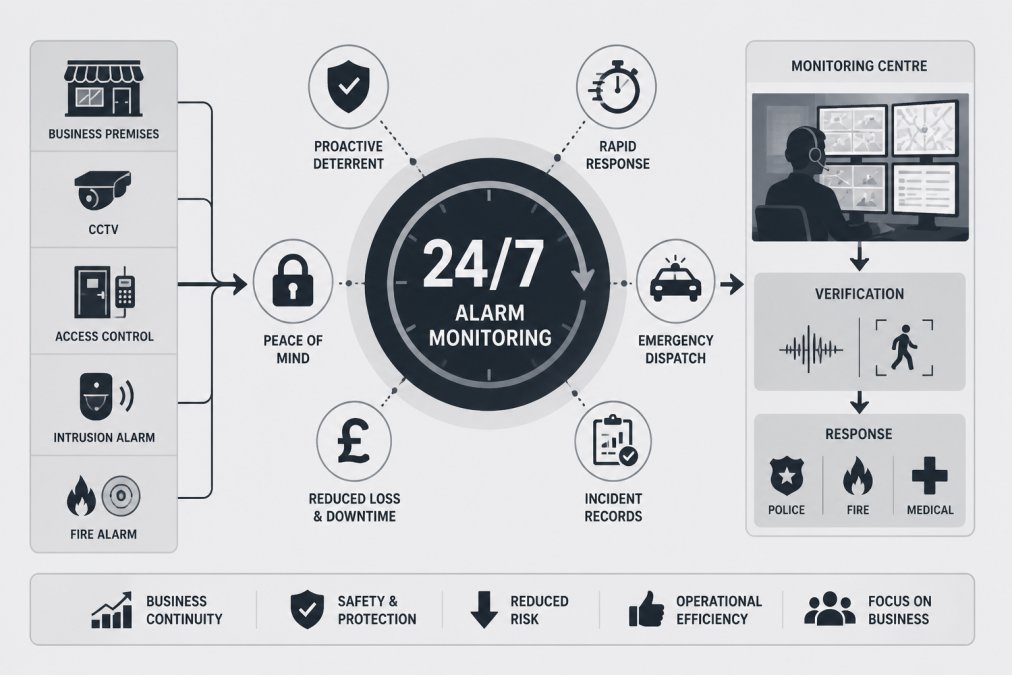
An alarm system is only as good as the response. A siren going off at 2 AM means nothing if no one arrives for 45 minutes. Professional security for retail stores includes monitored alarm response with documented dispatch protocols and rapid turnaround.
When your alarm triggers, whether it's a break-in, a panic button, or a motion sensor, the monitoring centre immediately dispatches a licensed response team. Tupper Security's local Silkstone depot means response times in Ipswich and the surrounding corridor are measured in minutes, not hours. Your alarm is assessed, your premises are checked, and the incident is documented.
Incident management goes beyond just showing up. A professional response team verifies the alarm (ruling out false triggers), secures the premises, preserves evidence if a crime has occurred, and provides a detailed incident report. This documentation is critical for insurance claims, police reports, and identifying patterns in your security vulnerabilities.
Many retail operators don't realise how valuable documented incident response is. If you've had three break-ins in six months, the pattern matters. It tells you where your vulnerability is, a poorly secured loading door, a blind spot in your CCTV, a time window when the alarm isn't armed. A professional response team identifies these patterns and recommends fixes.
24/7 alarm response also covers after-hours scenarios: a staff member accidentally triggering the alarm while opening the store, a pipe burst triggering a water sensor, or a genuine break-in attempt. Each scenario requires a different response. An automated alarm system can't distinguish between them. A monitored response service can.
3. CCTV Surveillance and Remote Monitoring
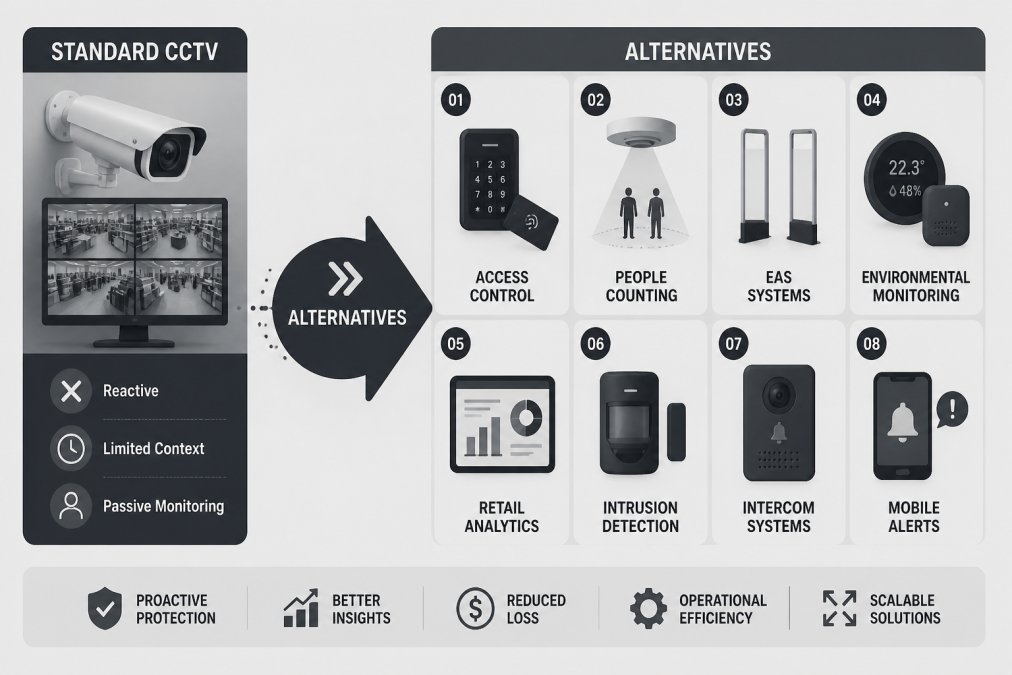
CCTV is the foundation of modern retail security, but it's often installed poorly. A camera pointing at a blank wall or a high-resolution system with footage no one reviews are both expensive mistakes. Professional security for retail stores includes strategically placed CCTV with remote monitoring and auditable footage retention.
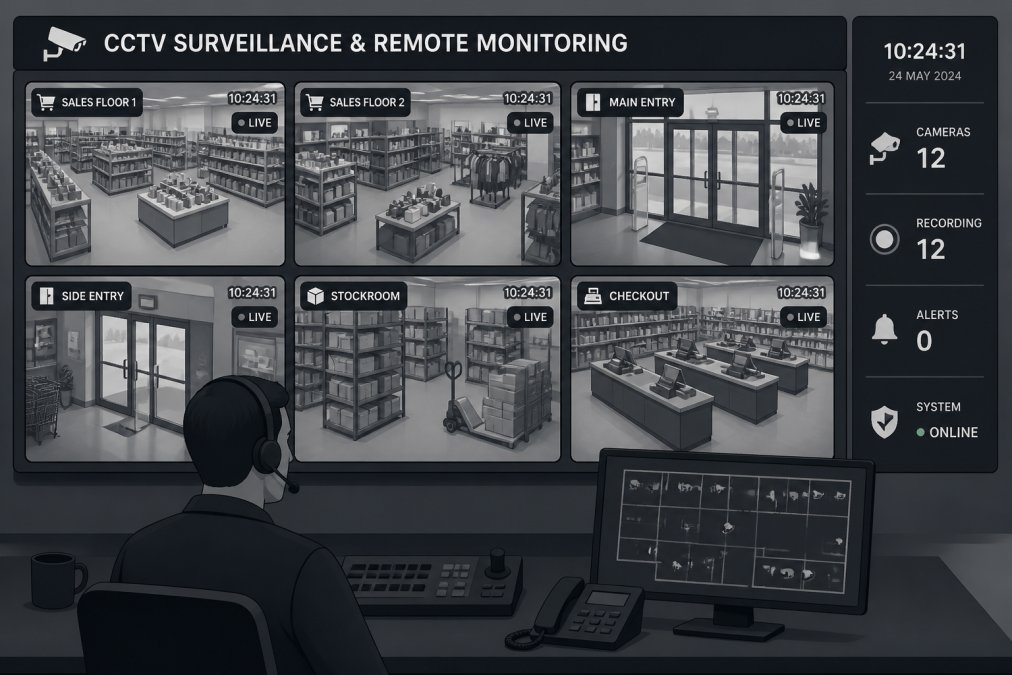
The key difference between DIY CCTV and professional surveillance is coverage and integration. A professional system covers entry points, high-value merchandise areas, cash handling zones, and blind spots where theft typically occurs. More importantly, it integrates with your access control and alarm system, creating a unified security infrastructure.
Remote monitoring means a trained operator is watching live feeds during business hours and high-risk periods. They spot suspicious behaviour before it becomes a loss, someone loitering near high-value items, a staff member handling cash irregularly, or a customer moving toward a blind spot. This real-time oversight prevents incidents rather than just recording them.
High-resolution IP surveillance is also auditable. Footage is time-stamped, encrypted, and retained on secure servers. If a loss occurs, you can pull footage from specific times and locations, identify what happened, and provide evidence to police or your insurer. This documentation is what separates a claim denial from a successful insurance recovery.
Many retailers ask: "Isn't this overkill for a small store?" The answer depends on your shrinkage rate. If you're losing 2-3% of inventory annually to theft or poor handling, professional surveillance pays for itself through loss prevention alone. If you're losing 0.5%, it's still worth the investment for liability protection and incident documentation.
4. Access Control and Inventory Protection
Not all theft is external. Internal shrinkage, staff theft, mishandling, or unauthorised access to high-value areas, often exceeds external losses. Professional security for retail stores includes access control systems that audit who enters restricted areas and when.
Access control works through keycards, biometric readers, or PIN codes. Your stockroom, cash handling area, or high-value merchandise zones are restricted. Only authorised staff can enter, and every entry is logged with a timestamp. If inventory goes missing, you know exactly who had access and when.
This isn't about accusation. It's about accountability. A documented access log creates transparency. Staff know their movements are tracked, which deters opportunistic theft. If a loss does occur, the audit trail shows who was present, narrowing the investigation dramatically.
Tupper Security designs access control systems around your actual site operations. Generic systems often fail because they don't match how your business actually works. A retail store might need different access rules for day shift versus night shift, for management versus junior staff, or for different departments. A tailored system accommodates these nuances rather than forcing your operation to fit the system.
Inventory protection also includes auditable reporting. When stock is moved, accessed, or removed, the system logs it. Over time, this data reveals patterns: which areas have higher shrinkage, which time periods are higher-risk, which staff members have access to loss-prone zones. This intelligence drives loss prevention strategy.
Retail Loss Prevention Strategies Australia
Effective retail loss prevention combines technology, personnel, and process. Here's what actually works in the Australian retail environment.
Visible Deterrence is your first line of defence. A security guard in uniform, visible CCTV signage, and professional-looking access control deter casual theft before it happens. Criminals look for easy targets. A well-secured store signals that losses will be caught and reported.
Incident Documentation creates accountability. Every loss, every suspicious behaviour, every security concern should be recorded. Over time, patterns emerge. You'll discover that losses spike at certain times, in certain areas, or under certain conditions. This intelligence drives targeted improvements.
Staff Training matters more than most retailers acknowledge. Your staff are your eyes and ears. They spot suspicious behaviour, handle cash, and manage inventory. Training them on loss prevention, recognising shoplifters, proper cash handling, securing merchandise, multiplies your security effectiveness without adding cost.
Audit Trails are non-negotiable. Access control systems, CCTV footage, alarm logs, and incident reports create a documented history. If a loss occurs, this history is evidence. It's also insurance. Many retailers can't claim losses because they have no documentation.
Risk Assessment should drive your security strategy. A professional security audit identifies your actual vulnerabilities. Some retailers invest heavily in CCTV when their real problem is unsecured loading doors. Others focus on staff theft when external shoplifting is the bigger issue. An audit points you toward the vulnerabilities that actually matter for your operation.
Collaboration with Police improves outcomes. Documented incidents, CCTV footage, and suspect identification help police build cases. Many retail theft cases go unsolved because evidence is poor or missing. Professional documentation increases prosecution rates and deterrence.
Retail Store Risk Assessment Checklist
Before investing in security solutions, understand your actual risk profile. Use this checklist to identify vulnerabilities.
| Risk Area | Assessment Question | Action if Yes |
|---|---|---|
| Entry Points | Are doors, windows, and loading areas properly secured? | Install additional locks, CCTV, or alarm sensors |
| High-Value Merchandise | Are high-theft items (electronics, cosmetics, alcohol) visible and accessible? | Relocate, install security cases, or increase staff monitoring |
| Blind Spots | Are there areas not covered by CCTV or staff sightlines? | Install additional cameras or reposition existing ones |
| Cash Handling | Are cash areas secure? Is cash handling documented? | Implement access control, increase oversight, or use drop safes |
| Staff Turnover | Is staff turnover high? Are new staff properly vetted? | Implement background checks and access control restrictions |
| After-Hours Security | Is the premises monitored after closing? | Install alarm system and 24/7 monitoring |
| Incident Response | Do you have documented procedures for theft, break-ins, or accidents? | Develop written protocols and train staff |
| Insurance Coverage | Does your policy cover all loss types and require documented evidence? | Review policy and ensure you meet documentation requirements |
A professional security audit goes deeper than this checklist, identifying vulnerabilities specific to your site layout, business model, and operational patterns. Tupper Security conducts independent site risk assessments that map your actual security gaps and recommend tailored solutions, not generic off-the-shelf packages.
Conclusion
Professional security for retail stores isn't a luxury. It's a business necessity that directly impacts your bottom line through loss prevention, liability management, and operational confidence. The seven services outlined above, licensed guards, 24/7 alarm response, CCTV surveillance, access control, loss prevention strategy, risk assessment, and incident management, create a layered defence that addresses the vulnerabilities most retailers face.
The challenge most retail operators face is choosing between competing security providers and deciding which services actually matter for their specific operation. A generic security package might cover the basics, but it won't address your unique vulnerabilities or adapt to your actual business model.
Tupper Security specialises in tailored protection plans built around how your site actually operates, not generic schedules. Our multi-class licensed operators conduct independent risk assessments, design systems that integrate with your existing infrastructure, and provide 24/7 monitoring and rapid response from our local Silkstone depot. We've helped retail operators across South-East Queensland reduce shrinkage, improve staff safety, and gain measurable control over their security posture.
Request a security audit from Tupper Security and discover the vulnerabilities in your current setup. Our team will assess your site, identify specific risks, and recommend solutions that actually move the needle on loss prevention and operational security.
Frequently Asked Questions
Do retail security guards in Australia need a specific licence?
Yes. In Queensland, security guards must hold a Security Guard Licence issued under the Security Providers Act 1997. This includes mandatory training in conflict resolution, emergency response, and legal obligations. Employers must verify that all security personnel hold current licences. Multi-class licensed operators can perform a wider range of duties, from access control to alarm response, across different retail environments.
What is the best way to prevent theft in a retail store?
Effective retail loss prevention combines visible deterrence, technology, and staff training. Licensed security guards on-site deter opportunistic theft. CCTV surveillance creates accountability and provides evidence. Access control systems restrict unauthorised movement in stockrooms and high-value areas. Staff training on identifying suspicious behaviour and proper checkout procedures reduces internal and external shrinkage. A professional security audit identifies your specific vulnerabilities and recommends tailored solutions.
How quickly can security respond to an alarm at my retail store?
Response times depend on your location and the security provider's local resources. A local provider with a depot in your area typically responds faster than a national service. Tupper Security operates from Silkstone with rapid-response capability across Ipswich and South-East Queensland. Verify response time guarantees in writing before signing a contract, and ask about their dispatch procedures for after-hours alarms.
What is the ROI of installing professional security in a retail store?
ROI is measured by reduced shrinkage (theft and loss), avoided incident costs, and faster response to emergencies. Retail stores typically lose 1-3% of revenue to shrinkage annually. Professional security reduces this loss, often recovering its cost within 12-24 months. Additional benefits include lower insurance premiums, documented compliance, staff confidence, and customer safety perception, all of which support long-term profitability.
This article was written using GrandRanker