 blog
blog
Is Professional Security Worth the Cost? A Honest Analysis
Table of Contents
- Is Professional Security Worth the Cost? Setting the Right Baseline
- DIY vs Professional Security Australia: An Objective Comparison
- Cost of Security Guards Australia: What You're Actually Paying For
- Benefits of Security Guards for Business Australia: Beyond Criminal Deterrence
- Return on Investment Security Australia: Impact on Insurance and Asset Protection
- Cybersecurity, Smart Home Integration, and the Hybrid Security Model
- So Is Professional Security Worth the Cost? The Verdict by Property Type
- Conclusion
Last Updated: August 1, 2026
Deciding whether professional security is worth the cost is one of the most practical questions a property owner or business manager can ask. At Tupper Security, we work with homeowners, retailers, construction sites, and event organisers across South-East Queensland, and the same tension comes up repeatedly: the upfront investment feels significant until the moment you actually need it. Below, we break down every dimension of that decision, from installation complexity and monthly fees through to insurance savings and the hidden costs most buyers never see coming.
The core argument is simple: the value of professional security is measured by what it prevents, not what it costs.
Is Professional Security Worth the Cost? Setting the Right Baseline
Professional security is the deployment of licensed, trained personnel and/or monitored technology systems to detect, deter, and respond to threats against a property, its occupants, or its assets. This definition draws a clear line between professional security and consumer-grade alarms. A system with no back-to-base monitoring and no professional dispatch is a deterrent, not a response capability.
The cost of professional security is directly proportional to the complexity of what you are protecting. A small retail store has different exposure than a multi-tenanted warehouse. The right baseline is a risk-adjusted analysis that accounts for asset value, foot traffic, after-hours vulnerability, and local crime patterns.
According to the Australian Institute of Criminology's crime statistics resources, property crime remains one of the most common categories of offence across Queensland, with commercial premises consistently over-represented.
DIY vs Professional Security Australia: An Objective Comparison
Most DIY security comparisons focus on price. The real difference between DIY and professional security comes down to three things: response capability, system reliability under stress, and accountability. A DIY system notifies you that something is happening. A professional system ensures something is being done about it.
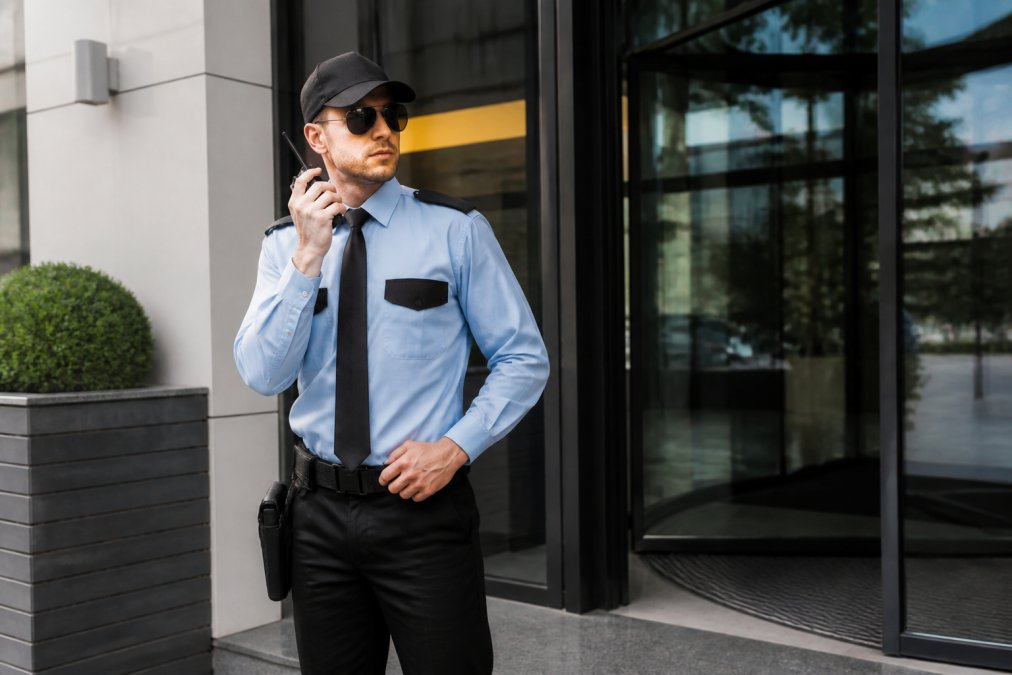
Installation Complexity and System Reliability
DIY installation suits simple residential environments with low-risk profiles. Wireless systems are faster to install but vulnerable to signal interference and battery failure. Hardwired systems are more reliable but require professional installation to meet Australian Standards, particularly AS 2201.1, which governs intruder alarm systems.
A common mistake is treating sensor calibration as a one-time task. Sensors drift, environments change, and a system that performed well at commissioning can generate chronic false alarms within twelve months without periodic maintenance. Professional installers build maintenance schedules into service agreements; DIY buyers rarely do.
Professional-grade intrusion detection equipment is tested to perform under power outages, temperature extremes, and deliberate interference. Consumer-grade equipment is not held to the same standard.
Alarm Verification and Emergency Service Dispatch Protocols
Alarm verification is the process by which a monitoring centre confirms a genuine event before dispatching emergency services. This step is critical in Australia because Queensland Police has formal policies on false alarm responses, and repeated unverified activations can result in fees and deprioritised responses.
Professional monitoring centres operating under AS 2201.2 use a structured verification protocol: they contact the keyholder, review available footage or audio, and dispatch when the threat is confirmed or cannot be ruled out. DIY app-based systems push a notification to your phone and leave the decision to you, at 2 AM, with no camera coverage of the affected zone.
| Feature | DIY System | Professional Security |
|---|---|---|
| Installation standard | Self-managed | AS 2201.1 compliant |
| 24/7 monitoring | App notification only | Back-to-base monitoring centre |
| Alarm verification | Owner decision | Trained operator protocol |
| Emergency dispatch | Owner-initiated | Professional dispatch |
| System maintenance | Owner-managed | Scheduled service agreement |
| False alarm mitigation | Limited | Structured verification process |
| Visible deterrence | Device only | Uniformed presence available |
Cost of Security Guards Australia: What You're Actually Paying For
The cost of security guards in Australia reflects a licensed, regulated profession. Every guard operating in Queensland must hold a valid security licence issued under the Security Providers Act 1993 (Qld), which requires background checks, training, and ongoing compliance. That regulatory overhead is built into every invoice for good reason.
Upfront Costs, Monthly Subscription Fees, and Contractual Obligations
Security costs typically fall into three buckets: upfront infrastructure, ongoing monitoring subscriptions, and labour for manned services. Upfront costs cover equipment supply, professional installation, and commissioning. Monthly subscription fees cover back-to-base monitoring, remote surveillance access, and technical support. Manned guarding is generally charged on an hourly or shift basis.
Contractual obligations vary significantly. Some providers lock clients into multi-year agreements with steep exit clauses; others offer rolling monthly terms. For current pricing across Tupper Security's service range, visit the Tupper Security pricing page for a transparent breakdown by service type.
Hidden Costs: False Alarm Costs and Penalties
False alarm mitigation is one of the most underappreciated factors in cost analysis. Queensland Police Service has a formal false alarm policy, and commercial premises that generate repeated unverified activations can face call-out fees and deprioritised responses.
A site with a history of false alarms trains its own staff to ignore activations, which allows genuine intrusions to go undetected. Professional monitoring with structured alarm verification dramatically reduces false alarm rates by ensuring only confirmed or high-probability events trigger dispatch.
System maintenance is the other hidden cost. Sensors require calibration, cameras require firmware updates, and access control credentials require regular auditing.
Benefits of Security Guards for Business Australia: Beyond Criminal Deterrence
The benefits of security guards for business in Australia extend well beyond stopping a break-in.
The Role of Visible Security Presence and Remote Surveillance
Visible deterrents work. The presence of a uniformed guard or clearly marked patrol vehicle changes the risk calculation for opportunistic offenders before any incident occurs. This is the foundational logic behind every crime prevention through environmental design framework used by Australian law enforcement.
Remote surveillance adds a second layer. High-resolution, remotely accessible IP cameras allow operations managers to monitor multiple sites from a single interface, review footage following an incident, and provide auditable evidence to insurers and police. For multi-site operators across South-East Queensland, this capability is a basic operational requirement.
According to the Australian Security Industry Association Limited's industry resources, the integration of remote monitoring with physical patrol capability represents the current best-practice model for commercial security in Australia.
Peace of Mind, Psychological Value, and Staff Confidence
Staff who feel unsafe at work are less productive, more likely to leave, and more likely to underreport incidents. A visible, professional security presence changes that dynamic.
For retail environments, this extends to customer confidence. Shoppers are more likely to dwell and spend in environments that feel safe and managed. For warehouses and construction sites, a secure environment reduces theft-related project delays, which carry real financial consequences beyond the value of stolen goods.
The psychological value of professional security is cumulative. The longer a professional presence is maintained, the more it normalises safety as an operational standard, which reduces incident frequency over time.
Return on Investment Security Australia: Impact on Insurance and Asset Protection
Many Australian commercial insurers offer premium discounts for properties with certified alarm systems, professional monitoring, and documented access control. The discount varies by insurer and property type, but it is a real and recurring financial benefit. For properties with high asset values or elevated risk profiles, the annual insurance saving can offset a meaningful portion of the monitoring subscription cost.
Asset protection is the broader frame. The ROI of professional security is the sum of: incidents prevented, insurance savings, reduced staff turnover linked to safety concerns, and avoidance of regulatory penalties for sites with compliance obligations around access and surveillance. Construction sites face significant liability exposure if unauthorised access leads to an injury on site.
The largest returns are invisible. You do not see the theft that did not happen, the assault that was deterred, or the insurance claim that was never filed. ROI analysis for security requires a risk-adjusted framework, not a simple cost-versus-incident comparison.
Cybersecurity, Smart Home Integration, and the Hybrid Security Model
Physical security infrastructure is increasingly networked, creating a category of risk that traditional security analysis ignores.
Privacy Risks and Security Vulnerabilities in Connected Systems
IP cameras, smart access control panels, and cloud-connected alarm systems are all network endpoints. Each is a potential entry point for a security breach that bypasses your physical defences entirely. Default credentials, unpatched firmware, and poorly segmented networks are the three most common attack vectors against commercial security infrastructure in Australia.
Smart home integration amplifies this risk for residential properties. Consumer-grade smart home ecosystems often lack the network segmentation and authentication controls found in enterprise security hardware. A compromised smart lock or doorbell camera can disable your physical security at a critical moment.
As documented in the Australian Cyber Security Centre's guidance on IoT device security, connected devices including security cameras and access control systems should be isolated on a dedicated network segment, updated regularly, and monitored for unusual traffic patterns.
Hybrid Security Models: Combining Back-to-Base Monitoring with Smart Home Ecosystems
The hybrid security model pairs a professionally monitored back-to-base system with smart home integration for day-to-day convenience, while ensuring critical response infrastructure is managed by licensed operators rather than a consumer app.
In practice, this means: professional-grade intrusion detection and alarm verification at the core, with smart home devices providing supplementary real-time alerts, remote access, and automation. The professional layer handles high-stakes decisions; the smart layer handles convenience.
Tupper Security's approach integrates with existing infrastructure where possible, rather than requiring a full rip-and-replace. For businesses with existing CCTV and access control, the question is whether the existing system is monitored, maintained, and verified to a professional standard.
So Is Professional Security Worth the Cost? The Verdict by Property Type
The answer depends on what you are protecting and your actual risk exposure.
Residential homeowners in higher-risk suburbs or those with significant asset values will find that back-to-base monitoring and mobile patrol coverage delivers measurable deterrence and insurance benefits that outweigh subscription costs.
Retail stores, regardless of size, benefit from visible deterrence, documented shrinkage reporting, and staff confidence. Professional security is not only for large operators.
Construction sites face a mandatory risk management obligation under Queensland workplace health and safety legislation. Professional security is a compliance requirement for many sites.
Multi-site operators and property managers need consistent standards across all locations. The operational risk of inconsistent security quality across multiple sites is significant.
Event organisers in South-East Queensland operate under specific crowd control and RSA compliance obligations. Professional security is the only compliant option for public functions above a defined threshold.
The real challenge for most property owners is finding a provider whose response capability matches their promises. Tupper Security operates from a local Silkstone depot with multi-class licensed operators, delivering 24/7 monitoring and dispatch with rapid response times across Ipswich and the broader South-East Queensland corridor. From independent site risk assessments and auditable access control systems to high-resolution remotely accessible IP surveillance, every solution is built around how your site actually operates. Request a quote from Tupper Security and get a security solution designed for your specific exposure, not a generic package.
Frequently Asked Questions
Is professional security worth the cost for a small business in Australia?
For most small businesses, professional security delivers measurable value beyond what a basic DIY system can offer. Back-to-base monitoring, licensed guard response, and documented incident reporting reduce both financial losses and liability exposure. Whether the cost is justified depends on your site's risk profile, stock value, and trading hours. Businesses in high-foot-traffic or after-hours-risk environments, such as retail stores or construction sites, typically see the strongest return on investment from professional security.
What are the main benefits of security guards for businesses in Australia?
The benefits of security guards for businesses in Australia include visible criminal deterrence, real-time intrusion detection, professional emergency dispatch, and documented incident reporting. Guards also provide alarm verification, which reduces false alarm callouts and the associated penalties from Queensland Police. For multi-site operations, a licensed security provider can deliver consistent standards across all locations, something a self-managed DIY system rarely achieves at scale.
Can professional security reduce my insurance premiums in Australia?
Many Australian insurers offer home insurance discounts and reduced commercial premiums when professionally monitored alarm systems or licensed security services are in place. The reduction varies by insurer and policy type, so it is worth contacting your provider directly. In some cases, the premium savings alone can offset a meaningful portion of your monthly monitoring fees, improving the overall return on investment security provides over time.
Is DIY security as effective as professional security in Australia?
DIY security can provide a basic layer of intrusion detection and real-time alerts, but it falls short in several critical areas. Without 24/7 monitoring centre oversight, alarm verification is left to the property owner, often unavailable at 2 AM. DIY systems also carry greater cybersecurity and privacy risks if not properly configured, and they lack the emergency service dispatch protocols that licensed providers must meet under Queensland licensing requirements. For most commercial and higher-risk residential properties, professional security offers substantially greater reliability.
What types of professional security services are available in South-East Queensland?
South-East Queensland businesses and homeowners can access a broad range of licensed security services, including 24/7 back-to-base alarm monitoring, mobile patrols, static guards, CCTV surveillance, access control systems, crowd control for events, and independent site risk assessments. Providers operating in Queensland must hold the appropriate licence classes under the Security Providers Act 1993 (Qld), ensuring operators meet regulated training and conduct standards before deploying on any site.
How do false alarms affect the cost of professional security in Australia?
False alarms are a frequently overlooked cost in security planning. In Queensland, repeated false alarm callouts can attract penalties from emergency services and damage your relationship with your monitoring provider. Professional security providers mitigate this through alarm verification procedures, confirming an event is genuine before dispatching, and through proper sensor calibration during installation. Choosing a provider with rigorous false alarm mitigation protocols can reduce both direct penalty costs and unnecessary emergency service burden.
This article was written using GrandRanker