 blog
blog
Legion Security Alternatives for Business in 2026
Table of Contents
- Why Businesses Switch From Legion Security
- Commercial Security Guard Services Brisbane and Beyond
- Private Security Hourly Rates Queensland: What You Actually Pay
- Security Risk Assessment for Small Business: The Hidden ROI
- Key Differences Between Legion Security and Local Alternatives
- Response Times, Scalability, and Multi-Site Management
- Choosing the Right Security Alternative for Your Business
- Frequently Asked Questions
Last Updated: August 31, 2026
Why Businesses Switch From Legion Security
When a security provider promises fast response times and tailored protection, most businesses expect exactly that. What they often get instead is a generic service plan that treats every site the same way, response times that slip during peak hours, and a team that doesn't actually understand how their operation works.
This is where many businesses discover they need a Legion Security alternative for business. The decision rarely comes from a single failure, it's usually a pattern. A delayed alarm response at 2 AM. CCTV footage that doesn't capture the angles that matter. Access control that doesn't match your actual workflow. Each issue compounds until the cost of staying outweighs the hassle of switching.
Tupper Security exists because this problem is solvable. Rather than applying a standard security template to every client, we build protection plans around how your specific site operates. That distinction changes everything: faster response times, better threat detection, and measurable results that justify the investment.
The businesses switching away from generic providers share a common insight: security isn't a commodity. It's a strategic asset that either works for your operation or works against it.
Commercial Security Guard Services Brisbane and Beyond
Licensed security officers form the backbone of any effective protection strategy (asial.com.au). The difference between a guard service that adds value and one that simply occupies space comes down to training, accountability, and how closely the service aligns with your actual security needs.
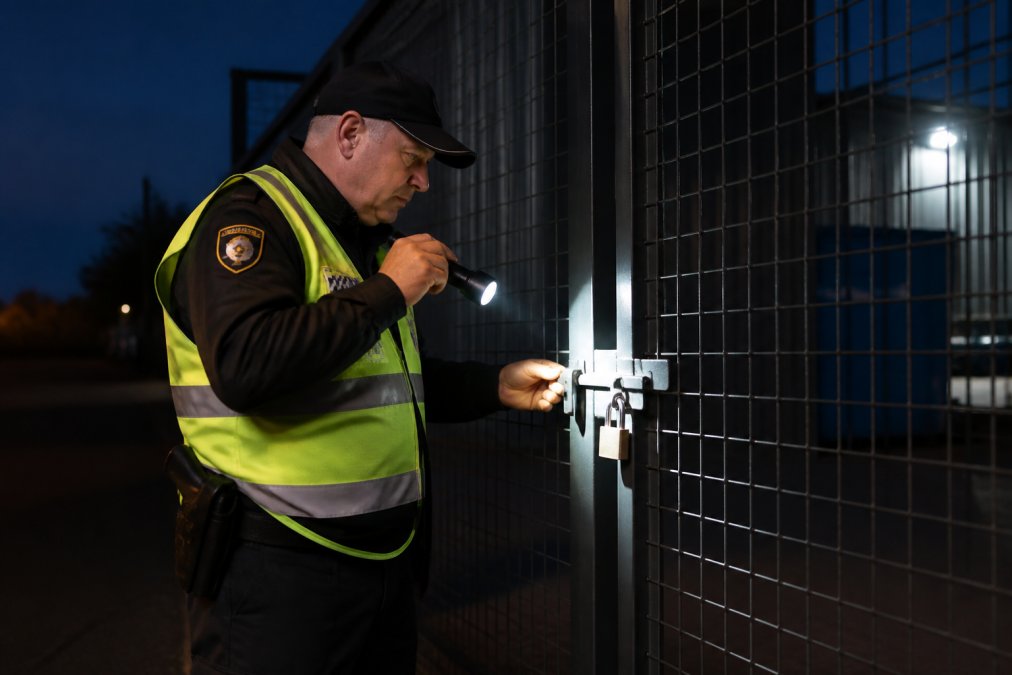
Commercial security guard services across the region vary significantly in quality and responsiveness. A guard service that works for a warehouse may not suit a retail environment (asis.org). A team trained for static perimeter protection won't necessarily excel at crowd control for events. The best commercial security guard services Brisbane operators understand this and staff accordingly.
What separates effective guard services from mediocre ones is specificity. Do the officers understand your site layout? Have they been briefed on your actual security risks, not generic ones? Can they respond to an alarm within a realistic timeframe given your location? These questions matter far more than the company's general reputation.
Tupper Security's multi-class licensed operators are trained across several security domains: static site protection, mobile patrol response, access control management, and crowd control for events. This breadth means we can match the right skill set to your specific needs rather than assigning whoever's available. Our local Silkstone depot also eliminates the lag that comes with dispatching from a distant regional office.
The ROI of guard services often gets overlooked. Many businesses assume a guard is a guard and compare purely on hourly cost. The reality is that a guard who understands your operation prevents losses that a generic guard would miss entirely.
Private Security Hourly Rates Queensland: What You Actually Pay
Private security hourly rates Queensland varies across providers, and the variation isn't random. It reflects differences in training, licensing, response capability, and actual accountability.
Businesses often focus on the hourly rate because it's the most visible cost. A more useful question is what you're actually getting for that rate. A cheaper provider might staff with minimally trained personnel. A premium provider might include site risk assessment, documented incident reporting, and rapid response protocols that justify the higher cost.
When evaluating private security hourly rates Queensland, consider what's bundled into the cost. Some providers quote a base rate then add surcharges for after-hours response, specialized training, or multi-site coordination. Others include these elements in a transparent all-in rate. The cheaper number often becomes more expensive once hidden costs surface.
Tupper Security's pricing is structured around actual service delivery rather than hidden complexity. You see what you're paying for: the level of training your officers have, the response time commitment we're making, and the tools we're deploying (CCTV integration, access control systems, documented reporting). This transparency is why businesses comparing private security hourly rates Queensland often find that apparent price differences narrow significantly once you account for what's actually included.
The most expensive security isn't the one with the highest hourly rate, it's the one that fails when you need it most. A provider charging less per hour but delivering slower response times or inconsistent service ultimately costs more in losses prevented.
Security Risk Assessment for Small Business: The Hidden ROI
Many small business owners assume security risk assessments are a luxury reserved for large enterprises (sba.gov). The reality is that small businesses often face disproportionate risk because they lack the resources to identify and address vulnerabilities systematically.
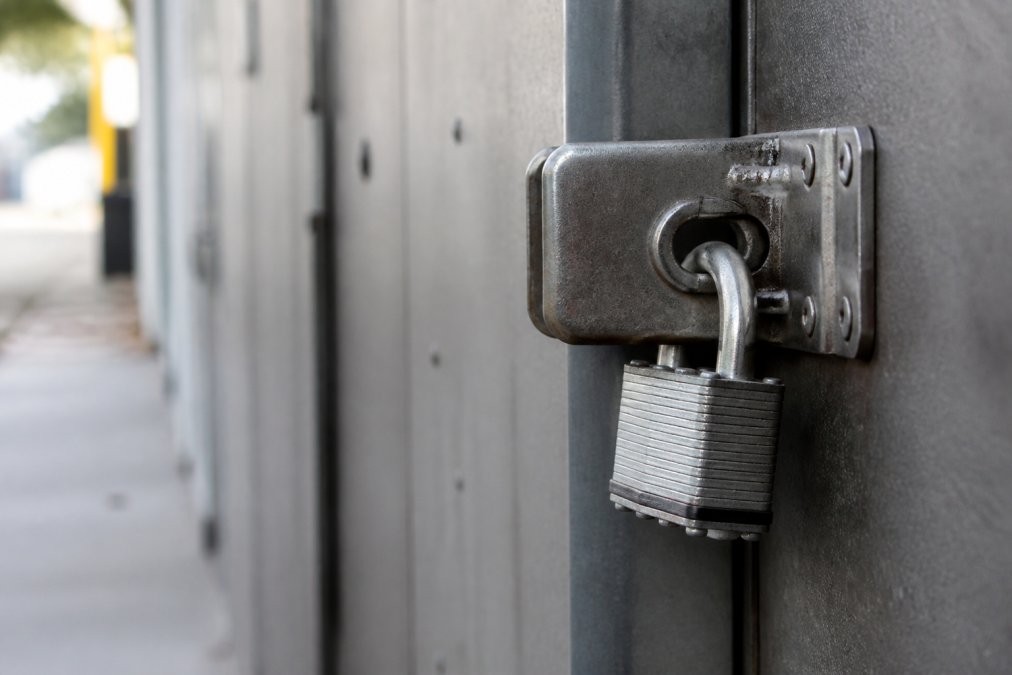
A proper security risk assessment for small business starts with understanding your actual vulnerabilities. Where are the physical weak points in your perimeter? Which access points see the most traffic? What does your typical day look like, when are you most vulnerable, and when does your operation naturally create security blind spots? These questions can only be answered by someone who understands your specific business model.
The ROI of a security risk assessment often appears months after the assessment is completed. You prevent a theft you never would have detected. You discover that a seemingly minor access control gap could have enabled a much larger incident. You implement a simple workflow change that eliminates an entire category of risk. These outcomes don't show up on a quarterly P&L, but they compound significantly over time.
Tupper Security conducts independent site risk assessments designed specifically for small operators. We're not trying to sell you a massive system you don't need. We're identifying the specific vulnerabilities in your operation and recommending proportionate solutions. For a retail store, that might be strategic CCTV placement and documented shrinkage reporting. For a small warehouse, it might be access control integration with your existing systems. For a construction site, it might be static guard positioning and perimeter checks.
The assessment itself typically costs far less than implementing poorly targeted security. The real value emerges when you avoid the losses that would have occurred without that insight.
Key Differences Between Legion Security and Local Alternatives
The security market in the region includes several established providers, each with different strengths and operational philosophies. Understanding these differences helps you identify which alternative actually matches your needs.
Legion Security operates at a regional scale with established processes and brand recognition. Local alternatives like Tupper Security operate with different constraints and advantages. Regional providers typically have standardised service models designed to work across multiple sites and customer types. Local operators can afford to be more specific about which clients they serve and how they tailor solutions.
The practical difference shows up in response times. A local operator with a depot in your immediate area can often respond faster to an alarm than a regional provider dispatching from further away. The trade-off is that a local operator may have less redundancy if key staff become unavailable. Understanding this trade-off helps you evaluate which model suits your risk tolerance.
Another distinction is in customization. Regional providers build systems that work acceptably across diverse customer types. Local providers can afford to build systems that work exceptionally well for a narrower set of use cases. If your security needs are standard, a regional provider's efficiency may serve you well. If your operation has specific requirements, a local alternative often delivers better results.
Tupper Security's approach prioritises specificity over scale. We're selective about which clients we take on because we're committed to understanding each operation deeply. This means we can deliver faster response times from our local depot, more detailed risk assessments, and security designs that actually match how your site operates rather than fitting you into a template.
The choice between a regional provider and a local alternative isn't about which is objectively better, it's about which model matches your specific situation.
Response Times, Scalability, and Multi-Site Management
Response time is one of the most concrete measures of security effectiveness. A fast response time to an alarm means the difference between preventing a loss and documenting it after the fact.
Response times vary based on geography, time of day, and the provider's dispatch model. A provider operating from a central dispatch point serving a wide region will naturally have longer average response times than one with local depots. This isn't a failure, it's a structural reality. What matters is whether the response time commitment is realistic given the provider's infrastructure.
Many businesses with multiple sites face a different problem: consistency. One site might get excellent service while another experiences delays or inconsistent guard behaviour. This happens when a provider manages multi-site accounts from a central office without local accountability for each location.
Scalability becomes relevant when your security needs grow. Can the provider add a second site without degrading service to your first? Can they manage three sites across different suburbs with consistent standards? These questions matter more than the provider's total customer count.
Tupper Security manages multi-site accounts through local coordination. Because our depot is in Silkstone, we can maintain consistent standards across sites in the immediate region. Our officers know the geography, understand local response routes, and can be deployed efficiently across multiple locations. This local model scales better for regional businesses than a distant central dispatch point.
When evaluating alternatives, ask about response time commitments for each location, how they ensure consistency across sites, and whether they have local infrastructure that supports rapid deployment.
Choosing the Right Security Alternative for Your Business
The decision to switch from your current security provider, or to choose one in the first place, requires clarity about what actually matters for your operation.
Start by defining your specific security challenges. Are you primarily concerned with theft prevention? Alarm response speed? Access control for multiple staff members? Documented incident reporting for compliance? Different challenges point toward different solutions. A retail store's security needs differ fundamentally from a warehouse's, which differ from an event venue's.
Next, evaluate what your current provider (if you have one) is delivering against what you actually need. Are response times meeting your expectations? Is the guard service tailored to your operation or generic? Are you getting documented reporting that supports your business decisions? Honest answers to these questions often reveal whether you need a different provider or simply a different service level.
When comparing alternatives, move beyond hourly rates and brand recognition. Ask for specific details: How many licensed officers do they employ? What's their actual average response time to your area? Have they conducted a site risk assessment, or are they quoting based on assumptions? Can they provide references from businesses similar to yours? Do they offer the specific services you need (CCTV, access control, mobile patrol, static guards)?
Tupper Security offers a free quote and site assessment. This isn't a sales tactic, it's how we determine whether we're the right fit for your operation. If your needs don't match our capabilities, we'll tell you that directly. If they do, the assessment gives you concrete data to compare against other alternatives.
The best security alternative for your business is the one that understands your specific operation and delivers measurable protection. That might be a regional provider if your needs are standard. It might be a local alternative if your operation requires customised solutions. The key is making the decision based on actual fit rather than brand recognition or the lowest hourly rate.
Choosing a Legion Security alternative for business means evaluating whether your current provider is actually delivering the protection your operation needs. Tupper Security's approach focuses on understanding your specific site, identifying genuine vulnerabilities, and deploying solutions that match how you actually operate. Our multi-class licensed operators, local Silkstone depot, and commitment to rapid response times address the core reasons businesses switch providers. Request a quote today and discover what tailored security protection looks like for your operation.
Frequently Asked Questions
What makes a local security provider different from Legion Security?
Local security alternatives typically offer faster alarm response times through nearby depots, tailored security design based on your specific site layout, and direct access to the decision-makers who understand your operation. Larger providers often use generic schedules and longer response windows. Local firms like Tupper Security can assess your property independently and adjust protection plans as your needs change, rather than applying a one-size-fits-all template.
How do I evaluate response times from a security provider?
Ask for documented response time data from recent callouts, not promises. Request references from similar-sized businesses in your area. Verify their dispatch location, a local depot in your region typically guarantees faster arrival than a centralised call centre. Check their licence status with the relevant Queensland regulator and ask how they handle peak-demand periods when multiple alarms occur simultaneously. Response times should be in writing as part of your service agreement.
Are small retail stores too small for premium security services?
No. Small retail locations often face proportionally higher shrinkage and targeted theft than larger sites. Professional security providers recognise this and tailor solutions accordingly. A security risk assessment for a small business identifies specific vulnerabilities, blind spots in CCTV coverage, access control gaps, or staff procedures, that directly impact loss prevention. The cost is justified by measurable reductions in documented shrinkage and faster incident response.
What happens if I already have CCTV and access control in place?
You don't need to replace everything. A professional security assessment evaluates your existing systems for integration capability, coverage gaps, and whether they align with current threat patterns. Many providers can upgrade specific components, integrate new monitoring software, or enhance your system's accessibility without full replacement. This approach typically costs far less than a complete overhaul and preserves your existing investment while closing security gaps.
This article was written using GrandRanker