 blog
blog
Security Alternatives to ProSafe: Your Options
Table of Contents
- Why Businesses Switch From Their Current Security Provider
- What to Look for in Security Alternatives
- Understanding Commercial Alarm Monitoring Rates
- Mobile Patrol Security Costs and Response Models
- Licensed Security Providers in South-East Queensland
- Key Differences: Static Guards, CCTV, and Access Control
- How to Verify Licensing and Compliance Standards
- Conclusion
Last Updated: August 25, 2026
Why Businesses Switch From Their Current Security Provider
When a business decides to look beyond its current security provider, something specific has gone wrong: a missed alarm response, inconsistent service across multiple sites, or the realisation that what you're paying for no longer matches what you're actually getting. At Tupper Security, we've worked with dozens of operations managers and property owners who've made this shift, and the pattern is always the same: they outgrew their previous arrangement or discovered it wasn't delivering what was promised.
Some businesses find that their security provider has become a box-ticking exercise, generic patrols, inflexible monitoring schedules, and no real understanding of how their site operates. Others hit a breaking point when response times slip, CCTV footage is grainy, access control logs aren't auditable, and shrinkage reporting is non-existent or useless. The real difference comes down to whether a provider tailors its approach to how your business actually works, or whether it applies a one-size-fits-all model.
What to Look for in Security Alternatives
Choosing a replacement security provider isn't about picking the cheapest option. It's about finding a partner that understands your specific vulnerabilities and responds to them with precision.
Start by defining what "good" looks like for your operation. If you're a retail store, you need loss prevention built into your security design, documented shrinkage reporting, strategic camera placement, and access control that tracks who's handling high-value inventory. If you're a property manager overseeing multiple sites, you need consistency across all of them. If you're running a construction site, you need static guards who understand site protocols and can respond to genuine threats without creating false alarms.
Look for providers that conduct independent site risk assessments before proposing solutions. A proper assessment identifies your actual vulnerabilities, not the ones the provider assumes you have. Someone qualified should walk your perimeter, review access points, examine current CCTV coverage, and understand your operational rhythm. That assessment should inform every recommendation that follows.
Response capability is non-negotiable. Ask for specifics: what's the average response time for alarms in your area? How many mobile patrols are active in your region? Is there a local depot, or are responders coming from across the state? A provider with a local Silkstone base can respond to Ipswich properties faster than one operating from Brisbane CBD.
Verify that the provider holds current licensing for all services they're offering. In Queensland, security work requires proper credentials. Multi-class licensed operators aren't just a nice-to-have; they're the standard that separates professional outfits from ones cutting corners. Ask to see their Queensland Firm Licence and confirm it covers the specific services you need.
Finally, assess their technical capability. Can they provide high-resolution, remotely accessible IP surveillance? Do their access control systems produce auditable logs you can actually use? Will they integrate with your existing infrastructure, or do they insist on ripping everything out and starting fresh?
Understanding Commercial Alarm Monitoring Rates
Commercial alarm monitoring is a core service, but the pricing model matters enormously. Most providers charge a monthly monitoring fee, but what you're actually paying for varies depending on how the service is structured.
Some providers offer back-to-base monitoring, where your alarm triggers a response from a call centre. The operator receives the alert, attempts to contact you or your nominated responder, and dispatches emergency services if needed. Other providers bundle monitoring with their own mobile patrol response, creating a tighter loop where a mobile unit can be dispatched within minutes. This model costs more, but response times are often significantly faster.
When comparing rates, don't just look at the monthly fee. Ask what's included: do multiple alarm zones cost extra? Are there setup fees, installation charges, or equipment rental costs? What happens if you need to add additional sensors? Also clarify the response protocol. When your alarm goes off, does the provider dispatch police, or do they send their own team first? For retail environments, many businesses prefer a provider who can assess the alarm before police are called, reducing false-alarm penalties.
Commercial alarm monitoring rates in South-East Queensland vary based on your location, system complexity, and service level. Providers with local presence and their own response capability typically charge more than national call-centre-only operations, but faster response times and local knowledge often justify the premium.
Mobile Patrol Security Costs and Response Models
Mobile patrol security serves a different function than static guards or alarm monitoring. Instead of someone stationed at your site, a mobile unit visits on a scheduled basis or responds immediately when triggered by an alarm.
Scheduled patrols are predictable and budget-friendly. A mobile team visits your property at set intervals, perhaps twice nightly or a few times weekly depending on your risk profile. They conduct a visual inspection, check doors and windows, and log their findings. This model suits lower-risk sites or properties where you want a visible security presence without the cost of a full-time guard.
Rapid-response mobile patrols operate differently. When your alarm triggers or you call for urgent assistance, a mobile unit is dispatched to your location. Response time depends on where the nearest unit is stationed. A provider with a local depot can reach properties faster than one based further away. For high-risk retail, cash-handling businesses, or sites where rapid containment is critical, this response capability is essential.
Some providers offer a hybrid model: scheduled patrols combined with rapid response capability. This approach is popular with property managers overseeing multiple sites across South-East Queensland, because it delivers consistent coverage without the expense of static guards at every location.
Licensed Security Providers in South-East Queensland
Not all security providers are created equal, and licensing is the baseline standard that separates legitimate operators from ones operating in grey areas.
In Queensland, security work requires proper licensing under the Security Providers Act 1993 (legislation.qld.gov.au). A legitimate provider holds a Queensland Firm Licence, which certifies that the business meets regulatory standards (qld.gov.au). Individual operators hold Personal Licences. This means the provider has been vetted, their staff have been background-checked, and they're bound by professional standards.
When evaluating licensed security providers in South-East Queensland, ask to see their current Firm Licence and confirm it covers the specific services you need. Some licences restrict the type of work; others hold multi-class licences that permit a broader range of services. Tupper Security holds QLD Firm Licence #4572076, which reflects their authorisation to deliver the full range of services they offer.
Beyond the licence, look at how long the provider has been operating locally. Established operators with local presence understand the regional landscape, know local law enforcement, and understand common security challenges. A provider that's been operating since 2014 has weathered market changes and built relationships that matter when you need rapid response.
Also consider whether the provider conducts independent site risk assessments. This is a sign they take a consultative approach rather than a transactional one.
Key Differences: Static Guards, CCTV, and Access Control
These three security layers serve different purposes, and understanding the distinction helps you choose the right combination for your operation.
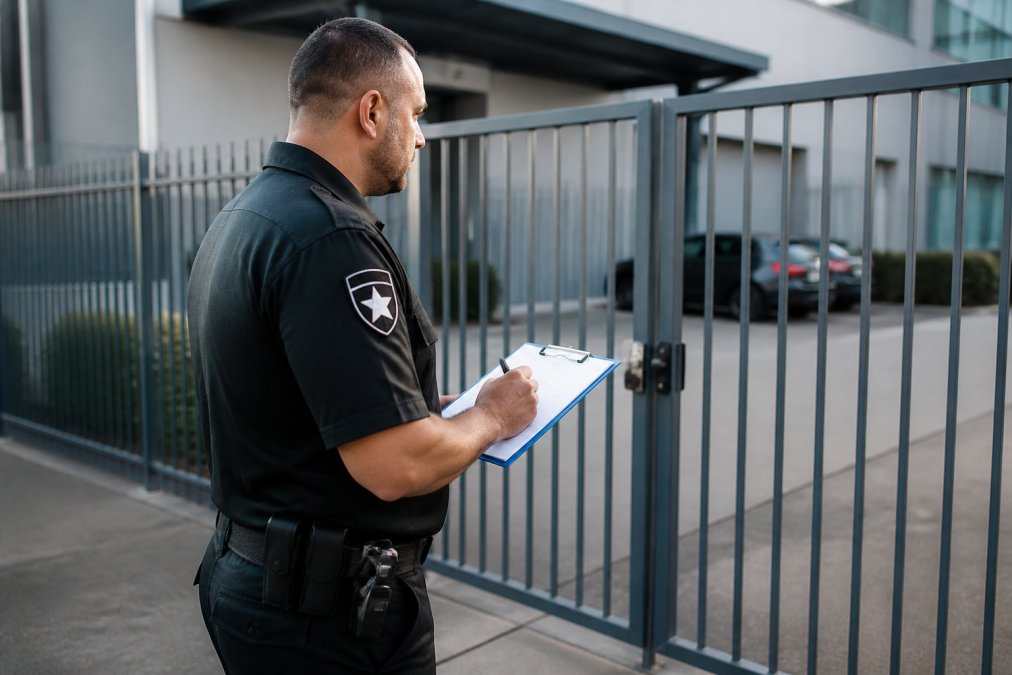
Static guards are people stationed at your site, either at an entry point, on patrol, or monitoring a specific high-risk area. They provide immediate human presence, can respond to incidents in real time, and offer a visible deterrent. For retail stores, hospitality venues, or events, static guards are often the most effective security layer because they can make judgement calls and respond to nuance that technology can't. The trade-off is cost: full-time guards are expensive.
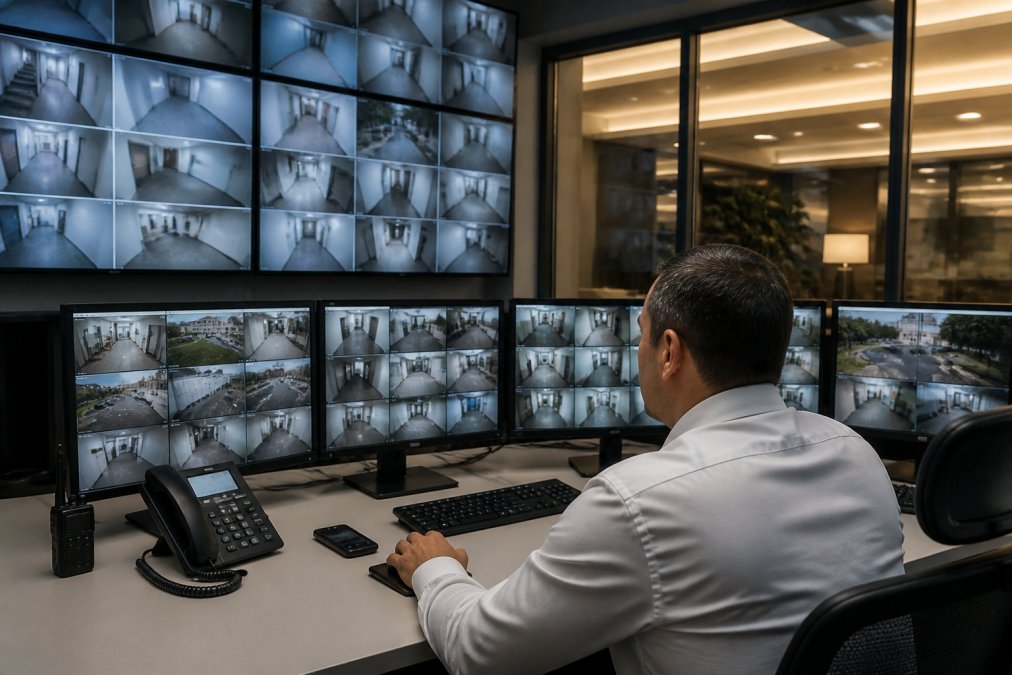
CCTV and video surveillance systems record what happens on your property. High-resolution IP cameras provide clear footage useful for incident investigation, evidence gathering, and identifying patterns of loss or suspicious behaviour. Remotely accessible systems let you monitor your site from anywhere. The limitation is that CCTV is reactive; it records incidents but doesn't prevent them or respond in real time.
Access control systems manage who enters your property and when. They're especially valuable for retail environments where you need to track who has access to high-value inventory, storage areas, or cash handling zones. Auditable access logs create accountability and can reveal patterns of shrinkage or suspicious access.
Most businesses use a combination. A retail store might deploy static guards during peak trading hours, CCTV throughout the property, and access control on the stockroom. A warehouse might use mobile patrols, comprehensive CCTV coverage, and access control on high-value storage. The key is matching the security layer to your actual risk and operational needs.
How to Verify Licensing and Compliance Standards
Before committing to any security provider, verify their credentials and understand their compliance obligations.
Start with the Queensland Firm Licence. Every legitimate security provider operating in Queensland must hold a current licence. Ask the provider for their licence number and confirm it's current. Check that the licence covers the specific services you need. If you're contracting for multiple services, confirm that the provider's licence authorises all of them.
Ask about their compliance standards and audit processes. Legitimate providers maintain documented security protocols, conduct regular staff training, and have processes for handling incidents, complaints, and evidence. For retail environments specifically, ask about shrinkage reporting and loss prevention protocols. A provider serious about retail security will have systems for documenting inventory discrepancies, tracking access to high-value areas, and providing reports that help you identify patterns.
Also verify their insurance and liability coverage. A properly insured provider carries public liability insurance and professional indemnity coverage. Ask to see proof of current insurance.
Finally, check their track record and references. Ask for contact details of existing clients in similar industries or with similar security needs. Contact them and ask specific questions: How responsive is the provider? Have response times been consistent? Have they handled incidents professionally? References from real clients are worth more than any sales pitch.
When you're evaluating security alternatives Brisbane offers, the goal isn't to find the cheapest option, it's to find a partner that understands your operation and delivers measurable security outcomes. Tupper Security brings local presence, multi-class licensing, and a commitment to tailored protection plans based on how your site actually operates. Whether you need rapid alarm response in Ipswich, documented access control for retail loss prevention, or comprehensive CCTV coverage across multiple sites, the right provider combines local responsiveness with professional expertise.
Request a quote from Tupper Security and discuss your specific security challenges. Our team will conduct an independent site risk assessment, outline a tailored protection plan, and deliver the rapid response times and professional oversight your property deserves.
=== FAQ ANSWERS (audit these too, same rules) ===
[1] Q: How do I verify if a security provider is licensed in Queensland? A: Check the Queensland Police Service's security licence register online (police.qld.gov.au). Every licensed security provider must display their Class licence number. Ask for proof before signing any contract. Verify the licence covers the specific services you need, alarm response, mobile patrols, static guarding, or access control. A legitimate provider will have no issue sharing this information immediately.
[2] Q: What's the difference between mobile patrol security and static guards? A: Mobile patrols involve licensed officers visiting your site on a scheduled or random basis, checking access points, responding to alarms, and documenting activity. Static guards remain on-site continuously. Mobile patrols suit retail stores, warehouses, and multi-site operations. Static guards work better for high-risk events, construction sites, or facilities requiring constant presence. Costs differ significantly; mobile patrols generally cost less but offer less continuous coverage.
[3] Q: What should I look for when comparing commercial alarm monitoring rates? A: Compare response times, not just monthly fees. Ask about 24/7 back-to-base monitoring, emergency dispatch protocols, and whether technicians are on-site or remote. Check if they offer auditable incident reports and integration with your existing CCTV or access control systems. Request a site risk assessment to ensure the monitoring plan matches your actual vulnerability. Lowest price rarely means best value if response times are slow or support is poor.
[4] Q: Are local security providers better than national chains? A: Local providers often offer faster response times from nearby depots and customised service tailored to regional risks. They typically provide direct access to decision-makers and adapt quickly to your site's unique needs. National chains offer broader resources and backup coverage but may apply standardised solutions that don't fit your operation. For sites in South-East Queensland, local licensed providers with established depots usually deliver better accountability and faster alarm response than distant corporate operations.
Frequently Asked Questions
How do I verify if a security provider is licensed in Queensland?
Check the Queensland Police Service's security licence register online. Every licensed security provider must display their Class licence number. Ask for proof before signing any contract. Verify the licence covers the specific services you need, alarm response, mobile patrols, static guarding, or access control. A legitimate provider will have no issue sharing this information immediately.
What's the difference between mobile patrol security and static guards?
Mobile patrols involve licensed officers visiting your site on a scheduled or random basis, checking access points, responding to alarms, and documenting activity. Static guards remain on-site continuously. Mobile patrols suit retail stores, warehouses, and multi-site operations. Static guards work better for high-risk events, construction sites, or facilities requiring constant presence. Costs differ significantly; mobile patrols generally cost less but offer less continuous coverage.
What should I look for when comparing commercial alarm monitoring rates?
Compare response times, not just monthly fees. Ask about 24/7 back-to-base monitoring, emergency dispatch protocols, and whether technicians are on-site or remote. Check if they offer auditable incident reports and integration with your existing CCTV or access control systems. Request a site risk assessment to ensure the monitoring plan matches your actual vulnerability. Lowest price rarely means best value if response times are slow or support is poor.
Are local security providers better than national chains?
Local providers often offer faster response times from nearby depots and customised service tailored to regional risks. They typically provide direct access to decision-makers and adapt quickly to your site's unique needs. National chains offer broader resources and backup coverage but may apply standardised solutions that don't fit your operation. For sites in South-East Queensland, local licensed providers with established depots usually deliver better accountability and faster alarm response than distant corporate operations.
This article was written using GrandRanker