 blog
blog
DSA Security vs ProSafe Security: Which Fits Your Site?
Table of Contents
- What Security Guard Services Each Provider Offers
- Service Coverage and Response Times
- How to Choose a Security Company: Key Criteria
- Licensing and Compliance Standards
- Mobile Patrol Security Costs and Value
- Technology and Monitoring Capabilities
- Which Provider Suits Your Property?
Last Updated: August 26, 2026
What Security Guard Services Each Provider Offers
DSA Security positions itself as a comprehensive security solutions provider focusing on corporate and commercial clients. Their service portfolio emphasises licensed security personnel deployment, mobile patrol security, and event security management across Queensland, with strength in larger contracts and institutional clients needing predictable, scheduled coverage.
ProSafe Security integrates technology more heavily into their service model, offering 24/7 monitoring alongside mobile patrols and residential security. This dual approach, combining personnel with remote monitoring, creates flexibility for property managers managing multiple sites.
The real difference emerges in how each provider structures security. DSA Security relies on scheduled guard deployment during predetermined windows. ProSafe Security emphasises responsive security: guards positioned to respond to incidents rather than simply patrol on schedule. For residential security, ProSafe has invested more heavily in alarm response integration through their 24/7 monitoring operations centre. For event security, DSA Security has deeper experience with large public events and crowd control operations.
ProSafe Security has invested more in auditable access control systems and remotely accessible IP surveillance, features critical for multi-tenant properties and warehouses requiring documentation and accountability. DSA Security offers these capabilities but doesn't emphasise them as central to their value proposition.
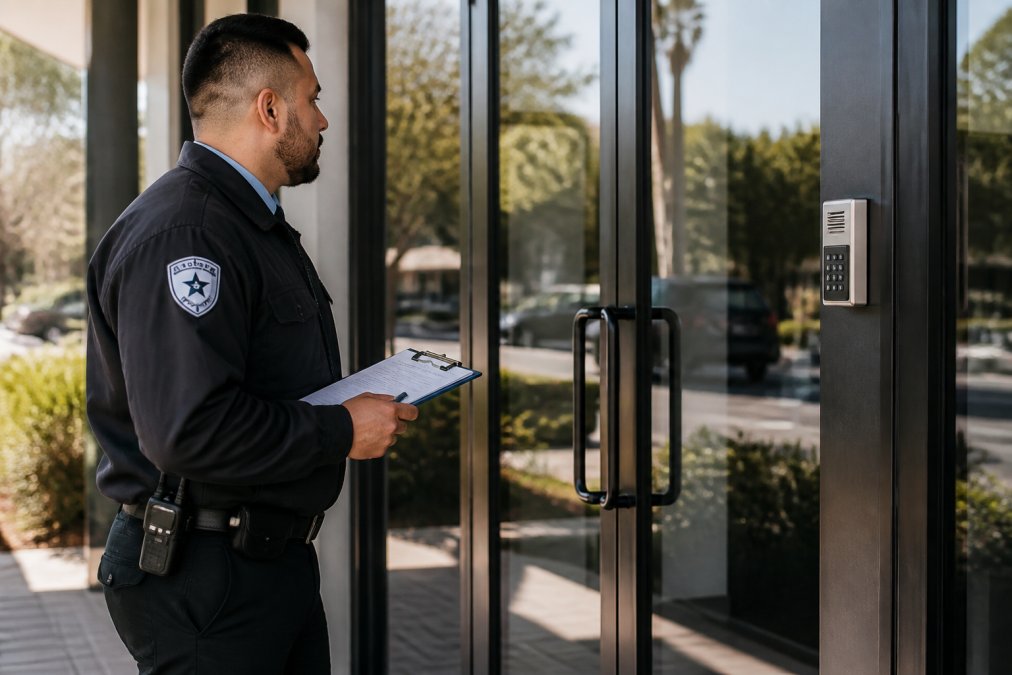
Tupper Security, operating locally from Silkstone, tailors protection plans based on how your specific site actually operates. Their multi-class licensed operators conduct independent site risk assessments, then design security around your actual operational patterns rather than applying generic schedules. This matters because a retail store's security needs differ fundamentally from a warehouse's.
Service Coverage and Response Times
Response time separates realistic expectations from marketing claims. DSA Security covers Brisbane, Gold Coast, and Sunshine Coast with established depot networks. Response times depend heavily on where your property sits relative to their nearest patrol vehicle. Their predetermined patrol routes mean availability isn't always where incidents occur.
ProSafe Security's 24/7 monitoring operations centre creates different response dynamics. Rather than relying on scheduled patrols, they dispatch the nearest available unit when an alarm triggers. This reactive model often produces faster response times in suburban and regional areas, though response still depends on actual unit availability.
Tupper Security's local Silkstone depot provides genuine competitive advantage for Ipswich and immediate surroundings. A local depot means no travel time from a distant dispatch centre, delivering measurably faster alarm response turnaround for Ipswich addresses than providers operating from Brisbane CBD or Gold Coast bases.
No provider guarantees 15-minute response times everywhere, geography matters. A property 50 kilometres from a depot will never achieve this. The question isn't whether response times are impossibly fast, but whether they're realistic for your specific location and whether the provider can maintain them.
For multi-site management, ProSafe Security's centralised monitoring operations centre handles coordination more smoothly than competitors, reducing communication gaps between different teams.
How to Choose a Security Company: Key Criteria
First, assess licensing and operational legitimacy. Every security guard in Queensland must hold a current security guard licence (legislation.qld.gov.au). Request documentation verifying personnel hold current licences. Tupper Security holds QLD Firm Licence #4572076, a verifiable credential confirming operational legitimacy.
Second, evaluate site assessment capability. Competent providers conduct independent risk assessments before designing your security plan, identifying vulnerabilities and recommending protection matching your actual needs. Many providers skip this step and apply generic solutions.
Third, examine documentation and reporting. For retail loss prevention, you need documented shrinkage reporting tracking incidents and patterns. For access control, you need auditable logs showing who entered when. Providers resisting documentation requests are hiding operational gaps.
Fourth, assess technology integration. Modern security combines personnel with CCTV, access control, and alarm monitoring. Integration quality varies enormously. ProSafe Security and Tupper Security both emphasise integrated systems; DSA Security's integration practices warrant direct questioning.
Fifth, evaluate responsiveness to your specific situation. A provider listening to your concerns and proposing customised solutions is more likely to deliver results than one offering standardised packages.
Finally, check actual customer feedback through Google reviews, industry ratings, and direct references from existing clients with similar property types.
Licensing and Compliance Standards
Security guard licensing in Queensland falls under the Security Providers Act 1993 (legislation.qld.gov.au). Every individual working as a security guard must hold a current security guard licence, this is legal requirement, not optional. Providers unable to produce current licences for all personnel are operating illegally.
Security firms must also hold a firm licence, demonstrating they've met vetting requirements, maintain proper insurance, and operate under regulatory oversight. Tupper Security's QLD Firm Licence #4572076 is verifiable proof of compliance.
Alarm response services carry additional compliance obligations. Providers responding to alarm activations must meet specific response protocols and maintain proper documentation. Providers integrating alarm response, like ProSafe Security, must maintain these compliance standards.
For events requiring RSA-compliant security, additional standards apply (olgr.qld.gov.au). Security personnel at licensed venues must understand liquor laws and crowd management protocols. DSA Security's emphasis on event security suggests they maintain this training.
Access control and CCTV systems must meet data protection standards and maintain proper audit trails. Providers offering auditable access control systems demonstrate awareness of these requirements.
Insurance is another compliance consideration. Legitimate security providers carry professional indemnity insurance and public liability insurance. Verify current policies directly with providers.
Mobile Patrol Security Costs and Value
Patrol frequency is the primary cost driver. A single nightly patrol costs significantly less than multiple daily patrols. When comparing costs, always confirm patrol timing and frequency, the numbers are meaningless otherwise. wired vs wireless systems.
Response capability adds cost. A patrol that stops, inspects, and documents issues differs fundamentally from one simply driving past occasionally. Reactive patrols responding immediately to alarm triggers cost more than scheduled patrols following predetermined routes.
Vehicle type and equipment affect pricing. Marked vehicles deter opportunistic crime but advertise security coverage. Unmarked vehicles provide different deterrent value. Vehicles equipped with CCTV, GPS tracking, and two-way communication cost more to operate than basic vehicles.
Geographic coverage matters enormously. Patrolling a property in central Brisbane costs less per visit than one 30 kilometres away. When comparing costs, calculate cost per patrol visit, not total contract cost.
The value question is trickier than cost. A cheap patrol service providing minimal deterrence and slow response creates false economy. A property experiencing regular break-ins benefits from responsive, well-equipped patrols even at higher cost. A low-risk property may get adequate value from inexpensive scheduled patrols. Your actual risk profile determines what patrol service delivers genuine value.
| Selection Criteria | DSA Security | ProSafe Security | Tupper Security |
|---|---|---|---|
| Service Coverage | Brisbane, Gold Coast, Sunshine Coast | Multi-region with 24/7 monitoring | South-East Queensland with local Silkstone depot |
| Response Model | Scheduled patrols | Reactive dispatch from monitoring centre | Local rapid response |
| Technology Integration | Standard offerings | Integrated monitoring and access control | IP surveillance and auditable systems |
| Licensing | Licensed personnel | Licensed personnel | QLD Firm Licence #4572076 |
| Site Assessment | Standard | Available | Independent risk assessments included |
| Multi-Site Management | Available | Centralised coordination | Consistent regional coverage |
Technology and Monitoring Capabilities
DSA Security's technology offerings remain relatively traditional. They provide standard CCTV and access control options with limited integration between systems. For clients seeking primarily personnel-based security with basic technology support, this approach works adequately.
ProSafe Security has invested significantly in technology infrastructure. Their 24/7 monitoring operations centre represents substantial capital investment. They offer integrated access control systems coordinating with alarm monitoring and mobile patrol dispatch. When an alarm triggers, the system automatically logs the event, alerts the monitoring centre, checks access logs, and dispatches the nearest available patrol, fundamentally more effective than isolated systems.
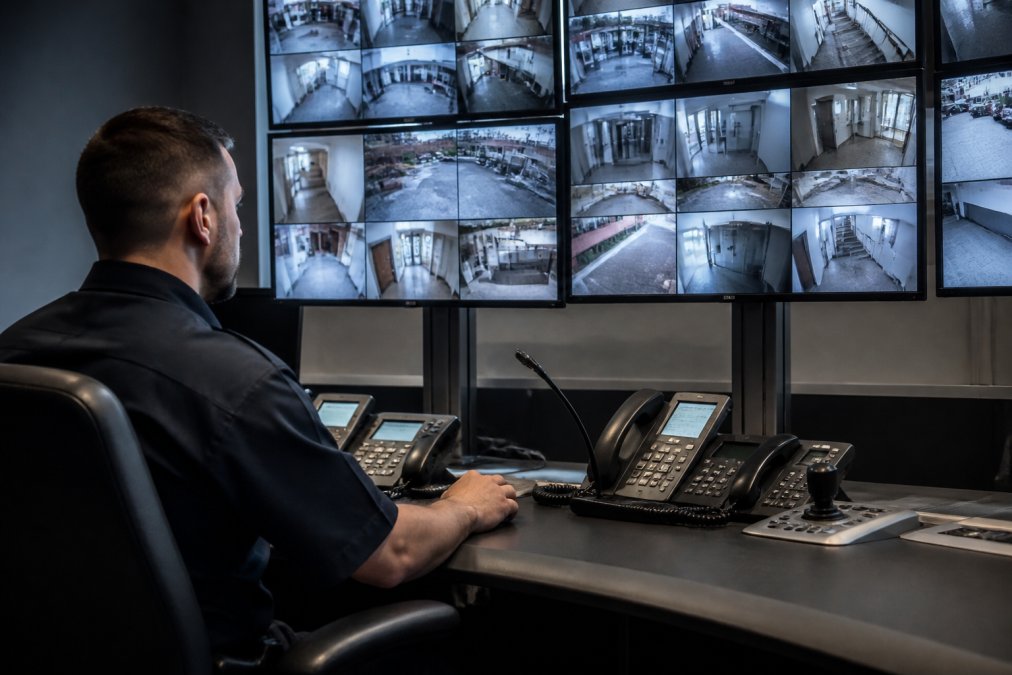
High-resolution, remotely accessible IP surveillance matters increasingly. Traditional CCTV stores footage locally requiring physical access to review. IP surveillance enables remote access from any location, integrates with alarm systems, and supports advanced analytics. Tupper Security specifically offers high-resolution, remotely accessible IP surveillance.
Alarm response integration creates measurable operational advantage. When an alarm triggers at a property with integrated systems, the monitoring centre simultaneously receives the alarm signal, reviews CCTV footage, checks access logs, and dispatches response. This coordinated approach reduces response time and provides responders with critical information before arrival.
Auditable access control systems create timestamped logs showing exactly who accessed which areas when, enabling incident investigation and pattern identification. For multi-tenant properties, warehouses, and retail sites, auditable access control is essential. Tupper Security emphasises auditable and revocable access control systems.
Mobile patrol coordination through technology creates efficiency gains. GPS-tracked vehicles integrated with dispatch systems allow the control centre to route the nearest available patrol to incidents. Providers without this integration rely on manual routing, creating delays and coordination gaps.
Technology amplifies good security practices. Providers combining capable personnel with integrated technology deliver measurably better results than those operating with either alone.
Which Provider Suits Your Property?
DSA Security suits properties requiring primarily scheduled guard presence and event security management. If you're organising a major public event, their established experience with crowd control is valuable. If you operate a construction site needing static guards during business hours, their personnel deployment capability works well.
ProSafe Security suits multi-site operations requiring coordinated management and properties where 24/7 monitoring capability matters. If you manage multiple warehouse locations across the region needing consistent monitoring, their centralised operations centre provides genuine advantage. If you operate a retail property requiring both scheduled patrols and rapid alarm response, their integrated model delivers better results.
Tupper Security suits properties in South-East Queensland, particularly Ipswich and surrounding areas, where local rapid response creates measurable value. If your property experiences regular false alarms or security incidents requiring quick response, their local depot matters. If you're uncertain whether your current security is working, their independent site risk assessments provide honest evaluation. If you operate a retail store concerned about loss prevention, their documented shrinkage reporting supports evidence-based investigation.
For homeowners in Ipswich seeking 24/7 alarm response and mobile patrol security, Tupper Security's local presence creates response advantage that larger regional providers can't match. For property managers of multi-tenant sites requiring auditable access control and CCTV surveillance, Tupper Security's integrated systems support proper accountability. For retail store owners seeking loss prevention and security design reviews, Tupper Security's combination of documented shrinkage reporting and independent risk assessments provides specific capabilities that matter.
The decision depends on three factors: your geographic location (local advantage matters), your operational complexity (multi-site coordination versus single-property focus), and your incident profile (scheduled security needs versus rapid response capability).
Choosing between security providers isn't about finding the cheapest option, it's about matching your actual security needs to a provider with the capability to deliver. For properties in South-East Queensland seeking rapid alarm response, tailored security design, and documented loss prevention, Tupper Security's local operational base, multi-class licensed operators, and commitment to site-specific risk assessment provide the boots-on-the-ground expertise you need. Request a quote and have Tupper Security conduct an independent site risk assessment to clarify exactly what your property requires and how their security solutions address your specific vulnerabilities.
=== FAQ ANSWERS (audit these too, same rules) ===
[1] Q: What services do DSA Security and ProSafe Security offer in South-East Queensland? A: Both providers offer licensed security guard services, mobile patrols, 24/7 alarm monitoring and response, static site guards, and access control systems. Each tailors their offerings to client needs, ranging from alarm response to comprehensive site surveillance and risk assessment.
[2] Q: How do mobile patrol response times compare between local security firms? A: Response times depend on your location and the provider's depot proximity. When evaluating mobile patrol security costs and performance, request their documented response time data and ask about their dispatch protocols. Faster response times usually correlate with better coverage density and local operational capacity.
[3] Q: What should I look for when comparing security guard companies? A: Prioritise licensing status under the Security Providers Act 1993, documented response times, insurance coverage, and whether guards hold current qualifications. Assess their vetting procedures, communication systems, and ability to customise services to your site. Request references from similar properties and clarify pricing structure upfront. Verify they conduct independent risk assessments rather than applying generic solutions to every client.
[4] Q: Are DSA Security and ProSafe Security licensed under the Security Providers Act 1993? A: Both providers operate as licensed security businesses in Queensland. Verify current licensing by checking the Queensland Office of Fair Trading's security provider register. Licensed status ensures operators meet training, insurance, and conduct standards. Always confirm a provider's licence number and check for any compliance history before engaging their services for your property.
Frequently Asked Questions
Q: What services do DSA Security and ProSafe Security offer in South-East Queensland?
A: Both providers offer licensed security guard services, mobile patrols, 24/7 alarm monitoring and response, static site guards, and access control systems. Each tailors their offerings to client needs, ranging from alarm response to comprehensive site surveillance and risk assessment.
Q: How do mobile patrol response times compare between local security firms?
A: Response times depend on your location and the provider's depot proximity. When evaluating mobile patrol security costs and performance, request their documented response time data and ask about their dispatch protocols. Faster response times usually correlate with better coverage density and local operational capacity.
Q: What should I look for when comparing security guard companies?
A: Prioritise licensing status under the Security Providers Act 1993, documented response times, insurance coverage, and whether guards hold current qualifications. Assess their vetting procedures, communication systems, and ability to customise services to your site. Request references from similar properties and clarify pricing structure upfront. Verify they conduct independent risk assessments rather than applying generic solutions to every client.
Q: Are DSA Security and ProSafe Security licensed under the Security Providers Act 1993?
A: Both providers operate as licensed security businesses in Queensland. Verify current licensing by checking the Queensland Office of Fair Trading's security provider register. Licensed status ensures operators meet training, insurance, and conduct standards. Always confirm a provider's licence number and check for any compliance history before engaging their services for your property.
This article was written using GrandRanker