 how-to
How to Improve Warehouse Security: 7 Essential Steps
Table of Contents
- How to Improve Warehouse Security: A Practical Framework
- Step 1: Conduct a Security Risk Assessment Template for Your Facility
- Step 2: Strengthen Perimeter Security and Entry Points
- Step 3: Install CCTV and Real-Time Monitoring Systems
- Step 4: Deploy Access Control and Keyholding Systems
- Step 5: Implement a Warehouse Security Checklist Australia
- Step 6: Prevent Warehouse Inventory Shrinkage Prevention Strategies
- Step 7: Establish Security Protocols and Employee Training
Last Updated: August 8, 2026
How to Improve Warehouse Security: A Practical Framework
Warehouse security breaches cost Australian businesses millions annually through theft, vandalism, and operational disruption. The challenge isn't identifying security measures, it's implementing them systematically across a facility that operates 24/7 with multiple entry points, staff turnover, and evolving threats. This guide from Tupper Security breaks down how to improve warehouse security with a structured, step-by-step approach that addresses physical infrastructure, technology, and human factors.
The seven-step framework below moves from assessment through to incident response. Each step builds on the previous one, creating layered protection rather than isolated solutions. By the end of this guide, you'll have a practical roadmap for securing your facility against the most common threats.
Step 1: Conduct a Security Risk Assessment Template for Your Facility
Start with a baseline. You cannot improve warehouse security without knowing what you're protecting and where the gaps exist. A security risk assessment identifies vulnerabilities before they're exploited, determines where to allocate resources, and creates a documented record for insurance purposes.
What to evaluate during your assessment
A comprehensive assessment examines physical perimeter integrity, access points, surveillance coverage, staff protocols, inventory control, and cybersecurity for connected systems. Walk the facility at different times, morning shift, night shift, weekends, observing how staff move through the space, where packages accumulate, which doors are propped open, and where lighting fails.
Evaluate entry and exit points: How many doors, gates, and loading areas exist? Which are monitored? Check fencing condition, gate locking mechanisms, and roof access. Assess current CCTV coverage for blind spots and review speed. Test access control systems to confirm functioning and audit trail recording.
Review staff protocols: Who has keys and how often are they rotated? Are visitor sign-in procedures followed consistently? Examine inventory management: Are high-value items stored securely? Is stock rotation audited? Are discrepancies investigated?
Common vulnerabilities to identify
Unsecured perimeters are the most common entry point for theft. Damaged fencing, unlocked gates, and poorly lit areas invite opportunistic criminals. Blind spots in CCTV coverage, particularly at loading docks and corners, allow theft without detection. Inconsistent access control (propped doors, shared credentials, expired keycards) undermines expensive systems.
Internal theft often goes undetected because staff assume losses are administrative errors. Inadequate lighting creates opportunities for concealment. Poor incident response, no clear escalation procedure or forensic documentation, means breaches aren't properly investigated.
Outdated or disconnected systems are increasingly problematic. CCTV footage that isn't backed up can be lost. Access control systems that don't integrate with alarm systems create response delays. Cybersecurity gaps in networked surveillance or inventory systems expose the facility to digital attacks.
Step 2: Strengthen Perimeter Security and Entry Points
Your perimeter is the first line of defence. A secure perimeter delays intruders, forces them to be visible, and creates opportunities for detection.
Fencing, gates, and reinforced doors
Perimeter fencing should be at least 2 metres high with no horizontal rails that allow climbing. Anti-climb fencing (angled tops, smooth surfaces) is more effective than standard chain-link. Gates should have heavy-duty locks, ideally electronic with audit trails. Electronic systems log every access attempt.
Reinforced doors at entry points resist forced entry. Steel frames, solid core doors, and heavy-duty locks make kick-ins significantly harder. Reinforce door frames with metal plates extending 10-15 centimetres beyond the lock. Install door closers so doors cannot be propped open.
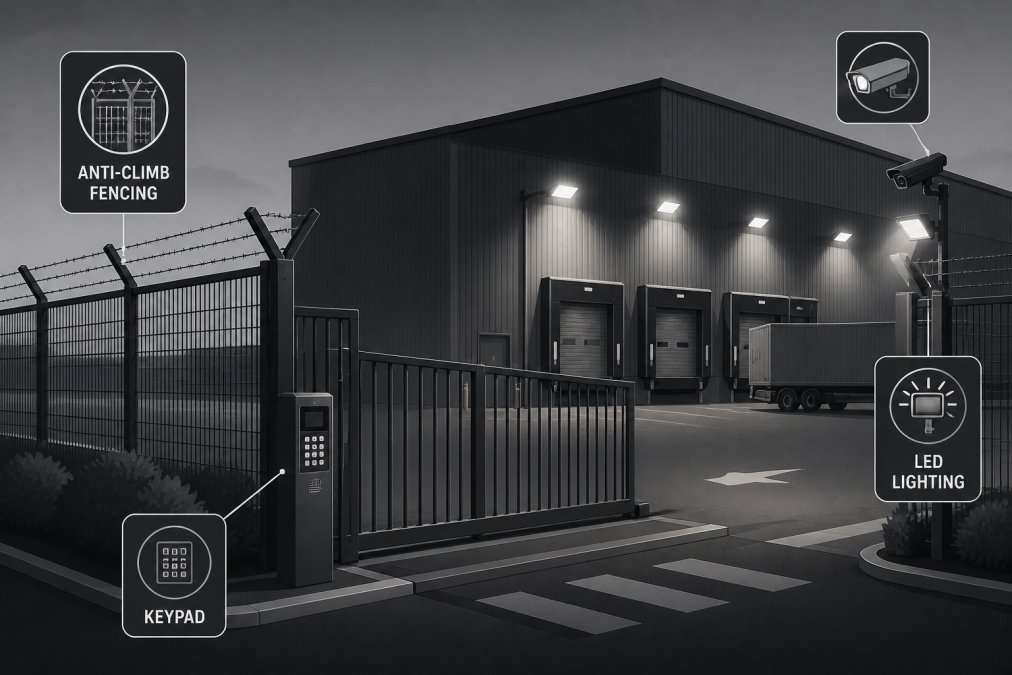
Loading docks are vulnerability hotspots. Implement controlled access: only authorised personnel enter, vehicles are logged, and shipments are verified before departure. Install bollards or barriers to prevent vehicles from driving into the warehouse. Use vehicle access control systems (rising bollards, gates) that require credentials before opening.
Loading dock and vehicle access controls
Vehicle access should be restricted to designated areas. Implement a vehicle pass system where drivers present credentials before entering. Photograph vehicles and drivers for records. Use weighing systems at entry and exit to detect unauthorised goods removal.
Implement a strict visitor management system. Visitors should not roam freely. Issue temporary access cards that expire at the end of their visit. Require sign-in with photo identification. Assign an escort for visitors in sensitive areas.
Step 3: Install CCTV and Real-Time Monitoring Systems
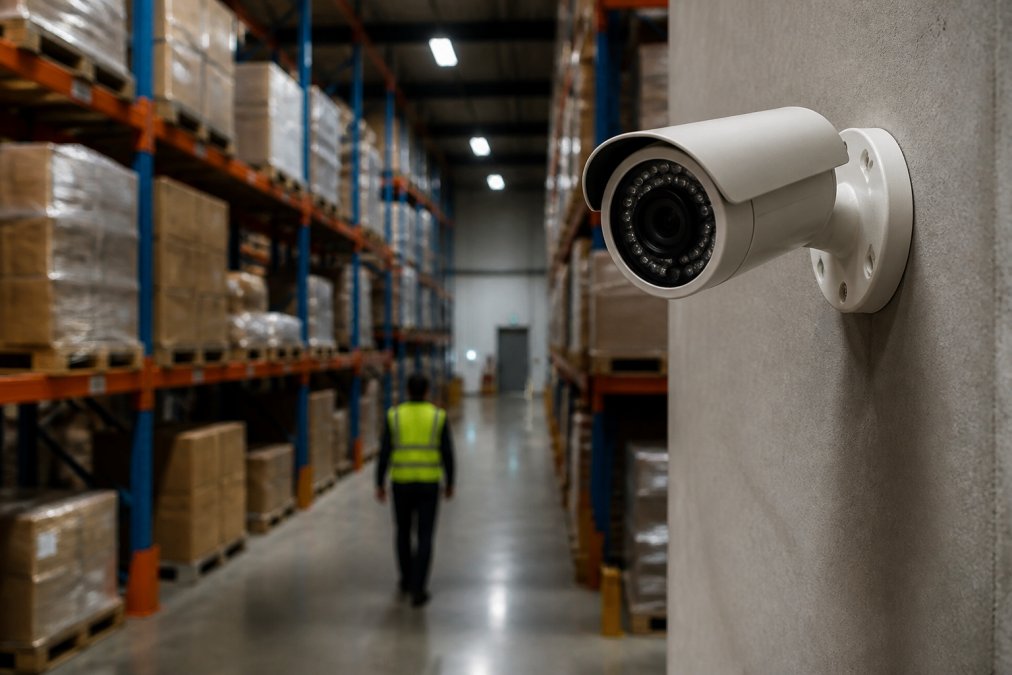
CCTV is a deterrent and a detective tool. Visible cameras discourage theft because criminals know they're being recorded. Footage provides evidence for incident investigation and helps identify patterns in theft or unauthorised access.
CCTV installation regulations Australia requires
In Australia, CCTV systems must comply with privacy legislation. The Privacy Act 1988 (Cth) and state-based privacy laws govern how footage is recorded, stored, and accessed. Signage must clearly indicate that CCTV is in operation. Footage retention periods are typically 30 days for routine security, longer for specific incidents. Access to footage should be restricted to authorised personnel.
Work with a licensed security provider familiar with Australian privacy requirements. Tupper Security ensures all installations comply with current legislation, protecting your facility and avoiding regulatory breaches.
Coverage zones and motion detection placement
Position cameras to cover all entry and exit points, loading docks, high-value inventory storage, and cash handling areas. Overlap coverage slightly so no area is missed. Place cameras at heights that capture faces clearly (typically 1.5-2 metres) and wide views of floor activity.
Motion detection triggers recording and alerts when movement occurs outside business hours, reducing storage requirements and flagging potential intrusions. Configure sensitivity carefully to balance detection and false alarm rates.
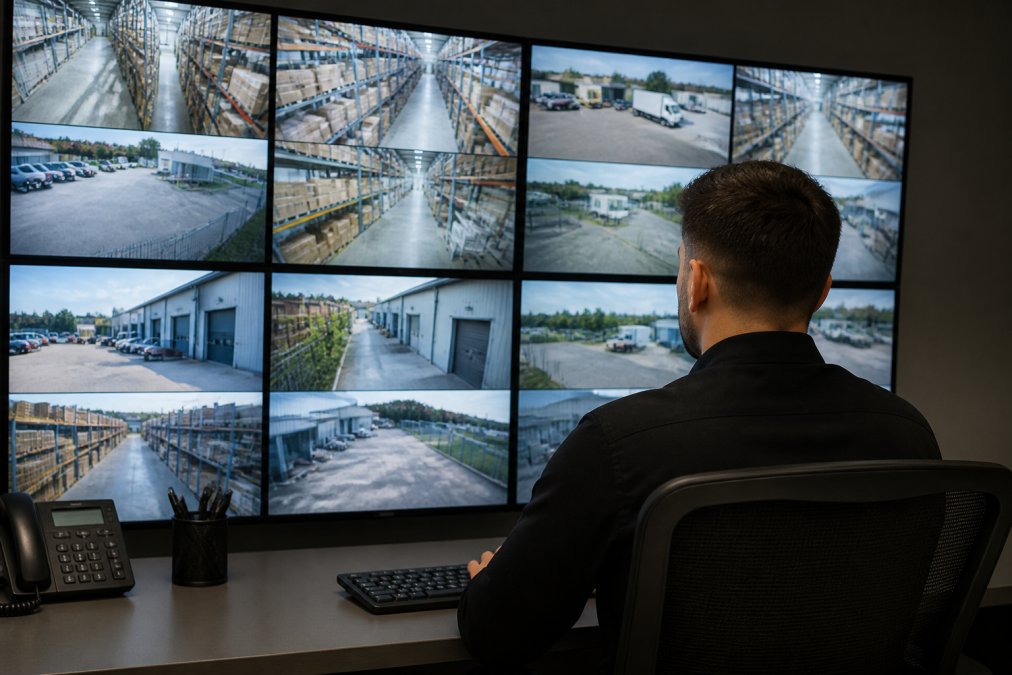
High-resolution IP cameras (1080p minimum, 4K preferred) provide clearer images for identification. Cloud-backed storage ensures footage isn't lost if local systems fail. Remote access allows authorised personnel to review footage from off-site, essential for rapid incident response. Ensure your system integrates with access control and alarm systems.
Step 4: Deploy Access Control and Keyholding Systems
Access control determines who enters which areas and when. Every access event should be logged with timestamp, cardholder identity, and location.
Biometric and credential-based entry
Biometric systems (fingerprint, iris scanning, facial recognition) eliminate the risk of shared credentials or lost keycards. Credential-based systems (keycards, PIN codes) are more flexible; credentials can be revoked instantly if lost or if an employee leaves.
Multi-factor access combines credentials with biometrics. A cardholder must also scan a fingerprint to enter. For high-security areas (server rooms, high-value inventory), multi-factor access is standard.
Implement role-based access control. A warehouse operative needs access to the warehouse floor but not to the finance office. This principle of least privilege limits damage if credentials are compromised. Review and update access rights quarterly as staff change roles or leave.
Audit trails and visitor management
Every access attempt must be logged: cardholder, location, time, success or failure. Audit trails detect unusual patterns, someone accessing areas they don't normally use, repeated failed access attempts, access at unusual hours. Review logs regularly for anomalies.
Visitor management systems track who visited, when, which areas they accessed, and who escorted them. Temporary credentials expire automatically, creating accountability and preventing visitors from returning after their authorised visit ends.
Step 5: Implement a Warehouse Security Checklist Australia
Consistency matters more than perfection. A security checklist ensures daily, weekly, and monthly checks happen regardless of staffing changes. Assign ownership to specific staff members and document completion.
Daily, weekly, and monthly checks
Daily checks (shift start and end): Verify all entry points are locked. Check for signs of forced entry or tampering. Confirm access control systems are functioning. Review overnight CCTV footage for unusual activity. Inspect high-value inventory areas. Test alarm systems.
Weekly checks: Walk the perimeter and document condition of fencing, gates, and doors. Test backup power systems for CCTV and access control. Review access logs for anomalies. Verify visitor logs are complete. Check lighting functionality.
Monthly checks: Conduct a full facility walk-through. Photograph perimeter condition. Test all emergency procedures (evacuation, lockdown, alarm response). Review shrinkage reports and investigate discrepancies. Audit access rights and confirm deactivation of staff no longer employed. Test backup systems and data recovery procedures.
Lighting, signage, and environmental controls
Lighting is a cheap, effective deterrent. Well-lit areas discourage criminals because they're visible. Install motion-activated lighting at perimeter areas and loading docks. LED lighting is energy-efficient and long-lasting.
Security signage (cameras in operation, alarm system active, restricted area) deters casual theft and informs staff and visitors of security protocols. Place signage at entry points and sensitive areas.
Environmental controls (temperature, humidity monitoring) protect inventory and detect unauthorised entry. Integrate monitoring with alarm systems so staff are alerted to anomalies.
Step 6: Prevent Warehouse Inventory Shrinkage Prevention Strategies
Shrinkage, the loss of inventory through theft, damage, or administrative error, directly impacts profitability. A typical warehouse experiences 1-3% shrinkage annually. Reducing shrinkage by even 0.5% can mean significant cost savings.
Internal theft deterrence and staff protocols
Internal theft accounts for a substantial portion of warehouse shrinkage. Implement clear protocols: staff cannot remove items without authorisation and documentation. High-value items should be stored in secure, restricted areas. Require staff to pass through security checkpoints with bags checked on exit.
Conduct background checks on new hires. Rotate staff between roles and areas; familiarity breeds opportunity. Create a reporting culture. Encourage staff to report suspicious activity without fear of retaliation. Anonymous reporting systems (hotlines, online forms) increase reporting. Investigate reports thoroughly and follow up with staff who reported.
RFID tracking and real-time inventory visibility
RFID tags on high-value items enable real-time tracking. Items moving outside the warehouse trigger alerts. RFID systems integrate with inventory management systems, providing live visibility of stock location and quantity.
Implement cycle counting, regular physical counts of specific inventory areas rather than annual full counts. This catches discrepancies quickly and minimises the window for undetected theft. Investigate every discrepancy and document findings.
Barcode scanning at receipt, storage, and shipment creates an audit trail. Deviations from expected movement patterns indicate problems.
Step 7: Establish Security Protocols and Employee Training
Security infrastructure fails without trained staff. Employees are your first line of defence and your greatest vulnerability.
Background checks and role-based access
Conduct background checks on all new hires, particularly those with access to high-value inventory or security systems. Checks should include criminal history, employment verification, and reference checks. Document checks and retain records.
Assign access rights based on role. Define access levels clearly and document decisions. Review access rights annually and when staff change roles.
Induct all staff on security protocols before they start work. Cover access control procedures, incident reporting, emergency protocols, and consequences of security breaches. Make security a condition of employment and include it in performance reviews.
Incident response and post-incident recovery
Develop an incident response plan: who is notified, in what order, and what actions are taken. Incidents include theft, unauthorised access, damaged goods, security system failures, and suspicious activity. Document every incident with date, time, location, what happened, who was involved, and what action was taken.
After an incident, conduct a post-incident review. What allowed the incident to occur? What could have prevented it? What changes are needed to prevent recurrence? Document findings and implement changes.
Maintain forensic integrity. If an incident involves theft or damage, preserve evidence. Document the scene with photographs, retain CCTV footage, and preserve access logs. This protects your legal position if you pursue recovery or prosecution.
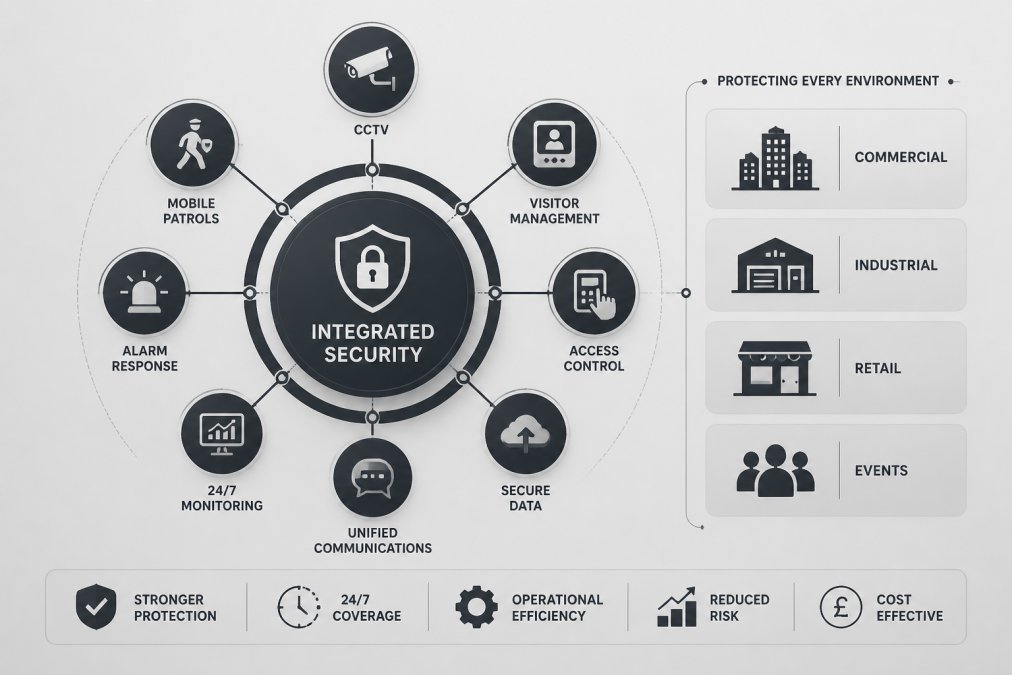
Warehouse security is a system, not a checklist. Each element, perimeter security, surveillance, access control, staff training, inventory management, works in concert. A gap in any area creates vulnerability. At Tupper Security, we've conducted risk assessments across South-East Queensland warehouses and helped operations managers implement layered security that reduces shrinkage, deters external theft, and creates accountability. Our multi-class licensed operators understand warehouse operations and design security around how your facility actually works. Request a security assessment to identify vulnerabilities specific to your facility and receive a tailored implementation plan that fits your budget and operational needs.
| Security Layer | Implementation Focus | Frequency | Outcome |
|---|---|---|---|
| Perimeter | Fencing, gates, lighting | Quarterly inspection | Unauthorised entry deterred |
| Surveillance | CCTV coverage, motion detection | Continuous monitoring | Incidents detected, evidence preserved |
| Access Control | Credentials, audit trails, visitor logs | Real-time logging | Accountability established, patterns identified |
| Inventory | Cycle counting, RFID tracking, discrepancy investigation | Weekly to monthly | Shrinkage detected early, theft prevented |
| Staff Training | Induction, protocols, incident reporting | Annual refresh | Compliance improved, human vulnerability reduced |
| Incident Response | Documentation, investigation, corrective action | Post-incident | Root causes identified, recurrence prevented |
Frequently Asked Questions
What are the most common security risks in Australian warehouses?
Internal theft and shrinkage, unauthorised access to high-value inventory, inadequate perimeter security, poor lighting around entry points, and outdated access control systems are the leading vulnerabilities. Many warehouses lack real-time visibility into inventory movement, making it difficult to detect losses quickly. A proper security risk assessment identifies which threats pose the greatest risk to your specific facility, allowing you to prioritise investments where they matter most.
How do I conduct a warehouse security risk assessment?
Start by mapping all entry and exit points, including loading docks, personnel doors, and roof access. Evaluate current surveillance coverage, access control systems, and lighting conditions. Interview staff about security concerns and review past incidents. Document vulnerabilities in a template covering perimeter security, CCTV placement, access controls, inventory tracking, and employee protocols. Compare findings against Australian compliance requirements and insurance standards. A professional assessment provides an auditable baseline and prioritised action plan for implementation.
What are the key regulations for CCTV installation in Australian warehouses?
CCTV systems must comply with privacy legislation under the Privacy Act 1988 (Cth) and state-based surveillance device laws. Signage must clearly notify employees and visitors that recording is occurring. Audio recording is heavily restricted and generally prohibited in private areas. Data retention policies must be documented, and footage access must be controlled and audited. Insurance providers often require CCTV as a condition of coverage, so verify your provider's specifications. Professional installation ensures compliance with these requirements and maximises evidentiary value if an incident occurs.
How can we prevent warehouse inventory shrinkage on a budget?
Begin with staff training on proper receiving, storage, and dispatch procedures, as human error accounts for significant shrinkage. Implement cycle counting and regular physical inventory checks to detect discrepancies early. Use simple access controls such as locked storage for high-value items and restricted loading dock entry. Improve lighting to deter theft and enable better visibility. Layer these low-cost measures before investing in RFID or advanced AI-powered analytics. Even modest improvements in process discipline and visibility can reduce shrinkage by 10-20%, often paying for themselves within months.
This article was written using GrandRanker