 comparison
Why Local Security Is Better for Your Business
Table of Contents
- Why Local Security Is Better: The Core Advantages
- Security Alarm Response Times: How Local Proximity Changes Everything
- Commercial Security Risk Assessment by Local Experts
- National vs Local Security Companies: What the Data Shows
- Total Cost of Ownership: Local Security Economics
- Integration with Smart Home and Business Ecosystems
- Cybersecurity and Physical Security Convergence
- Conclusion
Last Updated: August 21, 2026
Why Local Security Is Better: The Core Advantages
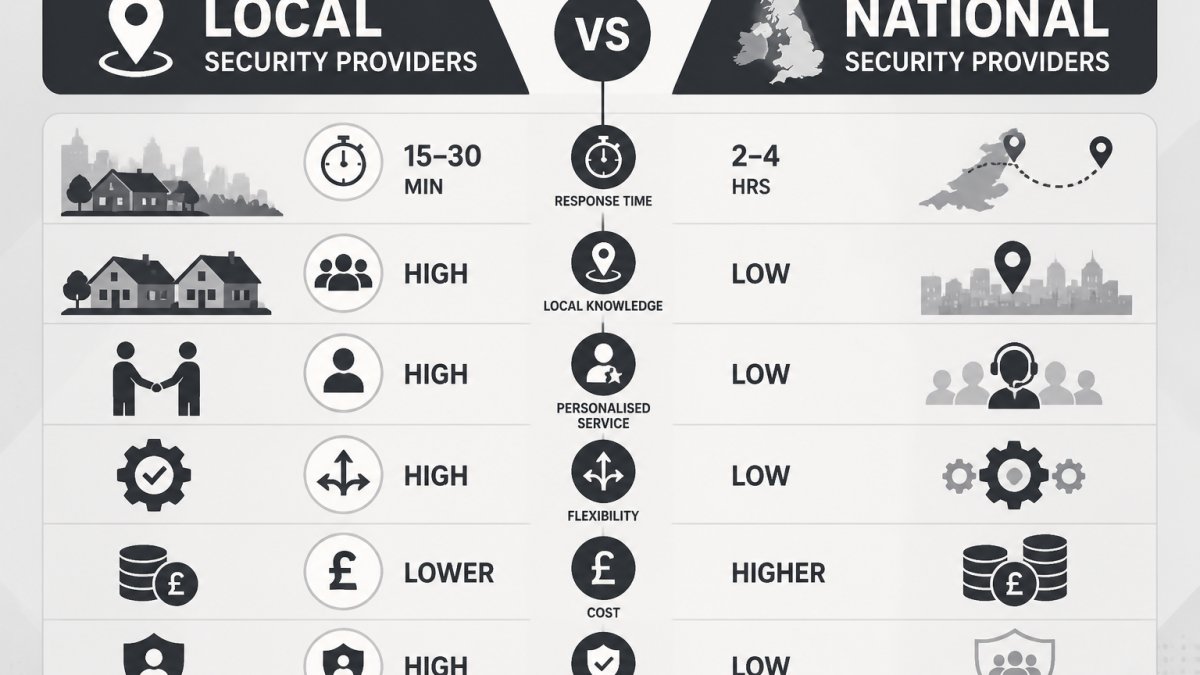
When a break-in happens at 2 AM, you don't want to explain your situation to a call centre 500 kilometres away. You want someone who knows your building, understands your neighbourhood, and can be there in minutes instead of hours. That's the fundamental difference between local security and national operators.
Local security companies operate within their communities. They understand the specific infrastructure, traffic patterns, and crime prevention strategies that matter for your area. A security professional based in your region doesn't need to learn your property from a database entry, they've likely worked similar sites nearby and know what works.
This proximity creates measurable advantages. Response times improve dramatically. Decision-making becomes faster because local teams don't need to navigate bureaucracy or consult with distant headquarters. Accountability increases when the same people who protect your property are the ones you see regularly and can speak to directly.
The contrast with national security companies is stark. Large operators manage hundreds of sites across multiple states. Your property becomes one account among thousands. Staffing decisions get made by people who've never visited your location. Service consistency varies depending on which contractor happens to be available that week.

Local security also adapts faster. When you identify a new vulnerability or need to adjust protocols, a local provider can implement changes immediately. National operators typically require formal requests that move through approval chains. By the time a change gets implemented across their system, your immediate security concern has either resolved or escalated.
For businesses in South-East Queensland, companies like Tupper Security exemplify this advantage. Established since 2014 with a depot in Silkstone, they've built deep familiarity with local infrastructure and community dynamics. Their multi-class licensed operators understand the specific security challenges facing Ipswich, Brisbane, and surrounding areas, challenges that differ significantly from coastal or regional Queensland sites.
Cost efficiency also favours local operators. National companies build overhead into their pricing to support distant headquarters, regional managers, and centralised systems. Local providers eliminate these layers. You pay for actual security services, not corporate infrastructure.
Security Alarm Response Times: How Local Proximity Changes Everything
The difference between a 15-minute response and a 45-minute response isn't just about speed. It's about whether someone arrives while the threat is still active or after the damage is done.
Alarm response times depend almost entirely on geography and dispatch logistics. A local security company with a nearby depot can dispatch officers from their immediate area. A national operator typically routes calls to a centralised dispatch centre, which then contacts the nearest available team, often in a different suburb or across town.
Local proximity creates a fundamental advantage in incident response. When an alarm triggers at your property, a local operator's closest available officer might be 5 kilometres away (peer-reviewed research). A national operator's nearest responder might be 25 kilometres away (peer-reviewed research). That distance directly translates to response time.
The practical impact matters most during actual incidents. If someone breaks into your retail space at 2 AM, a 15-minute response means police can arrive while the intruder is still on-site (the CDC). A 45-minute response means reviewing CCTV footage after the fact. One prevents loss; the other documents it.
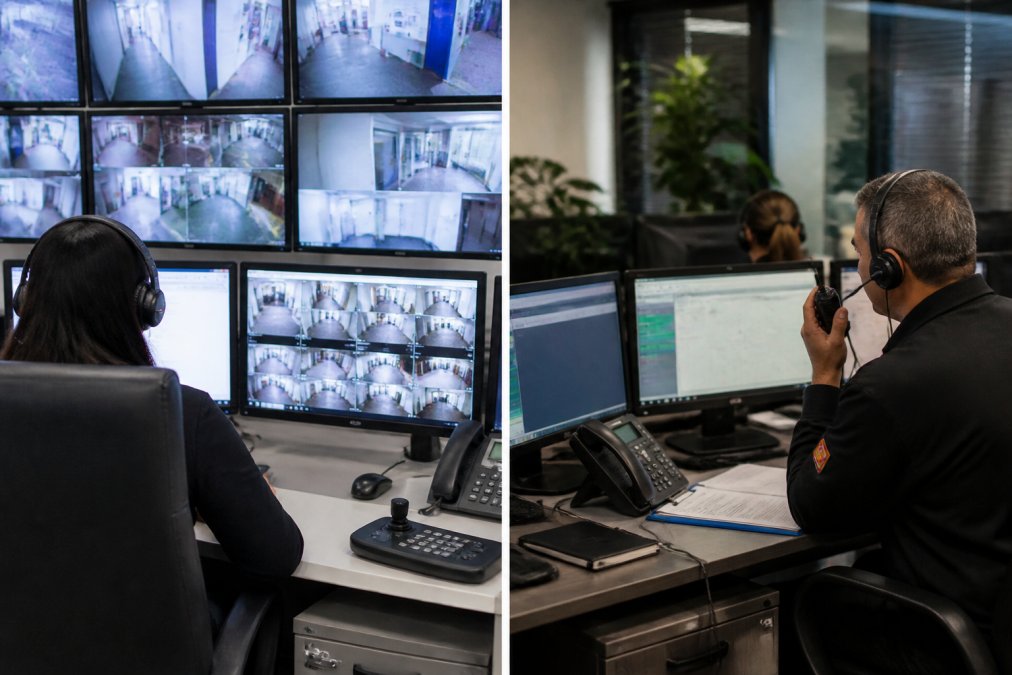
Tupper Security's local Silkstone depot enables rapid response times for properties in Ipswich and the immediate corridor. Their 24/7 monitoring and dispatch system prioritises geographic proximity, officers are already positioned in the areas they serve.
Weather and traffic also affect response capability. Local teams know which routes are typically congested and have contingency paths memorised. They understand seasonal challenges and can adjust patrol schedules accordingly. National operators rely on GPS and generic routing, which often fails during peak congestion or unusual traffic events.
Response flexibility represents another advantage of local security. When circumstances change, a late shipment arrives, an after-hours event happens, or staffing changes occur, local operators can adapt their response protocols immediately. They don't need to submit change requests through a national system or wait for approval from distant management.
Commercial Security Risk Assessment by Local Experts
Before you can protect a property effectively, you need to understand what you're actually protecting against. That's where commercial security risk assessment becomes critical.
A risk assessment identifies vulnerabilities specific to your property, your operations, and your location. It's not generic, it's built around how your business actually runs. A retail store faces different threats than a warehouse. A construction site faces different challenges than an office building. A property in an industrial area faces different crime patterns than one in a commercial district.
Local security experts conduct these assessments with on-site knowledge. They walk your property, understand your workflows, identify entry and exit points, and assess your current security measures. They ask questions that reveal gaps: How many staff work late shifts? Where do you store high-value inventory? What's your current access control system? Do you have blind spots in your CCTV coverage?
This process generates a detailed report that becomes your security foundation. It documents current vulnerabilities, recommends specific improvements, and prioritises which changes matter most. For a small retail store, the recommendations might focus on CCTV placement and alarm response protocols. For a multi-site operation, they might address access control consistency across locations.
Tupper Security provides independent site risk assessments as part of their service model. Their licensed operators evaluate your specific property and operations, then design tailored protection plans based on actual security needs rather than generic schedules. This approach prevents overinvestment in unnecessary systems and ensures resources focus on genuine vulnerabilities.
The assessment also establishes a baseline. When you implement recommended changes, you can measure whether security actually improves. This creates accountability, you're not just paying for a service, you're tracking whether that service delivers measurable results.
National vs Local Security Companies: What the Data Shows
The structural differences between national and local security operators create measurable performance gaps across several dimensions.
Response Flexibility and Accountability
National security companies operate standardised systems across all locations. This creates consistency in some areas, training standards, equipment specifications, reporting formats. But it eliminates flexibility. When your situation is unique, standardised solutions often miss the mark.
Local operators adjust their approach to your specific circumstances. If you need patrols at irregular times because of seasonal business patterns, a local company can accommodate that. If you need to revoke access for a specific staff member immediately, a local operator handles it the same day. National operators require formal requests that move through approval processes.
Accountability differs significantly. With a local provider, the same people who protect your property are the ones you interact with regularly. Poor service becomes visible immediately. You can address issues directly with decision-makers. With national operators, you're one account among thousands. Service issues get logged as tickets in a system. Resolution timelines extend across weeks.
Understanding Local Community and Infrastructure
Local security professionals understand their region's specific crime patterns, traffic flows, and community dynamics. They know which areas experience higher theft rates, where traffic congestion typically occurs, and how local law enforcement operates. choosing local professional services.
This knowledge translates into better security decisions. A local operator can recommend CCTV placement that covers high-risk areas. They can schedule patrols during peak risk periods. They can coordinate with local police in ways that national operators cannot.
National operators rely on generalised security principles. These work adequately for common situations but often miss location-specific factors. A warehouse in an industrial area might need different security protocols than one in a commercial precinct, but a national operator's system treats them identically.
Total Cost of Ownership: Local Security Economics
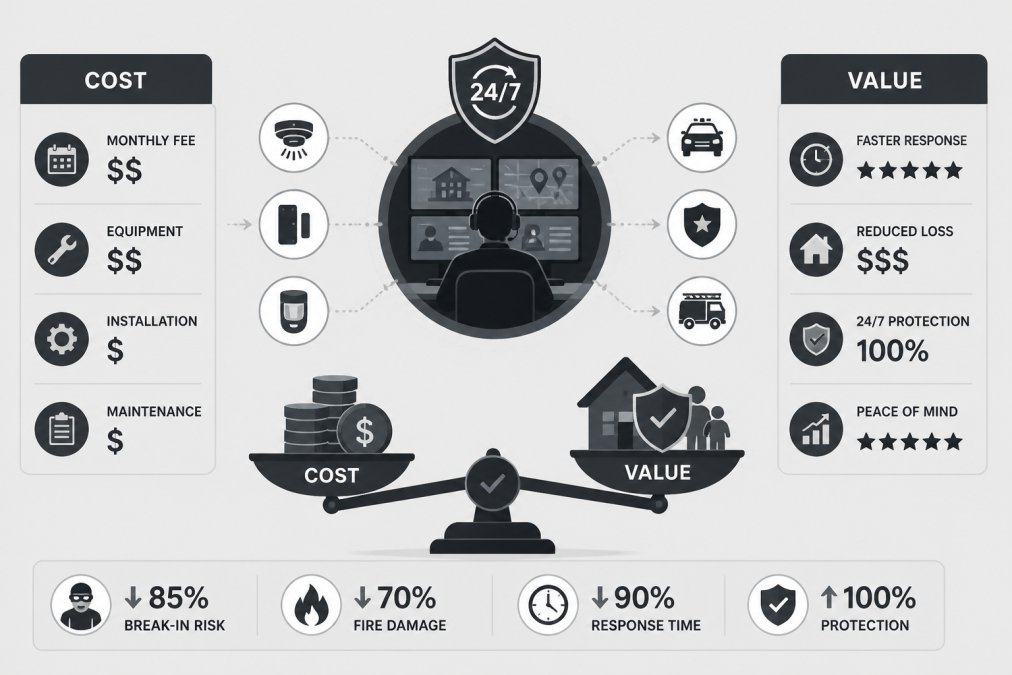
When evaluating security providers, comparing monthly fees tells only part of the story. Total cost of ownership includes implementation costs, system changes, ongoing adjustments, and efficiency losses from service gaps.
Local operators typically have lower implementation costs. They don't need to replace existing systems if they're adequate. They work with what you have and integrate their services around your current setup. National operators often recommend system replacements to ensure compatibility with their centralised monitoring infrastructure.
Ongoing adjustment costs favour local providers. When you need to modify access control, adjust patrol schedules, or update security protocols, local operators implement changes quickly. National operators charge for change requests and typically batch changes, meaning you wait weeks for implementation.
Service gaps create hidden costs. When response times are slow, losses increase during incidents. When accountability is unclear, problems persist longer. When decision-making is bureaucratic, security vulnerabilities stay open. These costs don't appear on an invoice, but they're real.
Tupper Security's model emphasises tailored protection plans based on your actual operations. Rather than forcing you into a standard package, they design solutions around your specific needs. This approach reduces wasted spending on unnecessary services while ensuring adequate coverage for genuine risks.
The economics also favour local operators when you operate multiple sites. Local operators can manage multiple nearby properties more efficiently, often offering volume discounts that national competitors cannot match.
Integration with Smart Home and Business Ecosystems
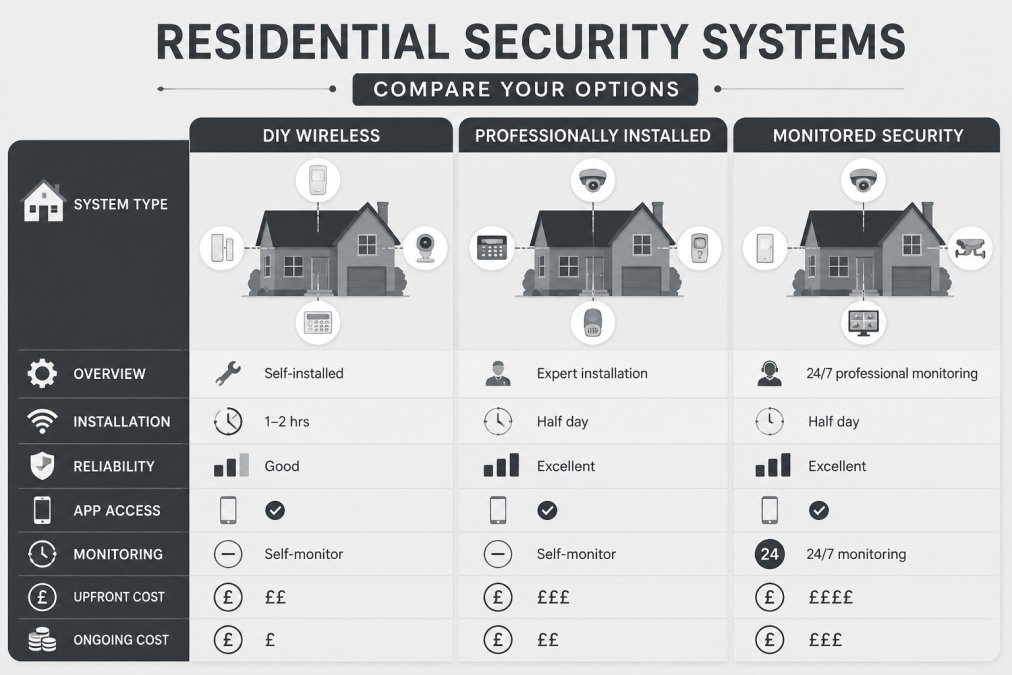
Modern security increasingly involves integration with broader smart home and business systems. Access control needs to communicate with building management systems. CCTV needs to integrate with analytics platforms. Alarm systems need to coordinate with mobile patrol dispatch.
National security operators have invested heavily in proprietary integration systems. These work well within their ecosystem but often create compatibility issues with other providers. If you use a different access control system or CCTV platform, integration becomes complicated and expensive.
Local operators work with industry-standard systems and protocols. They integrate with multiple platforms because they serve diverse clients with different technology choices. This flexibility means you're not locked into a single vendor's ecosystem.
For businesses managing multiple locations, integration consistency matters. Local operators can ensure your three warehouse sites all use the same access control system and monitoring protocols. National operators often deploy different systems at different locations depending on which contractor is available.
Smart home integration for residential properties follows similar patterns. Local security providers understand which smart home systems work well together and can recommend compatible solutions. They're not pushing you toward a specific vendor's ecosystem, they're helping you choose systems that actually work together.
Cybersecurity and Physical Security Convergence
Physical security and cybersecurity are no longer separate domains. A locked door protects against physical intrusion. A password protects against digital intrusion. But modern threats combine both, someone might steal physical access credentials to bypass security systems, or compromise security system software to disable alarms.
Local security operators increasingly understand this convergence. They recognise that access control systems require strong password complexity and regular authentication updates. They understand that CCTV systems need secure networks and encrypted data transmission. They know that integrating physical and digital security requires expertise in both domains.
National operators often treat physical and digital security separately. Their physical security teams don't coordinate with IT security teams. This creates gaps, a compromised user account might give someone access to CCTV footage or alarm system controls without triggering physical security protocols.
This convergence particularly matters for businesses handling sensitive information or high-value inventory. Your access control system shouldn't just prevent physical entry, it should log who accessed what, when, and from which device. Your CCTV system shouldn't just record video, it should encrypt transmission and restrict access to authorised personnel only.
Tupper Security's approach includes auditable and revocable access control systems, which address both physical and digital security requirements. Their systems track access events and allow immediate revocation if credentials are compromised. This integrated approach prevents the gaps that emerge when physical and digital security operate independently.
Conclusion
Local security delivers faster response times, better accountability, and more flexible adaptation to your specific circumstances than national operators can provide. The difference isn't theoretical, it affects whether someone arrives during an incident or after the damage is done.
For businesses and properties across South-East Queensland, Tupper Security demonstrates these advantages through rapid alarm response from their Silkstone depot, tailored security design reviews based on your actual operations, and 24/7 monitoring with documented incident reporting. Their multi-class licensed operators provide the boots-on-the-ground expertise that transforms security from a generic service into precision protection built around how your property actually operates.
Request a quote from Tupper Security and discover how local security expertise can strengthen your protection while reducing unnecessary costs.
=== FAQ ANSWERS (audit these too, same rules) ===
[1] Q: What are the main benefits of using a local security company? A: Local security providers deliver faster alarm response times due to proximity, offer personalised service tailored to your specific site, maintain direct accountability through established relationships, and understand regional risks and community dynamics. They can also adapt quickly to operational changes and provide on-site expertise without the bureaucratic delays common at national firms.
[2] Q: How do local security companies improve alarm response times? A: A local depot positioned near your property means security personnel are already in your area. When an alarm triggers, dispatch can direct the nearest officer to your site immediately. National companies often route calls through centralised call centres far away, causing delays in decision-making and technician dispatch. Local providers also know the fastest routes, local traffic patterns, and property layouts, eliminating the time wasted on unfamiliar terrain and reducing overall response time significantly.
[3] Q: Why is a commercial security risk assessment important when choosing a provider? A: A thorough risk assessment identifies vulnerabilities specific to your operation: entry points, high-value asset locations, staff movement patterns, and peak risk periods. Local security experts conduct these assessments on-site and understand your industry's unique challenges. This leads to tailored protection plans rather than generic schedules, ensuring security resources are deployed where they matter most. Documented assessments also provide evidence of due diligence for insurance and compliance purposes.
[4] Q: Are local security firms more cost-effective than national providers? A: Local firms often deliver better value through reduced overhead, faster incident resolution, and minimal bureaucratic delays. Shorter response times mean fewer false alarms escalate unnecessarily, and personalised service reduces wasted resources on irrelevant coverage. However, total cost depends on your specific needs: site size, risk profile, and required service level. Request quotes from local providers to compare pricing directly against national alternatives and assess what genuine accountability and rapid response are worth for your operation.
Frequently Asked Questions
What are the main benefits of using a local security company?
Local security providers deliver faster alarm response times due to proximity, offer personalised service tailored to your specific site, maintain direct accountability through established relationships, and understand regional risks and community dynamics. They can also adapt quickly to operational changes and provide on-site expertise without the bureaucratic delays common at national firms.
How do local security companies improve alarm response times?
A local depot positioned near your property means security personnel are already in your area. When an alarm triggers, dispatch can direct the nearest officer to your site immediately. National companies often route calls through centralised call centres far away, causing delays in decision-making and technician dispatch. Local providers also know the fastest routes, local traffic patterns, and property layouts, eliminating the time wasted on unfamiliar terrain and reducing overall response time significantly.
Why is a commercial security risk assessment important when choosing a provider?
A thorough risk assessment identifies vulnerabilities specific to your operation: entry points, high-value asset locations, staff movement patterns, and peak risk periods. Local security experts conduct these assessments on-site and understand your industry's unique challenges. This leads to tailored protection plans rather than generic schedules, ensuring security resources are deployed where they matter most. Documented assessments also provide evidence of due diligence for insurance and compliance purposes.
Are local security firms more cost-effective than national providers?
Local firms often deliver better value through reduced overhead, faster incident resolution, and minimal bureaucratic delays. Shorter response times mean fewer false alarms escalate unnecessarily, and personalised service reduces wasted resources on irrelevant coverage. However, total cost depends on your specific needs: site size, risk profile, and required service level. Request quotes from local providers to compare pricing directly against national alternatives and assess what genuine accountability and rapid response are worth for your operation.
This article was written using GrandRanker