 comparison
Is Professional Alarm Monitoring Worth the Cost?
Table of Contents
- What Professional Alarm Monitoring Actually Delivers
- Self-Monitored vs Professionally Monitored Security: The Real Differences
- Does Alarm Monitoring Lower Insurance Costs?
- Security System Response Time Importance and What It Means for Your Home
- Breaking Down the True Cost of Professional Monitoring
- Who Actually Benefits Most From Professional Alarm Monitoring
- Conclusion: Making the Decision That Fits Your Situation
- Frequently Asked Questions
Last Updated: September 18, 2026
What Professional Alarm Monitoring Actually Delivers
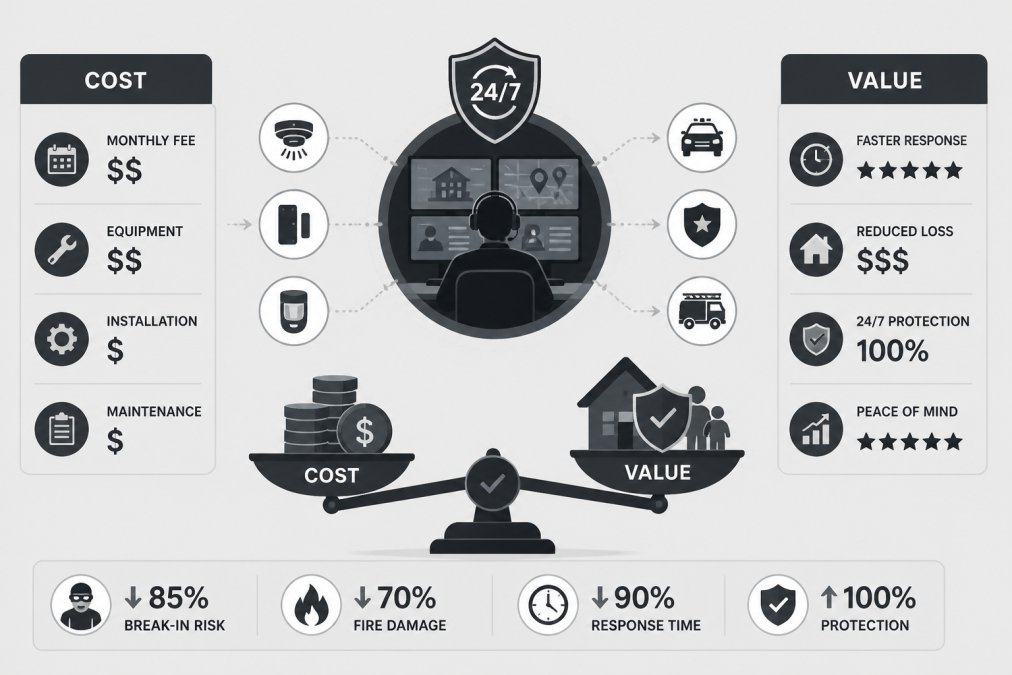
Professional alarm monitoring provides 24/7 emergency response: when an alarm triggers, a monitoring centre verifies the alert and dispatches help, unlike self-monitored systems that rely entirely on you to respond, which is why many homeowners ask whether is professional alarm monitoring worth the cost.
The core value is speed and accountability: a monitoring centre operates 24/7, contacts you immediately, assesses the situation via two-way voice, and takes action, delivering peace of mind when you're asleep, away, or unable to respond.
At Tupper Security, we operate a 24/7 professional monitoring centre with rapid response capabilities tailored to South-East Queensland properties. The difference between knowing your system is monitored and having someone respond within minutes can determine whether an intruder is caught or a fire spreads uncontrolled.
Self-Monitored vs Professionally Monitored Security: The Real Differences
Self-monitored systems send alerts to your phone; you assess the situation and decide whether to contact emergency services. Professionally monitored systems route alerts to trained operators who verify the threat and initiate response protocols immediately.
Self-monitored systems place the burden on you: if you're asleep or travelling, you may miss alerts or make poor decisions under pressure. Professional monitoring removes that responsibility, trained operators handle false alarms, verify threats, and dispatch help immediately.
Self-monitored systems require only equipment and optional app subscriptions. Professionally monitored systems add monthly fees that cover trained operators, monitoring centre infrastructure, and emergency response protocols.
Does Alarm Monitoring Lower Insurance Costs?
Many insurers offer premium discounts for professional monitoring because it reduces break-ins and speeds emergency response, lowering their financial exposure.
Discounts vary by insurer, property type, and monitoring service credentials. Home and contents insurance may see reductions; business properties may see larger savings.
Calculating Your Actual Insurance Offset
To determine whether monitoring fees are offset by insurance savings, you need three figures:
- Your current annual home and contents insurance premium. Find this on your latest policy statement.
- The discount percentage your insurer offers for professional monitoring. Contact your insurer directly and ask: "What percentage discount do you provide for properties with professionally monitored alarm systems?" Request this in writing, as some insurers apply discounts only to specific policy types or property values.
- The annual cost of professional monitoring. This includes monthly subscription fees (typically $25-$50 per month, or $300-$600 annually) plus any annual maintenance or system testing fees.
Example calculation:
- Annual home and contents insurance: $1,200
- Insurer discount for professional monitoring: 12%
- Annual insurance saving: $1,200 × 0.12 = $144
- Annual monitoring cost: [Refer to Tupper Security pricing page]
- Net annual cost after insurance offset: $480 − $144 = $336
In this scenario, professional monitoring costs $336 per year after the insurance discount is applied. The insurance saving covers 30% of the monitoring expense; the remaining 70% must be justified by the value of rapid emergency response, risk reduction, and peace of mind.
Important Conditions and Verification Steps
Before signing a monitoring contract, confirm in writing: certification requirements, response time standards, continuous monitoring conditions, system type eligibility, and documentation needed for the discount.
Confirming these details upfront prevents discovering too late that your insurer offers only 5% or applies the discount only to business insurance.
When Insurance Savings Justify Monitoring
Insurance discounts alone rarely justify monitoring costs, but they reduce net expense significantly. If your saving is $200 annually and monitoring costs $600, insurance covers one-third; the remaining $400 must be justified by risk reduction, fewer break-ins, faster response, documented evidence for claims.
Insurance savings are more compelling for high-value properties or generous discounts (15%+), less relevant for low-crime areas with minimal contents or 5% discounts.
Security System Response Time Importance and What It Means for Your Home
Response time, the interval between alarm trigger and arrival, matters critically. In burglary, 15 minutes versus 45 minutes often determines whether the intruder is caught or gone. In fire, it determines whether the fire spreads beyond containment.
Professional monitoring centres prioritise response time because it directly impacts outcomes. Urban centres typically achieve faster response times; rural areas extend due to distance. Reputable services are transparent about these expectations upfront.
Fastest response times come from services with local mobile patrol units or nearby emergency service partnerships. Local depots enable rapid dispatch compared to distant call centres.
What Happens When Your Internet or Power Fails?
Response time is only meaningful if the alarm signal actually reaches the monitoring centre. This is where many homeowners discover a critical gap: what happens when your internet connection drops, your power fails, or your mobile signal is jammed?
Professional monitoring systems use multiple communication pathways to ensure the alarm signal reaches the centre even if one pathway fails:
- Primary pathway (broadband): Most modern systems send alerts via your home internet connection. This is fast and reliable under normal conditions.
- Secondary pathway (cellular backup): If your broadband fails, the system automatically switches to a cellular connection (using a SIM card built into the control panel). This ensures the monitoring centre receives the alert even if your internet is down.
- Tertiary pathway (landline backup): Some older systems use a traditional phone line as a final backup, though this is becoming less common.
Dual-path systems (broadband + cellular) vs. single-path systems:
Verifying Response Time Claims
Also ask:
- What is your average response time in my postcode? Response times vary significantly by location. Urban areas may see 12-15 minute averages; rural areas may see 25-40 minutes.
- Do you have local mobile patrol units, or do you rely on emergency services dispatch? Local patrols typically respond faster than waiting for police or fire services.
- What happens if your monitoring centre loses communication with my system? A professional service will have protocols to contact you by phone and dispatch a patrol unit if the system goes offline unexpectedly.
- What communication pathways does my system use? Confirm that your system includes both broadband and cellular backup, not just one.
- Do you monitor signal quality and alert me if my system switches to backup communication? Some services proactively notify you if your primary connection fails, allowing you to investigate and restore it.
Breaking Down the True Cost of Professional Monitoring
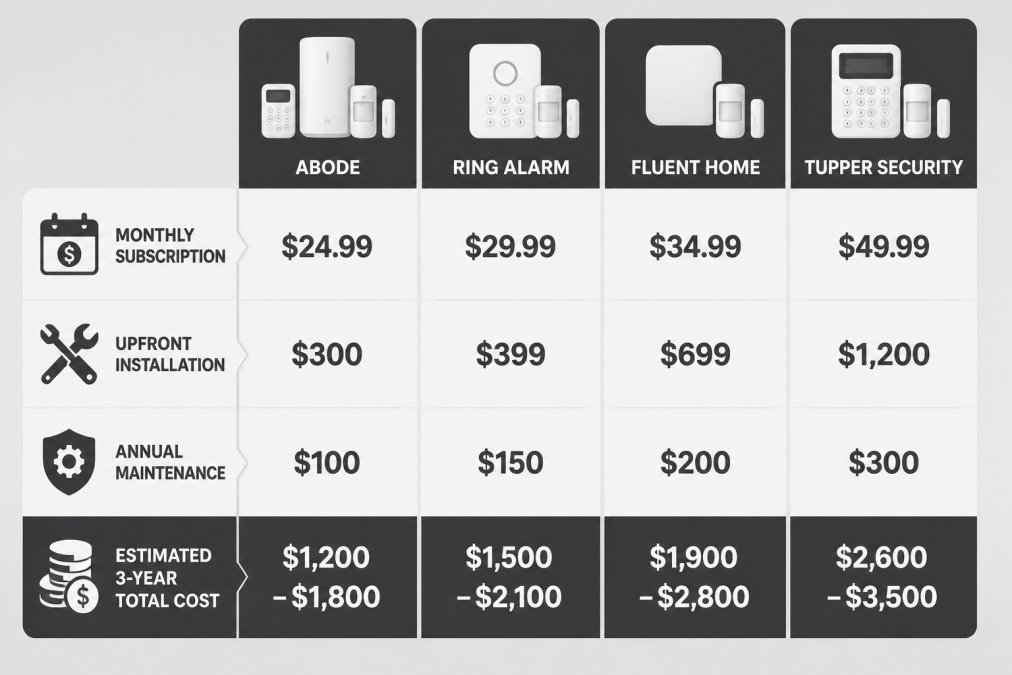
Professional alarm monitoring involves multiple cost layers that extend beyond the monthly subscription. Understanding the complete financial picture helps you evaluate whether the service is worth the investment for your specific situation.
Who Actually Benefits Most From Professional Alarm Monitoring
Professional monitoring delivers the strongest value for specific situations. Understanding whether you fit these profiles helps clarify whether the investment makes sense for you.
Conclusion: Making the Decision That Fits Your Situation
Determining whether is professional alarm monitoring worth the cost requires honest assessment of your specific circumstances: property value, crime rates in your area, your personal availability to respond to alerts, and your insurance situation. The monthly fees add up, but so do the tangible benefits of rapid emergency response and documented protection.
Frequently Asked Questions
What are the main benefits of 24/7 professional alarm monitoring compared to self-monitoring?
Professional alarm monitoring centres provide immediate dispatch to your property when an alarm triggers, 24 hours a day. Unlike self-monitoring where you respond to alerts and contact emergency services yourself, professional monitoring means trained operators verify the alarm and dispatch response instantly. This eliminates the lag time between detection and help arriving, which is critical during break-ins or fire emergencies. Professional centres also maintain two-way voice communication with your property, allowing operators to speak directly with occupants or intruders.
How much can professional alarm monitoring actually reduce your home insurance premium?
Many insurers offer discounts on home insurance for properties with monitored alarm systems, though the exact discount depends on your insurer and policy. To qualify, your system typically needs to be professionally installed and monitored by a licensed centre. Calculate your potential saving by contacting your insurer with proof of professional monitoring. For many homeowners, the insurance discount alone covers a significant portion of monthly monitoring fees, making the net cost substantially lower than the subscription price alone suggests.
Why does response time matter so much in professional alarm monitoring?
Response time is the difference between preventing a loss and discovering it after the fact. When an intruder triggers your alarm, every minute counts. A faster response time may catch an intruder still on site, whereas a slower response means they've had time to load valuables and leave. For fire or carbon monoxide alerts, rapid response is life-critical. Professional monitoring centres dispatch emergency services immediately upon alarm verification, and licensed security providers like those operating locally can often arrive faster than emergency services alone. This speed directly reduces the likelihood and severity of loss.
Is professional alarm monitoring worth it for a small residential property?
Yes, if your property holds significant value or you're away frequently. Small homes still face the same burglary and fire risks as larger ones, and the cost of professional monitoring is the same regardless of square footage. The decision hinges on your risk profile: renters or owners in low-crime areas may find self-monitoring adequate, whilst properties in higher-risk areas, those containing valuable items, or where occupants work long hours benefit most from professional dispatch. Additionally, if your insurer offers meaningful premium discounts, the effective cost drops considerably.
Get started with Tupper Security's professional alarm monitoring and gain 24/7 emergency response, rapid dispatch from our local Silkstone depot, and the documented protection that transforms a security system into an active defence. Contact us today to discuss your property's specific requirements and receive a customised monitoring proposal.