 comparison
Is Smart Home Security Worth the Cost in 2026?
Table of Contents
- Is Smart Home Security Worth the Cost? The Real Verdict
- What Smart Home Security Actually Costs: Equipment vs. Monitoring
- DIY vs Professional Security Installation: Which Delivers ROI?
- Smart Home Security Subscription Costs: What You Actually Pay
- Benefits of 24/7 Alarm Monitoring and Response
- Long-Term Financial Analysis: Does It Pay for Itself?
- Cybersecurity and Privacy: The Hidden Costs You Need to Know
- Frequently Asked Questions
Last Updated: September 1, 2026
Is Smart Home Security Worth the Cost? The Real Verdict
Whether smart home security is worth the cost depends on your risk profile, willingness to self-monitor, and access to professional monitoring. A basic DIY system costs a few hundred dollars upfront, whilst professional 24/7 monitoring adds ongoing subscription fees. The real value lies in response time, insurance reductions, and consistent use, not the equipment itself.
At Tupper Security, we've analysed the financial case for homeowners across South-East Queensland. A retiree in a quiet suburb faces different maths than a property manager overseeing multiple sites. The question isn't whether smart home security works; it does. The question is whether your chosen configuration aligns with your actual needs and budget over five years.
What Smart Home Security Actually Costs: Equipment vs. Monitoring
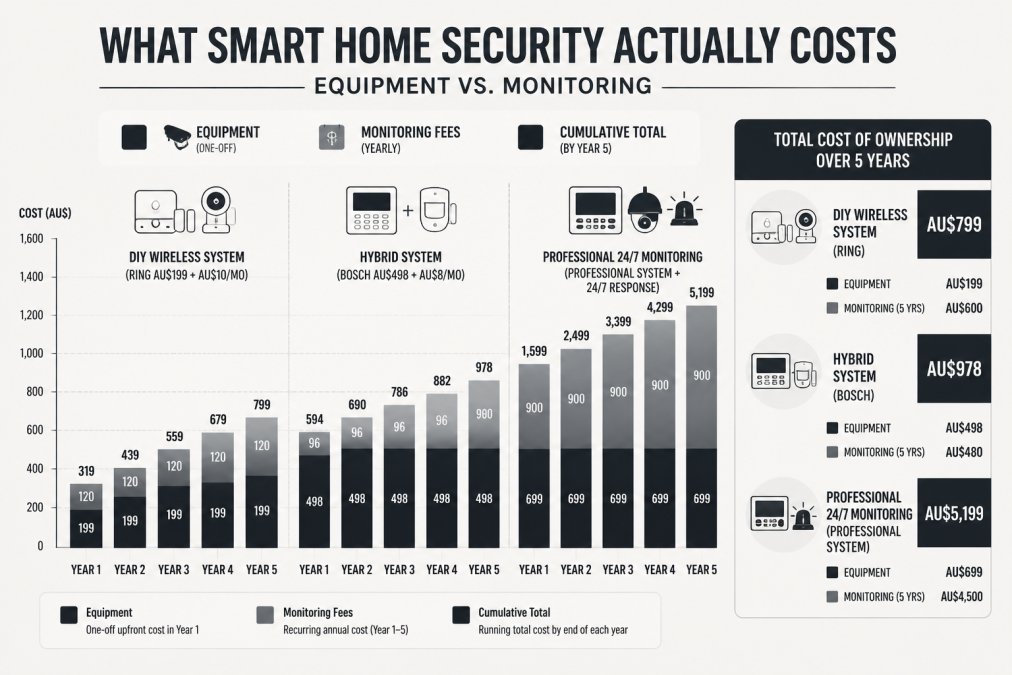
Smart home security pricing splits into two buckets: upfront equipment and monthly monitoring fees. Most people underestimate the second one.
Upfront equipment investment
A basic DIY wireless system like the Ring Alarm Security Kit starts around AU$199.99 for a five-piece kit. The Arlo Essential Spotlight Camera runs approximately AU$229.99 per camera. The Bosch Solution 3000, a hybrid wired-wireless system, begins at around AU$498.00. The Hikvision AX PRO Wireless Alarm System costs approximately AU$697.00 for a nine-piece kit.
Professional installation adds labour costs. Wireless systems like Ring or Arlo can be installed by homeowners in under an hour. Professional systems from security firms like Tupper Security involve site assessment, custom configuration, and installation tailored to your property's layout.
Budget an extra 20-30% for expansion within six months, as most people need additional sensors or cameras.
Ongoing subscription and monitoring fees
Ring Alarm allows free self-monitoring via app, but professional 24/7 monitoring runs approximately AU$10-15 per month (ring.com). Arlo's cloud storage requires an Arlo Smart subscription at AU$4.99-9.99 monthly. Bosch Solution 3000 integrates with professional monitoring through third-party providers at AU$15-25 per month for 24/7 dispatch.
Tupper Security's professional monitoring includes 24/7 alarm response with rapid dispatch from our local Silkstone depot, covering your entire system with response times built around your property's actual operation.
Over five years, a AU$10/month self-monitoring subscription totals AU$600. Professional monitoring at AU$20/month totals AU$1,200. The difference is material, but the real question is whether you'll respond to alerts at 2 AM or need professional response.
DIY vs Professional Security Installation: Which Delivers ROI?
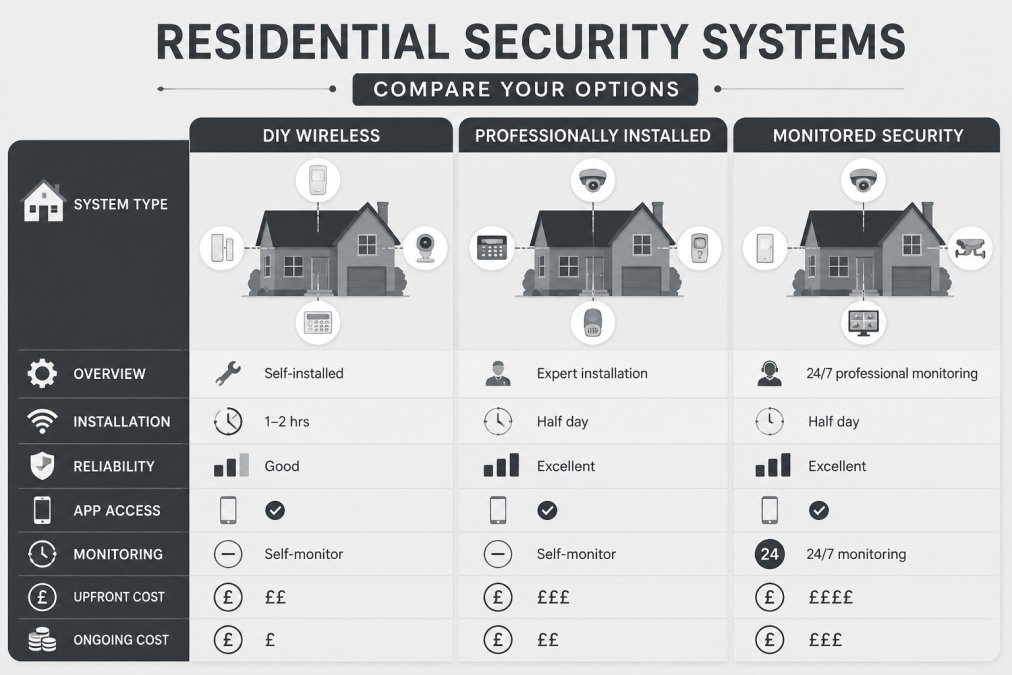
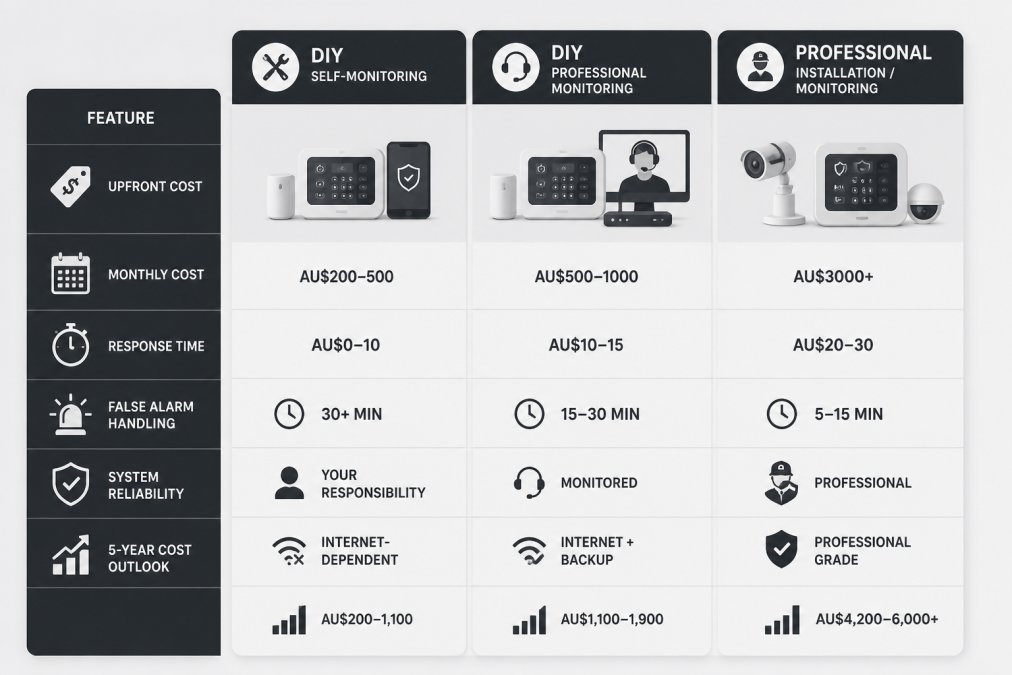
DIY systems are cheaper to buy and install, but only as reliable as your willingness to maintain them and respond to alerts. Professional installation means someone else handles setup, integration, and 24/7 response, but you pay for that expertise.
DIY systems: Lower cost, limited reliability
Ring Alarm and Arlo cameras appeal to homeowners because they're affordable and require no professional installation. You're live within an hour. The barrier to entry is low, which is both their strength and weakness.
Reliability issues emerge over time. DIY systems depend on your internet connection, smartphone battery, and willingness to respond. If your Wi-Fi drops at 3 AM and an intruder triggers a sensor, you won't get an alert until connection restores (cisa.gov). Ring's cellular backup feature mitigates this but adds cost.
False alarms carry financial penalties. Many police forces charge for responding to false alarms after a threshold. Professional installers like Tupper Security conduct site assessments to eliminate false alarm triggers before they happen.
DIY systems also lack accountability. If something goes wrong, there's no one to hold responsible except yourself.
Professional installation: Speed and accountability
Professional installation means a licensed technician assesses your property, identifies vulnerabilities, places sensors strategically, and integrates your system with 24/7 monitoring. When an alarm triggers, a trained operator responds immediately.
Tupper Security's approach involves independent site risk assessments and security design reviews tailored to how your property actually operates. We don't apply generic schedules; we build protection around your specific vulnerabilities. That precision reduces false alarms and improves response times.
The upfront cost is higher, typically several thousand dollars for a comprehensive system with professional installation and 24/7 monitoring. But ROI becomes clearer when you factor in response time, insurance premium reductions, and documented theft prevention. A property manager overseeing multiple retail locations can't afford the liability of self-monitoring.
Professional installation also handles integration with existing systems. If you have CCTV, access control, or legacy security infrastructure, a professional installer ensures everything communicates.
Smart Home Security Subscription Costs: What You Actually Pay
A AU$10/month self-monitoring subscription is AU$120 per year, AU$600 over five years. Professional 24/7 monitoring at AU$20-30 per month is AU$240-360 per year, AU$1,200-1,800 over five years.
Professional monitoring isn't just a subscription fee. You're paying for trained operators, rapid dispatch, incident documentation, and legal liability coverage. If an alarm triggers and a response team arrives within 15 minutes, that's worth more than the monthly fee alone if it prevents a burglary. top rated security devices.
Tupper Security's monitoring service includes 24/7 dispatch with response times built around your property's location and operation. We have a local depot and multi-class licensed operators trained to handle your specific site.
Many professional monitoring services bundle insurance discounts. Some insurers reduce your annual premium by 10-15% if you have monitored 24/7 alarm response. Over five years, that discount can offset a significant portion of the monitoring fee.
Benefits of 24/7 Alarm Monitoring and Response
Real-time alerts and remote monitoring provide immediate value. A motion sensor triggers while you're away, you get notified within seconds and can view live video to decide whether to call police.
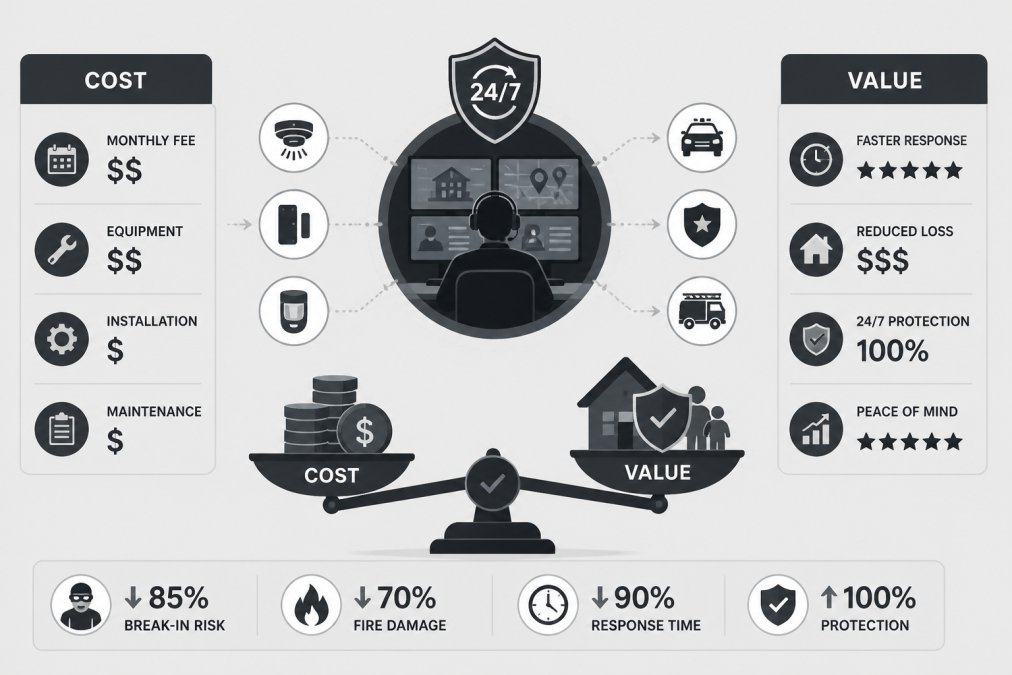
24/7 professional monitoring adds trained response. When your alarm triggers at 2 AM, a professional monitoring centre alerts emergency services immediately. Police respond faster to monitored alarms because the centre provides verified information, system type, entry point, and history.
For property managers and business owners, 24/7 monitoring becomes essential. A retail store can't rely on a manager's phone battery. A warehouse can't depend on manual alert checking.
Tupper Security's 24/7 monitoring includes rapid dispatch from our local Silkstone depot. We're not routing your alarm to a distant call centre; we have operators positioned to reach your property quickly.
Long-Term Financial Analysis: Does It Pay for Itself?
The five-year cost comparison reveals where smart home security delivers ROI.
Insurance premium reductions
Many insurers reduce your annual premium by 10-15% if you have monitored 24/7 alarm response. For a homeowner paying AU$500-800 per year for contents insurance, a 10% reduction saves AU$50-80 annually. Over five years, that's AU$250-400 in savings.
Professional monitoring systems qualify for these discounts more reliably than DIY systems. Insurers view professionally monitored alarms as verified threats. Ask your insurer whether they offer discounts and what conditions apply.
Theft and loss prevention value
A burglary costs far more than stolen items. There's emotional impact, police reports, insurance claims, deductibles, and disruption. For a business, there's lost inventory, liability, and reputational damage.
A visible alarm system deters most casual thieves. Professional monitoring with rapid response makes your property a harder target. If a break-in occurs, the response team can often interrupt it in progress, preventing loss entirely.
Peace of mind and remote monitoring
You're away on holiday and receive a motion alert. You pull up the live camera feed and see it's just a possum. That peace of mind has value.
For property managers overseeing multiple sites, remote monitoring eliminates the need for constant on-site presence. You can view live feeds, check access logs, and respond to incidents from anywhere. That operational efficiency translates directly to cost savings and risk reduction.
Cybersecurity and Privacy: The Hidden Costs You Need to Know
Most cost analyses ignore cybersecurity and privacy risks of connected smart home systems. Every camera, sensor, and hub is a potential entry point for attackers. Every cloud storage subscription means your video footage is stored on someone else's server, subject to their security practices.
Ring and Arlo cameras store footage in the cloud. That's convenient, but it means your home's video is transmitted to Amazon's or Arlo's servers daily. If those servers are compromised, your footage is exposed.
Professional security systems often offer encrypted, on-premise storage options. Tupper Security's high-resolution IP surveillance is remotely accessible, but you control where data is stored and how long it's retained. That gives you visibility and control over your own security data.
Battery lifecycle is another hidden cost. Wireless sensors run on AA or AAA batteries lasting 6-12 months (peer-reviewed research). A 16-sensor system replacing batteries twice per year means purchasing 32 batteries annually. Over five years, that's a material consumable cost.
False alarms carry cybersecurity costs too. If your system is misconfigured or compromised, it might trigger false alarms repeatedly. Police stop responding, and you may face fines.
Professional security providers like Tupper Security operate under stricter privacy and security standards. We collect only what's necessary for security and incident response. We don't monetise your data, and we're transparent about retention and access.
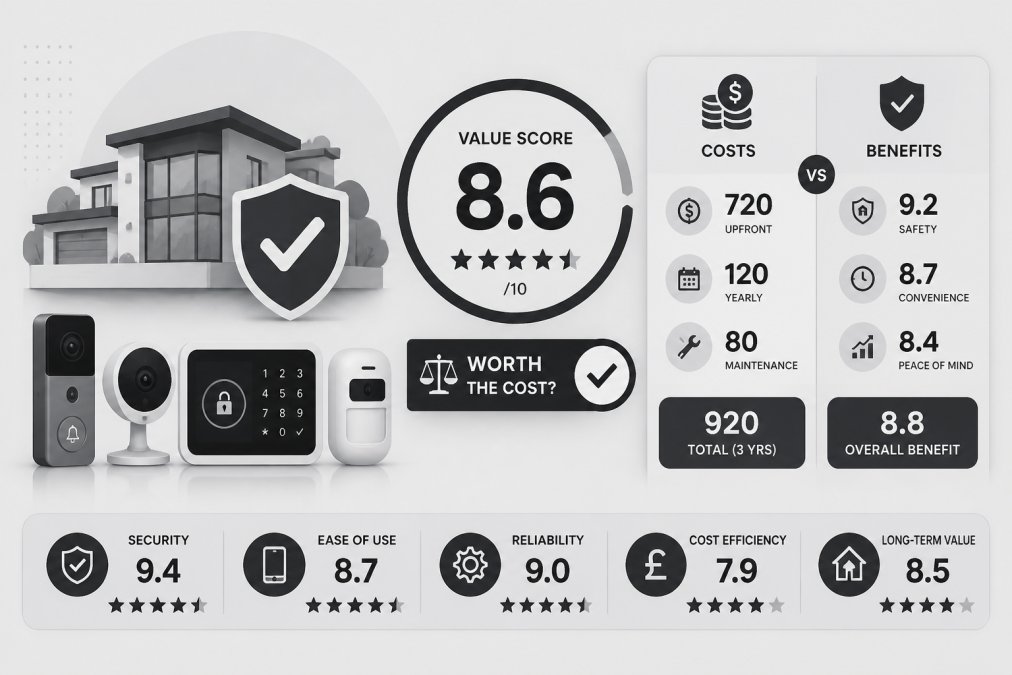
Smart home security is worth the cost if you choose the right configuration for your risk profile and commit to using it consistently. For most homeowners, a professionally monitored system pays for itself within three to five years through insurance reductions, theft prevention, and peace of mind. For property managers and business owners, professional monitoring becomes essential.
The hidden costs, cybersecurity risks, privacy implications, battery lifecycle, false alarm penalties, matter more than most people realise. Budget for them upfront.
If you're evaluating options for your property, Tupper Security offers independent site risk assessments and security design reviews tailored to your specific needs. Our multi-class licensed operators provide 24/7 monitoring and rapid response from our local Silkstone depot. Request a quote and we'll provide a detailed cost-benefit analysis specific to your situation.
Frequently Asked Questions
Does smart home security actually reduce home insurance premiums?
Many insurers offer discounts for verified alarm systems, typically 5-15% depending on the system type and monitoring method. Professional 24/7 monitored systems usually qualify for larger discounts than self-monitored DIY options. Check with your insurer before purchasing, not all systems meet their requirements. The discount can offset 1-3 years of subscription costs, making the long-term investment worthwhile if you stay with the system.
What's the difference between DIY and professional security installation?
DIY systems (Ring, Arlo, Bosch) require you to install hardware and manage alerts yourself or pay for self-monitoring apps. Professional installation includes site assessment, system design, wired or hybrid setup, and often 24/7 professional monitoring with rapid alarm response. DIY is cheaper upfront but slower to respond to emergencies. Professional installation costs more initially but provides accountability, faster response, and system reliability tailored to your property's actual layout and risk profile.
Are smart home security subscription costs worth paying every month?
Subscription costs range from AU$10-40+ monthly for professional monitoring and cloud storage. Self-monitoring (free or low-cost apps) removes this expense but means you respond to alerts yourself. Professional monitoring is worth the cost if you're away frequently, own rental properties, or run a business. For homeowners who are mostly present, self-monitoring can reduce costs, though you lose the rapid emergency response that professional services provide.
How fast do professional monitoring services actually respond to alarms?
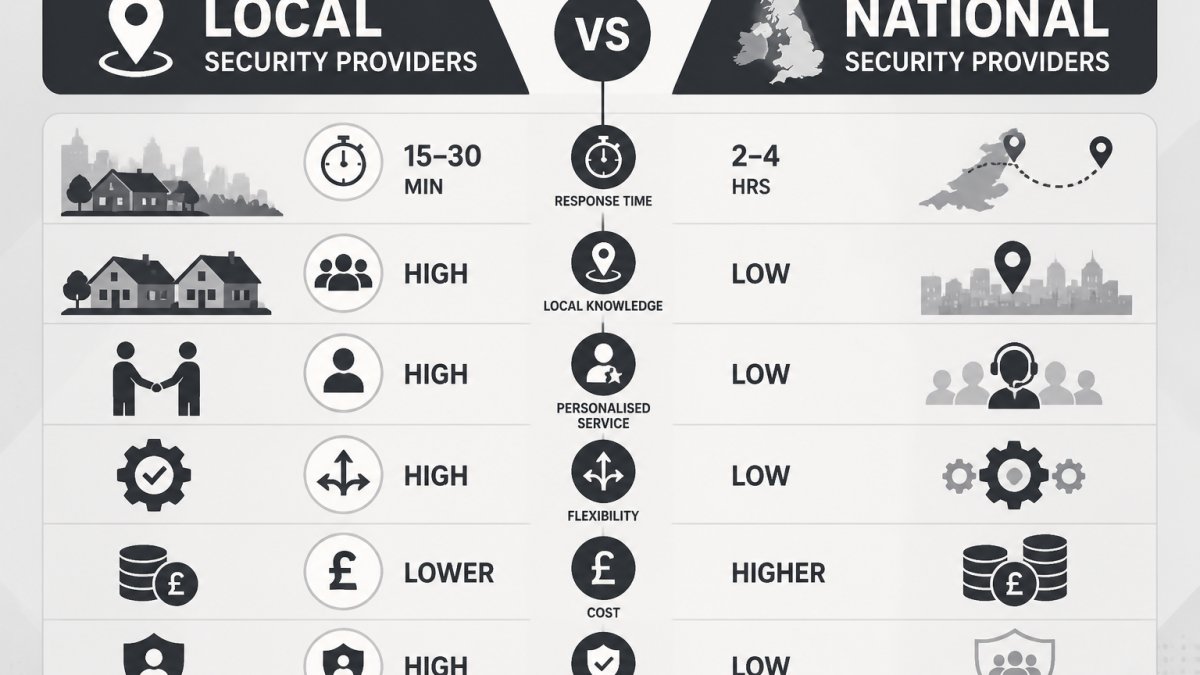
Professional monitoring centres typically dispatch police or send security personnel within 15-30 minutes of an alarm trigger, depending on your location and the provider. Response time is faster in urban areas with local depots. DIY systems send you a mobile notification but require you to contact emergency services yourself, adding 5-10 minutes of delay. The difference matters in break-ins or medical emergencies. Providers like Tupper Security, with local depots, often achieve faster response in their service areas than national chains.
What privacy and security risks come with smart home security systems?
Cloud-connected systems store video and sensor data on remote servers, creating potential exposure if not encrypted properly. Wireless systems can be jammed or hacked if not using strong encryption. Subscription-based services require you to trust the provider's data handling practices. Check whether the system uses end-to-end encryption, allows local storage, and complies with Australian Privacy Principles. Professional providers like Tupper Security should be transparent about data retention and access controls.
This article was written using GrandRanker