 ultimate-guide
Integrating CCTV with Alarm Systems: A 2026 Guide
Table of Contents
- Why Integrating CCTV with Alarm Monitoring Matters
- How Integration Works: The Technical Foundation
- Benefits of Integrated Security Systems
- 24/7 Security Monitoring Response and Real-Time Alerts
- Key Components of a Modern Security Ecosystem
- Cybersecurity and System Interoperability
- Troubleshooting Common Integration Failures
- Conclusion
- Frequently Asked Questions
Last Updated: September 29, 2026
Why Integrating CCTV with Alarm Monitoring Matters
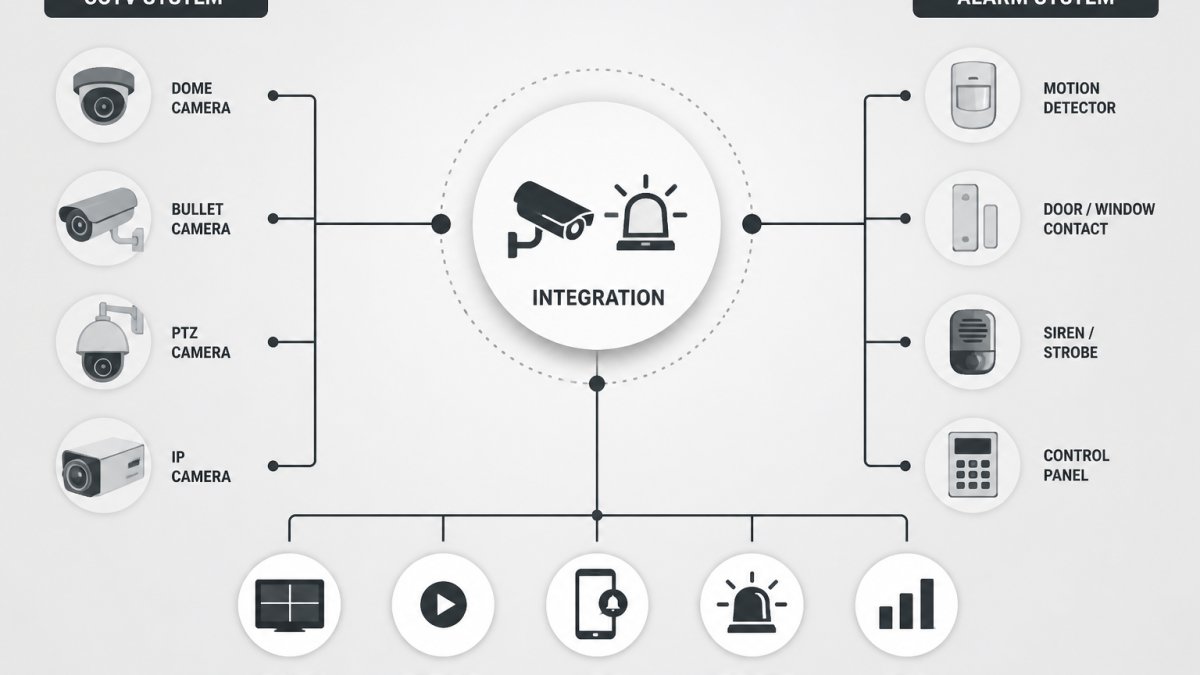
When your CCTV system communicates directly with your alarm panel through integrating CCTV alarm systems, operators can verify threats before dispatch and reduce unnecessary callouts by up to 40% in most installations.
Integrating CCTV with alarm monitoring systems transforms reactive security into intelligent response. At 2 AM when a motion sensor fires, your team needs to know whether it's a genuine intruder, wind-blown debris, or an animal crossing the perimeter.
Your alarm panel, IP cameras, access control logs, and environmental sensors must communicate seamlessly. When they don't, response times stretch and false alarms multiply.
How Integration Works: The Technical Foundation
Integrating CCTV with alarm monitoring systems requires three core components: your alarm panel, video management software, and data correlation logic.
Alarm Panel to Video Management Software
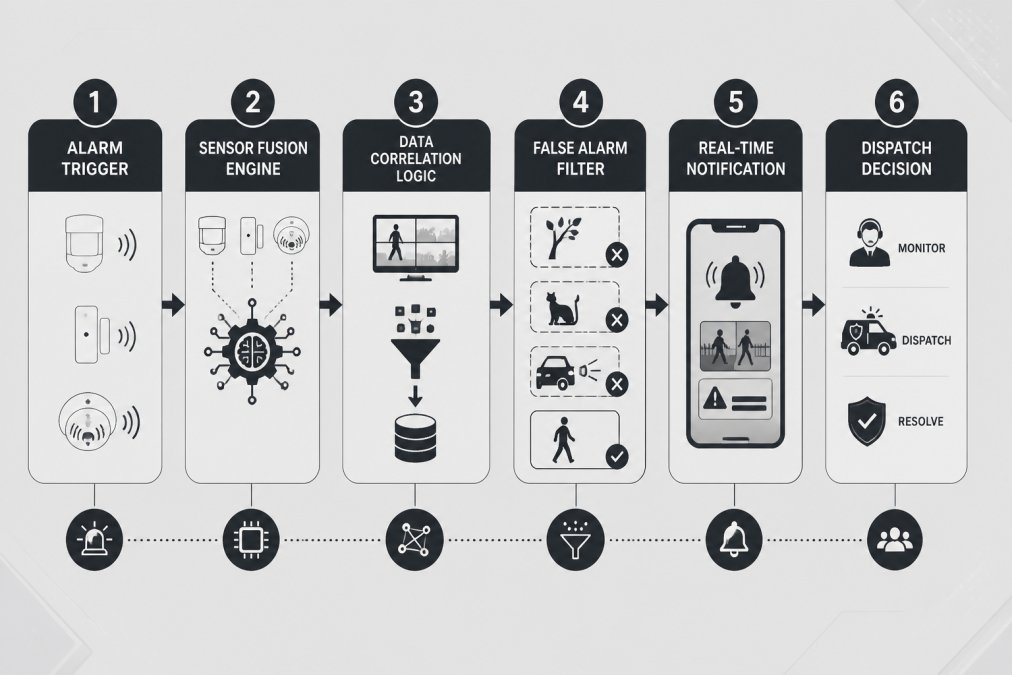
When a sensor triggers, the alarm panel generates an event code and timestamp, transmitting it to your video management software in real time to trigger automatic recording and alerting.
The alarm panel sends event data to the video management software via API or direct network integration. The software receives the signal and begins recording from specified cameras, typically 30 seconds before the trigger.
This connection must be reliable. Network latency, firewall rules, and authentication protocols affect signal delivery. Testing before deployment prevents the most common failure: the alarm fires but cameras don't record.
Sensor Fusion and Data Correlation
Sensor fusion combines data from motion detection, door/window sensors, access control logs, and environmental sensors. The video management software correlates these signals to build a complete incident picture.
When motion detection triggers simultaneously with an unauthorized door opening in access logs, the system recognizes a genuine intrusion and escalates only high-confidence threats to your monitoring centre.
Data correlation reduces false alarms. A motion sensor near a window might fire from passing headlights, but when correlated against access control and perimeter data, the system flags it as low-risk.
Benefits of Integrated Security Systems
Integrating CCTV with alarm monitoring systems delivers three measurable outcomes: faster incident response, reduced false alarm costs, and actionable security intelligence.
Visual Verification and Faster Incident Response
When an alarm triggers, the dispatcher sees the camera feed instantly with no delay hunting through footage or uncertainty about which area triggered the alert.
Your mobile patrol arrives with full situational awareness: threat location, direction of movement, and incident status. Response times can improve, making a difference between preventing a loss and documenting it.
Visual verification protects against liability by documenting what patrol officers encountered and how they responded.
Reducing False Alarm Callouts
False alarms are expensive, tying up patrol resources and triggering local authority penalties. False alarm rates can drop after integration.
Sensor fusion and data correlation distinguish genuine threats from environmental noise. A motion sensor near a tree branch triggered by wind is suppressed when correlated against door sensors and access logs.
User-configurable alert thresholds require confirmation from multiple sensors before escalating to dispatch. Single motion detection alerts your smartphone; simultaneous motion plus door breach triggers immediate dispatch.
Access Control and Actionable Intelligence
When access control integrates with CCTV and alarm monitoring, every door opening is timestamped and correlated with video, creating an auditable security record.
For retail loss prevention, correlate staff access patterns with inventory shrinkage. Integration provides documented evidence for investigation without relying on memory.
For multi-tenant properties and warehouses, access control logs show who was on-site when an incident occurred. Video management software instantly retrieves footage from the relevant timeframe and location.
24/7 Security Monitoring Response and Real-Time Alerts
Integrated systems deliver real-time notifications to your smartphone, monitoring centre, and dispatch team simultaneously with video context.
Real-time alerts enable response while incidents unfold. A break-in detected at 2 AM generates instant notification, allowing the monitoring centre to observe movement and direct mobile patrol to intercept.
Remote monitoring is essential for businesses with multiple sites. Your operations manager can view live feeds from any location via smartphone or desktop, with access control logs and alarm events in a unified dashboard.
The monitoring centre operator observes incidents in real time, communicates with mobile patrol, and guides them to the threat location.
Key Components of a Modern Security Ecosystem
A fully integrated security system comprises cameras, sensors, control logic, cloud storage, and the monitoring interface.
IP Cameras and Motion Detection
IP cameras are the foundation of visual verification, with built-in motion detection algorithms that distinguish between people, vehicles, animals, and environmental changes.
High-resolution IP cameras (2 megapixel minimum for facial recognition, 4 megapixel for wider coverage) provide the detail needed for fast decisions. Lower-resolution cameras create ambiguity.
Motion detection settings must be tuned to your environment. A street-facing camera requires traffic filtering; a perimeter camera should trigger on human-sized movement. Integration flows motion events directly to your monitoring centre with video context.
Environmental Sensors and Perimeter Protection
Beyond cameras and door sensors, a modern security ecosystem includes environmental sensors monitoring temperature, humidity, water intrusion, and smoke. These sensors integrate into your alarm panel and correlate with video and access control data. Reliable performance for these sophisticated detection networks often depends on upgrading low voltage wiring to ensure consistent signal integrity across the entire infrastructure.
A water intrusion sensor triggering at 3 AM is more concerning if your access control log shows nobody on-site. If it triggers while your facilities team is present, the system flags it as expected maintenance activity. Perimeter protection sensors, buried ground sensors or fence vibration sensors, detect intrusion attempts before they reach your building.
These sensors create layers of defense. An intruder must defeat multiple systems simultaneously. One motion sensor can be bypassed or triggered by accident. Multiple sensors correlated with access control and video create a security infrastructure that's difficult to defeat and easy to audit.
Cloud Storage and Remote Monitoring
Cloud storage for video is no longer optional, it's essential. Local storage on your premises is vulnerable to theft or destruction during a break-in. Cloud-based video management ensures your evidence survives even if your on-site equipment is damaged.
Remote monitoring means your team can access live and recorded video from anywhere. A manager in Brisbane can view footage from a site in Ipswich without returning to the office. Your monitoring centre can access the same feeds. This accessibility is critical for incident investigation and for managing multiple properties consistently.
The trade-off is network bandwidth and latency. High-resolution video streams require adequate internet capacity. Latency, the delay between a real-time event and when it appears on your screen, should be under 2 seconds for effective monitoring. Integrating CCTV alarm systems demands reliable network infrastructure.
Cybersecurity and System Interoperability
An integrated security system is a network. Networks require security. If your alarm panel, video management software, access control system, and cloud storage aren't secured properly, an attacker who compromises one system can access all of them.
Cybersecurity for integrated systems means several things. Your alarm panel should authenticate to your video management software using encrypted credentials, not plain-text passwords.
Troubleshooting Common Integration Failures
Most integration problems fall into three categories: connectivity, authentication, and configuration.
Conclusion
Integrating CCTV with alarm monitoring systems transforms your security from reactive response into intelligent, real-time protection. Visual verification cuts false alarms, faster incident response protects your property while events are unfolding, and access control correlation creates auditable security records that serve both loss prevention and liability protection.
Frequently Asked Questions
What is CCTV integration with alarm monitoring systems?
Integrating CCTV with alarm monitoring links your video surveillance directly to your alarm panel and monitoring centre. When a motion sensor or door contact triggers an alarm, the system automatically records video and sends real-time alerts to your monitoring team. This visual verification allows operators to assess the threat immediately rather than dispatching blindly, reducing false alarm callouts and speeding up genuine incident response.
What are the primary benefits of integrating CCTV with alarm monitoring?
Integrated systems deliver three core advantages. First, visual verification confirms whether an alarm is genuine, cutting false callouts that waste emergency resources. Second, your monitoring team sees the incident as it happens, enabling faster and more informed response decisions. Third, access control logs and sensor data combine with video to create actionable security intelligence, you know not just that an alarm occurred, but exactly what triggered it, where, and when. This data correlation is critical for loss prevention in retail and auditable security in multi-site operations.
Can existing CCTV cameras be integrated with new alarm monitoring systems?
Yes, but compatibility depends on your camera type and alarm panel. IP cameras integrate more easily with modern alarm systems than older analogue models. Your system must support the same connectivity standards (usually network-based protocols). A site assessment by a licensed security technician can determine whether your existing cameras can be retrofitted or if upgrading is more cost-effective. Many businesses find that upgrading to IP-based systems improves performance, scalability, and remote monitoring capability.
How quickly does 24/7 security monitoring response work with integrated systems?
Response speed depends on your monitoring centre's protocols and your location. With integration, the monitoring operator sees the video event within seconds of the alarm trigger, eliminating the delay of waiting for a guard to arrive on-site first. They can immediately assess the threat, contact you, and dispatch response if needed. Local response times vary by region, but having visual verification ready before dispatch significantly reduces overall incident response time compared to non-integrated systems.