 how-to
How to Set Up Rapid Alarm Response for Commercial Property
Table of Contents
- Assess Your Property's Security Vulnerabilities
- Design Your Back-to-Base Alarm Monitoring System
- Establish Alarm Response Protocols for Businesses
- Coordinate Commercial Security Patrol Services
- Integrate Surveillance and Access Control Systems
- Test and Document Your Rapid Alarm Response Plan
- Conclusion
Last Updated: August 29, 2026
Assess Your Property's Security Vulnerabilities
Before installing systems or contacting monitoring providers, walk your site like an intruder would. Look for obvious weak points: ground-floor windows without reinforcement, side doors obscured from view, roof access that's unmonitored, loading docks that stay open during shift changes. Document entry points methodically, noting areas with poor lighting, blind spots, and where unauthorised access would be easiest.
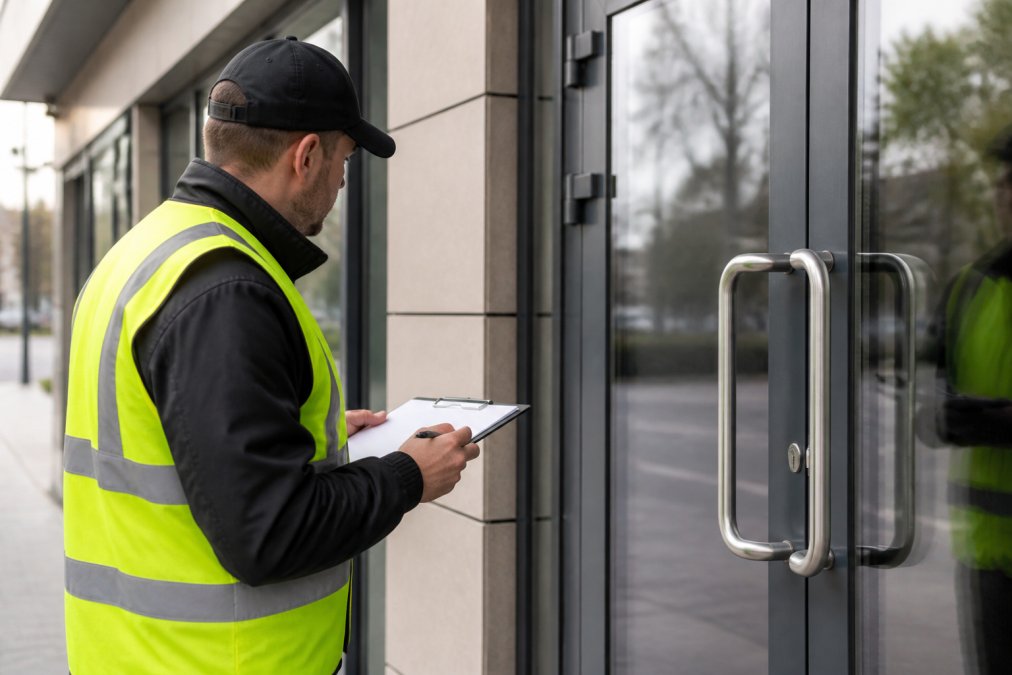
A proper site risk assessment maps your actual operational vulnerabilities. Most owners skip this step, assuming they already know their site, a costly mistake. You'll identify things you've walked past a hundred times: a window propped open for ventilation, a back entrance used so rarely nobody remembers it exists, unmonitored storage with valuable inventory.
Document the assessment thoroughly. Photograph entry points and measure response times by checking how long it takes a vehicle to reach different areas from key access roads. This baseline directly influences which rapid alarm response strategy will work for you.
Identify high-risk times and areas. Most commercial break-ins happen between 10 PM and 5 AM (fbi.gov). Retail stores lose more to internal theft during shift changes (peer-reviewed research). Warehouses are vulnerable when loading docks are in use but staff attention is divided. Your assessment should pinpoint these patterns specific to your operation.
Design Your Back-to-Base Alarm Monitoring System
Back-to-base alarm monitoring is the foundation of rapid alarm response. When your alarm triggers, the signal travels to a remote monitoring centre staffed 24/7. The operator receives the alert, verifies activation, and initiates your established response protocol. This system works because it removes the lag between detection and action.
System architecture matters more than most owners realise. Your alarm panel connects to the monitoring centre through multiple pathways: primary phone line, backup cellular connection, and internet-based reporting. Redundancy is critical. If your primary connection fails, the backup activates automatically, preventing scenarios where your alarm triggers but the monitoring centre never receives the signal.
Choose alarm sensors matched to your actual entry points. Magnetic door sensors on all external doors, glass break detectors on accessible windows, motion sensors in areas where movement shouldn't occur during closed hours, and pressure mats under high-value inventory. Sensor layout should reflect your site assessment, not a generic template.
Your monitoring centre agreement should specify response protocols explicitly. When the alarm triggers, the operator attempts to reach an authorised contact. If contact can't be established or the person can't provide the correct disarm code, the operator escalates to your nominated security patrol service immediately. Write these protocols into your contract.
Test the system quarterly. Trigger alarms during business hours and verify the monitoring centre receives the signal and contacts you within the agreed timeframe. Test during after-hours too. A monitoring system that hasn't been tested is a system you don't actually know works.
Establish Alarm Response Protocols for Businesses
Rapid alarm response requires documented protocols that every relevant person understands. Your protocol should cover three scenarios: false alarm, verified intrusion, and system malfunction.
False alarms are common. Your protocol should allow the monitoring centre to verify the alarm before dispatching security. Provide authorised contact numbers and establish a code word that confirms you're the legitimate property owner. If the monitoring centre reaches you and you disarm the system with the correct code, they cancel the dispatch. This saves time and money.
For verified intrusions, your protocol must be immediate. The monitoring centre contacts your nominated security patrol service simultaneously with attempting to reach you. The patrol vehicle dispatches without waiting for your confirmation. Time is critical, every minute between alarm trigger and security arrival increases the likelihood of theft or damage. Your contract should specify maximum response times.
Document what happens when security arrives. Do they enter the property or maintain a perimeter? Are they authorised to confront an intruder or only observe and report to police? These decisions depend on your insurance requirements, local regulations, and business nature. Write it down and brief your security provider.
Include communication protocols in your plan. Assign specific people to specific roles: who notifies the business owner, who contacts insurance, who manages media inquiries, who coordinates with police. Provide backup contacts.
Coordinate Commercial Security Patrol Services
Security patrols are the physical response component of rapid alarm response. When your alarm triggers and the monitoring centre escalates, a patrol vehicle is dispatched to assess the situation, secure the property if necessary, and report findings to you and police.

Select a patrol service with local presence. A provider based in your area reaches you faster than one operating from across the state. Response times improve dramatically when the patrol base is nearby. Tupper Security operates from a local Silkstone depot, meaning response times in Ipswich and the immediate corridor are significantly faster than national providers. The difference between a 15-minute response and a 45-minute response is the difference between catching someone on site and discovering the theft after the fact. emergency property restoration.
Verify that your patrol provider employs multi-class licensed operators. Licensing requirements in Queensland are specific (qld.gov.au). Verify licence numbers independently. Licensed operators understand legal constraints on their authority, insurance requirements, and proper evidence handling.
Establish a relationship with your patrol provider before you need them. Brief them on your property layout, alarm panels, camera systems, and access control readers. Provide photos of high-value areas and explain your business operations so they understand what's normal and what's suspicious.
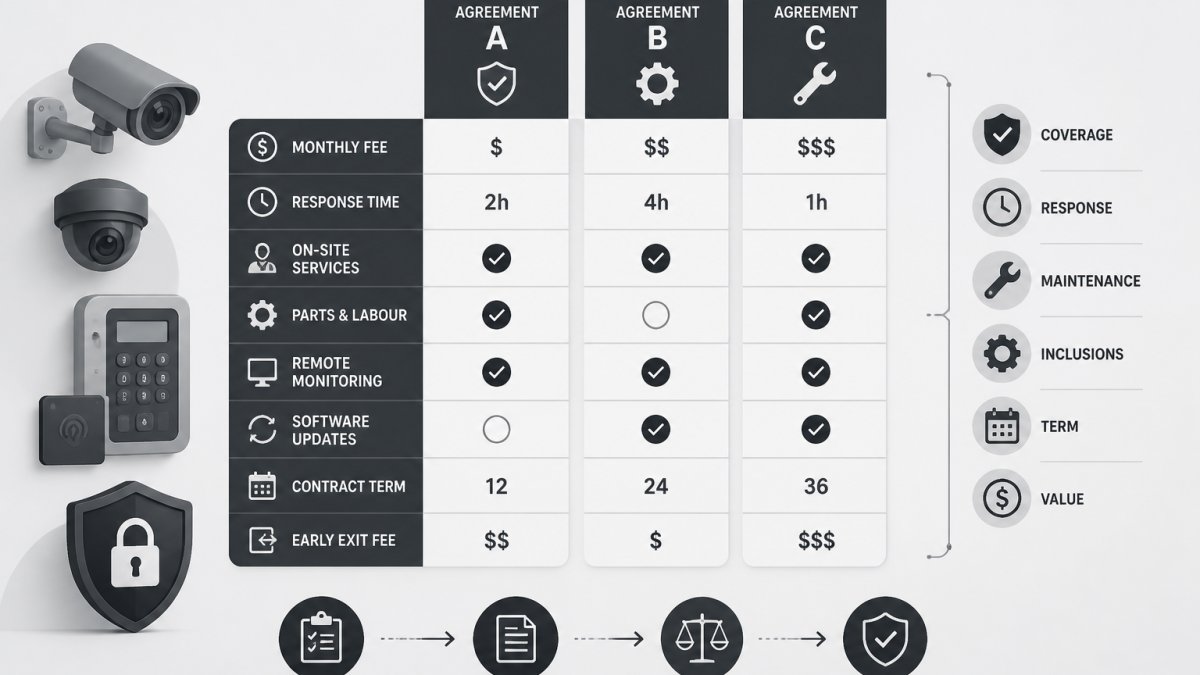
Coordinate patrol schedules with your monitoring centre. The monitoring centre should have the patrol service's direct dispatch number. When an alarm escalates, they should contact the patrol service directly, not require you to call them. Your contract should specify that the monitoring centre has authority to dispatch without waiting for your approval.
Arrange regular patrol visits during business hours too. Visible security patrols deter theft and create security for your staff and customers.
Integrate Surveillance and Access Control Systems
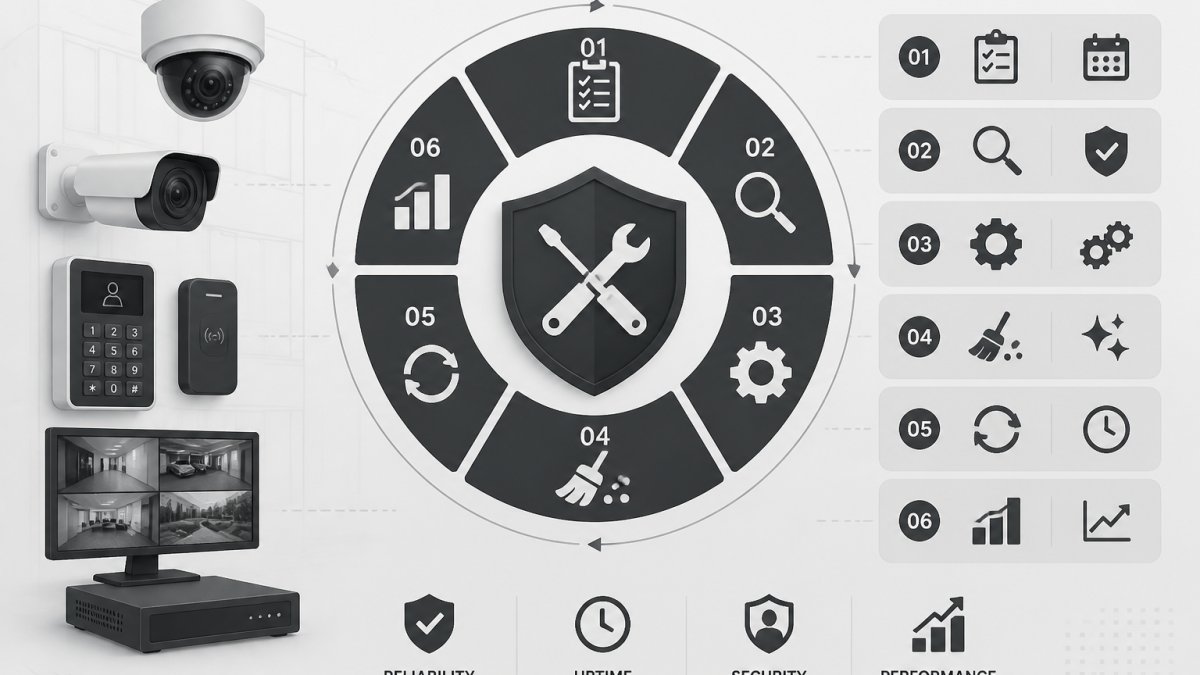
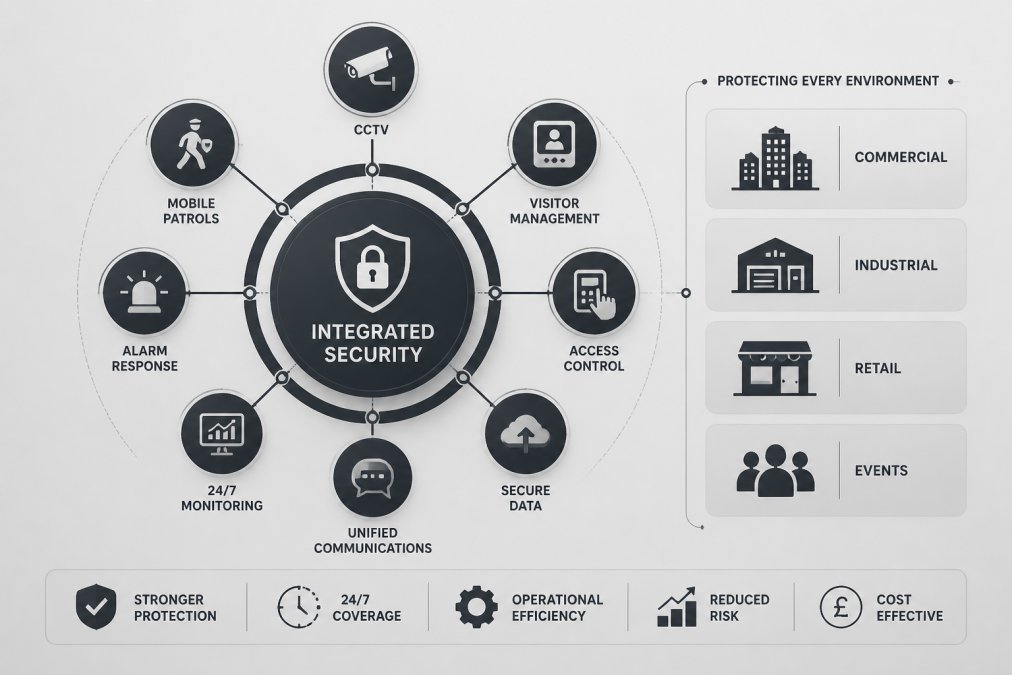
CCTV surveillance and access control systems complement alarm monitoring and patrols. When an alarm triggers, surveillance footage shows exactly what triggered it. Access control logs show who entered and exited, and when. This integration transforms rapid alarm response from reactive to evidence-based.
Install surveillance cameras at all entry points and in high-value areas with adequate resolution to identify faces and read licence plates. Night-vision capability is essential for after-hours monitoring. Position cameras to capture activity without blind spots.
Access control systems replace traditional keys with electronic credentials. Employees use keycards, PIN codes, or biometric readers to unlock doors. The system logs every access: who entered, when, and which door they used. This creates an auditable record. If something goes missing, you can review the access log and determine exactly who had the opportunity.
Integrate these systems with your alarm monitoring. When an alarm triggers, the monitoring centre should be able to view recent surveillance footage and access control logs. This information helps them make better decisions about escalation.
Cloud-based systems provide remote accessibility. You can view live surveillance feeds from your phone or computer and review access logs without being on site. This flexibility is particularly valuable for multi-site operations.
Ensure your surveillance and access control systems integrate with your rapid alarm response protocols. Brief your security provider on system operation and how to request footage if needed.
Test and Document Your Rapid Alarm Response Plan
A security plan that's never tested is a plan you don't actually know works. Schedule quarterly tests of your entire system.
Start with alarm system testing. Trigger a sensor during business hours and verify the monitoring centre receives the signal and contacts you. Test the disarm code and verify cancellation when you provide the correct code. Document results: time from trigger to monitoring centre contact, time from contact to cancellation.
Conduct after-hours tests too. Verify the monitoring centre's after-hours contact procedures work and that the security patrol service receives the escalation. Time the patrol response from dispatch to arrival. If response times are longer than expected, investigate why.
Test communication with all parties involved. Verify the monitoring centre has current contact information for you, your security provider, and police. Confirm your security provider has current information about your property layout and protocols.
Document everything. Create a test log recording the date, time, which system was tested, results, and any issues identified. Keep records of your monitoring centre agreement, patrol service contract, and surveillance system specifications. Maintain current photos of your property, entry points, and high-value areas.
Update your protocols annually. Review what worked during tests and what didn't. Update contact information as staff changes occur. Refresh your property assessment if you've made changes to layout or operations.
Conclusion
Setting up rapid alarm response for commercial property requires assessment, system design, documented protocols, and regular testing. When an alarm triggers at 2 AM, you want systems in place that work automatically, with no confusion, delays, or communication gaps.
Tupper Security has helped commercial property owners across Ipswich and South-East Queensland implement these systems. Our multi-class licensed operators conduct thorough site assessments, design customised monitoring and patrol protocols, and maintain 24/7 response capability. We integrate your alarm systems, surveillance, and access control into a cohesive response plan that works when it matters. Request a quote to discuss how rapid alarm response can protect your property.
Frequently Asked Questions
Q: What is the difference between back-to-base monitoring and self-monitoring?
A: Back-to-base monitoring means a professional monitoring centre receives alarm signals 24/7 and dispatches emergency services or security patrols immediately. Self-monitoring relies on you or your staff to respond to alerts via an app or keypad. Back-to-base is faster and more reliable because trained operators verify threats and initiate response protocols without delay, reducing false alarm penalties and response time.
Q: How quickly should security arrive after an alarm trigger at my commercial property?
A: Response time depends on your location and patrol coverage. Most rapid alarm response systems aim for 10-20 minutes in urban and suburban areas. Factors affecting speed include distance from the patrol base, traffic, and whether officers are already nearby. Verify response time guarantees in writing before signing any agreement, and ask whether times are measured from alarm trigger or from dispatch notification.
Q: What legal requirements apply to commercial alarm systems in Australia?
A: Commercial alarm systems must comply with Australian Standards AS/NZS 3786 for security alarm systems. Security personnel responding to alarms must hold a current Queensland Security Licence (Class 1, 2, or 3) issued under the Security Providers Act 1997. Your monitoring centre should be licensed and compliant with state regulations. Always verify that your provider holds the appropriate licence and follows documented emergency response protocols.
Q: Can I integrate my existing CCTV with an alarm response system?
A: Yes. Modern CCTV systems can integrate with alarm monitoring centres so that when an alarm triggers, footage is automatically pulled up for threat verification. Integration requires compatible hardware and software, and both systems must communicate via secure networks. A site assessment will identify whether your existing equipment can be integrated or if upgrades are needed. Integration improves verification speed and reduces false alarms.
This article was written using GrandRanker