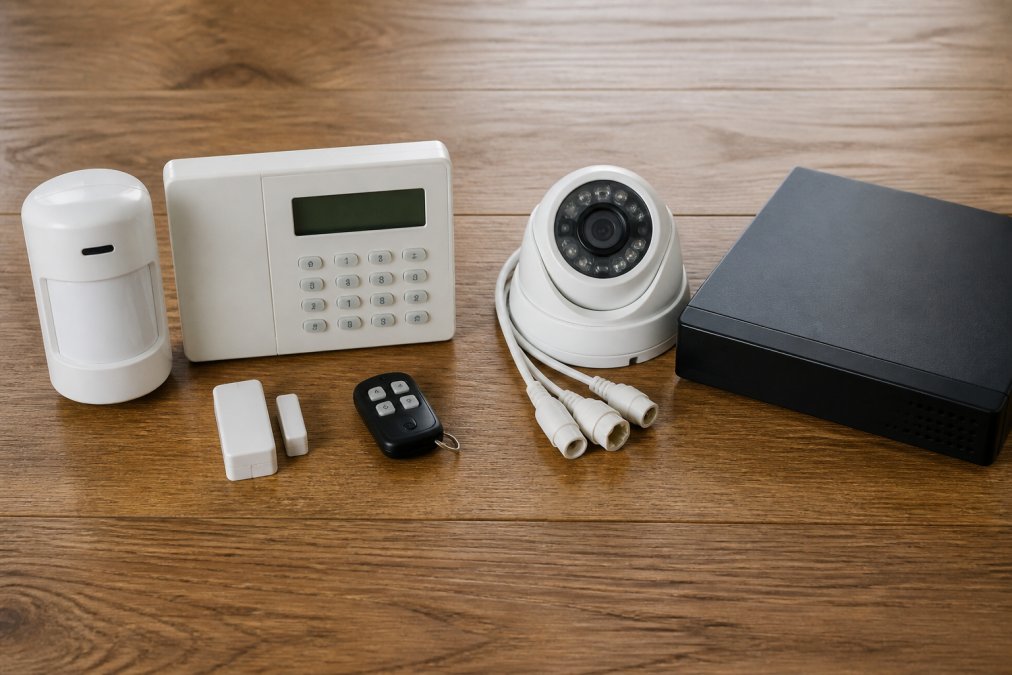
 comparison
Eximm vs DSA Security Comparison: Which Wins in 2026?
Table of Contents
- Eximm vs DSA Security Comparison: What the SERP Gets Wrong
- Head-to-Head Comparison Table: Eximm vs DSA Security
- Eximm Security Reviews Australia: Strengths and Gaps
- DSA Security Brisbane Reviews: Strengths and Gaps
- 24/7 Alarm Monitoring Australia: How Both Providers Stack Up
- CCTV Installation Gold Coast and SEQ: Coverage Compared
- Hybrid Security Models and Cost-Benefit Analysis for SMBs
- Which Provider Wins for Your Specific Security Needs?
Last Updated: July 30, 2026
The eximm vs dsa security comparison is one of the most searched queries among South-East Queensland property managers and business owners. At Tupper Security, we track this question closely because it comes up in almost every initial consultation across Ipswich, Brisbane, and the Gold Coast corridor. Here's what most comparison guides get wrong: they treat this as a cryptographic debate when, for the majority of Australian SMBs and homeowners, the real question is about physical security providers operating under Queensland licensing. Below, we'll cut through that confusion and show you where each provider genuinely performs and where each falls short.
Eximm vs DSA Security Comparison: What the SERP Gets Wrong
The biggest problem with most eximm vs dsa security comparisons online is intent fragmentation. Search the phrase and you'll get a mix of physical security company reviews, cryptographic algorithm explainers, and generic surveillance guides that serve none of these audiences well.
For physical security in Queensland, both Eximm and DSA Security operate as licensed providers under the Security Providers Act 1993 (Qld), which requires individual and firm licensing through the Queensland Police Service. According to Queensland Police Service Security Industry licensing requirements, all security firms operating commercially in Queensland must hold a current firm licence, and their operators must carry individual licences covering the specific classes of work they perform.
A firm licence number is publicly verifiable. Tupper Security holds QLD Firm Licence #4572076, which is checkable on the QPS register. Before you sign any security contract in Queensland, verify the firm licence of any provider you're evaluating. A provider without a current, verifiable licence is an immediate disqualifier.
The second thing most comparisons miss is the difference between a generic security schedule and a site-specific risk assessment. Many providers offer a standard patrol route and monitoring package. Fewer conduct a genuine independent risk assessment before designing a protection plan. That distinction matters enormously for sites with unusual access points, shift-based staffing, or high-value inventory.
Head-to-Head Comparison Table: Eximm vs DSA Security
The table below summarises the key criteria relevant to Queensland buyers comparing these two providers against Tupper Security as the benchmark.
| Criteria | Eximm | DSA Security | Tupper Security |
|---|---|---|---|
| QLD Firm Licence | Publicly listed | Publicly listed | #4572076 verified |
| Primary Service Area | South-East QLD | Brisbane / SEQ | Ipswich, Brisbane, Gold Coast corridor |
| 24/7 Alarm Response | Offered | Offered | Local Silkstone depot dispatch |
| Site Risk Assessment | Generic review | Generic review | Independent, site-specific |
| CCTV Installation | Standard packages | Standard packages | High-resolution IP, remotely accessible |
| Access Control | Available | Available | Auditable and revocable systems |
| Mobile Patrols | Yes | Yes | Tailored patrol schedules |
| Retail Loss Prevention | Available | Available | Documented shrinkage reporting |
| Multi-class Licensed Operators | Varies by job | Varies by job | Standard across all deployments |
| Established | Not publicly stated | Not publicly stated | Since 2014 |
| Google Rating | Not independently verified here | Not independently verified here | 4.4 stars |
| Best For | General commercial | Brisbane-centric commercial | SEQ sites needing rapid response |
Eximm Security Reviews Australia: Strengths and Gaps
Where Eximm Performs Well
Eximm operates across South-East Queensland and has built a recognisable presence in the commercial security market. For businesses seeking standard alarm monitoring, CCTV installation, and mobile patrol services packaged together, Eximm offers a consolidated service model that reduces administrative burden. Their coverage footprint across SEQ is reasonably broad, which matters for multi-site operators who want a single point of contact.
Where Eximm Falls Short
A common observation among businesses that have moved away from larger bundled providers is that schedule flexibility is limited. Patrol routes and alarm response priorities tend to follow standardised protocols rather than being built around how a specific site actually operates. For a construction site with variable shift patterns or a retail store with irregular trading hours, this rigidity creates coverage gaps.
The other gap is in post-incident reporting. Documented shrinkage reporting and auditable access logs are increasingly important for insurance compliance and internal accountability. Generic monitoring packages often lack the granularity that operations managers and insurers now expect. According to Australian Security Industry Association Limited industry standards, professional security providers should deliver incident documentation that meets the evidentiary standards required for insurance claims and workplace investigations.
DSA Security Brisbane Reviews: Strengths and Gaps
Where DSA Security Performs Well
DSA Security has a strong footprint in the Brisbane metropolitan area and is recognised for commercial clients seeking static guard deployment and event security. For event organisers in Brisbane requiring crowd control and RSA-compliant security personnel for public functions, DSA has the licensing and staffing structure to handle larger-scale deployments. Their Brisbane-centric model means response infrastructure is concentrated in the metro area, which can work in their favour for inner-city clients.
Where DSA Security Falls Short
The Brisbane concentration is also a limitation. For clients in Ipswich, the Lockyer Valley, or the outer Gold Coast corridor, DSA's response times from their primary operational base extend considerably. A provider whose depot is 45 minutes from your site during off-peak hours is not a 24/7 rapid-response provider in any meaningful sense.
The other consistent gap is in access control granularity. Auditable, revocable access control systems that generate time-stamped logs for each entry event are the standard that warehouses, hospitals, and multi-tenant sites now require. A system that can't produce a clean audit trail on demand is a liability, not an asset.
24/7 Alarm Monitoring Australia: How Both Providers Stack Up
Genuine 24/7 alarm monitoring means more than having a phone answered after hours. It means a monitored response centre receives the alert, assesses the signal, and dispatches a licensed operator who can physically reach your site within a response window that actually matters.
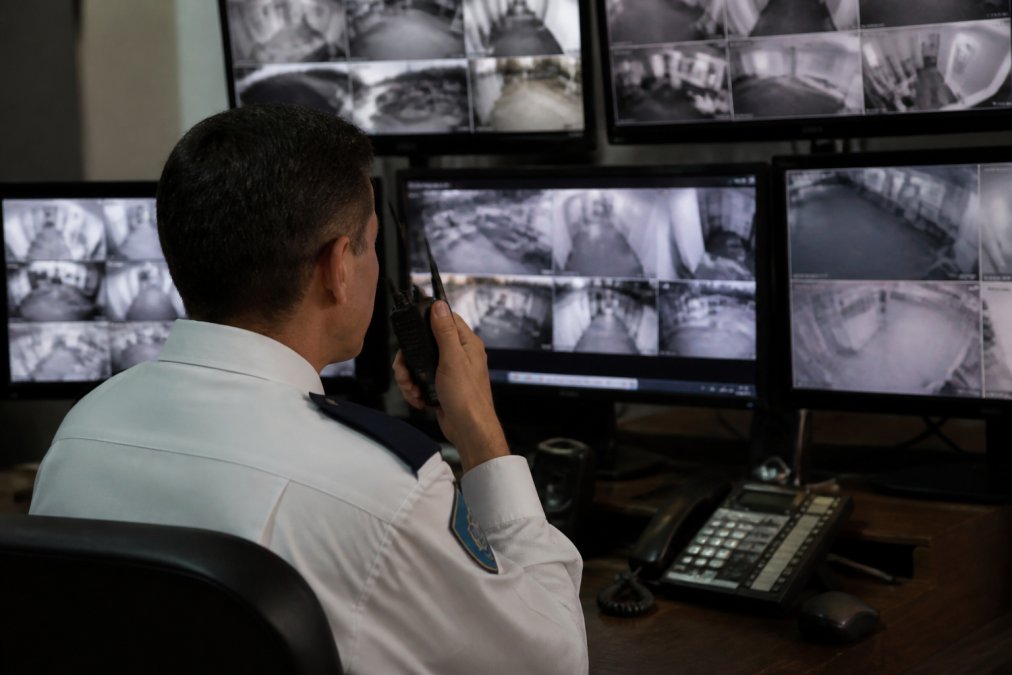
Both Eximm and DSA Security offer alarm monitoring as part of their service packages. The critical variable is depot-to-site transit time for your specific address. A monitoring centre can be staffed around the clock, but if the nearest mobile patrol unit is 40 minutes from your property at 2 AM, the monitoring is largely academic.
Tupper Security operates from a local Silkstone depot, which directly addresses the transit time problem for clients across Ipswich and the immediate corridor. For a homeowner in Silkstone or a warehouse manager in Wacol, the difference between a 15-minute and a 45-minute response is the difference between intercepting an incident and arriving after the fact.
According to ASIAL's guide to monitoring centre standards and response protocols, alarm response effectiveness is directly correlated with the proximity of mobile patrol resources to monitored sites. For operations managers evaluating 24/7 alarm monitoring across multiple SEQ sites, ask any provider: "Where is the nearest patrol unit to my site at 2 AM on a Tuesday, and what is the documented average response time to my postcode?" If a provider can't answer with a specific number, the 24/7 claim deserves scrutiny.
CCTV Installation Gold Coast and SEQ: Coverage Compared
CCTV installation quality varies significantly between providers in three key areas: camera resolution, remote accessibility, and integration with access control systems.
Standard CCTV packages from many providers still deploy cameras that produce footage unusable for evidentiary purposes. Low-resolution images create a false sense of security without delivering the documentation capability that justifies the investment. High-resolution IP cameras with remote accessibility are the baseline standard for any serious commercial installation in 2026.
For Gold Coast and broader SEQ clients, the differentiator is not the hardware spec sheet but the installation methodology: camera placement based on actual site risk assessment, field of view calibrated to cover blind spots, and integration with access control logs so that a door entry event and the corresponding camera feed are time-synchronised.
Tupper Security's approach to CCTV installation uses high-resolution, remotely accessible IP surveillance as the standard deployment. Remote accessibility means that a property manager overseeing three sites across SEQ can review live or recorded footage from any site on a mobile device without needing to be on-site.
Hybrid Security Models and Cost-Benefit Analysis for SMBs
Why a Single-Provider Model Can Leave Gaps
The conventional wisdom in commercial security procurement is to consolidate everything with one provider for simplicity. This is understandable from an administrative perspective but can leave coverage gaps. A single-provider model works well when the provider's capability set genuinely matches the site's risk profile across all dimensions: physical patrols, electronic surveillance, access control, and alarm response. Most providers have a primary competency and fill the remaining service lines with subcontracted or lower-capability offerings.
Hybrid security models, where a primary provider handles high-criticality functions and specialist subcontractors handle specific technical installations, can produce better outcomes. The trade-off is coordination complexity. For SMBs without a dedicated facilities manager, that complexity often exceeds the benefit.
Cost-Benefit Considerations for Small and Medium Businesses
The most common objection from small retail operators and SMB owners is that premium security services are sized for enterprise clients. A tailored protection plan built around a small retail site's actual operating hours, inventory risk profile, and access patterns is not inherently more expensive than a generic package. It is, however, more effective.
The relevant cost-benefit calculation is not the monthly security fee in isolation but the fee weighed against the cost of a single incident: inventory loss, property damage, business interruption, and insurance premium impact. For retail stores with documented shrinkage reporting, the reporting itself can support insurance negotiations and internal accountability processes that reduce losses over time.
For current pricing specific to your site's requirements, visit Tupper Security's pricing page and request a quote tailored to your location and risk profile. Generic pricing guides are rarely useful because a single-site retail store in Ipswich and a three-site warehouse operation in the Logan corridor have fundamentally different requirements.
Which Provider Wins for Your Specific Security Needs?
The honest answer to the eximm vs dsa security comparison is that neither provider is the universal winner. The right choice depends on your site's location relative to the provider's operational depot, the depth of risk assessment offered before service design, and whether the provider's licensed operator classes match your site's specific requirements.
For clients in the Ipswich corridor, Silkstone, and the broader western Brisbane region, depot proximity strongly favours a provider with local infrastructure. A 24/7 alarm response commitment from a provider whose nearest unit is 40 minutes away is a materially different product from the same commitment delivered by a provider with a local depot.
For Brisbane CBD and inner-metro commercial clients with standard risk profiles, DSA Security's metro concentration may be adequate. For Gold Coast and outer SEQ clients evaluating CCTV installation and access control, the quality of the installation methodology matters more than the provider's brand recognition.
The eximm vs dsa security comparison ultimately comes down to fit, not ranking. What the comparison consistently reveals is that neither provider's standard offering includes the combination of independent site risk assessment, multi-class licensed operators across all service lines, and local depot-based rapid response that characterises a genuinely tailored security solution.
For event organisers in Brisbane, property managers across multi-site SEQ operations, and retail operators who need documented loss prevention reporting, evaluation criteria extend well beyond patrol frequency and camera count. According to ASIAL's consumer guide to choosing a security provider, buyers should verify licence currency, request site-specific proposals, and confirm that response time commitments are documented in the service agreement, not just stated verbally.
The eximm vs dsa security comparison is a useful starting point. It should not be the ending point.
Choosing between security providers in South-East Queensland is a decision with real consequences if you get it wrong. Tupper Security has operated from its local Silkstone depot since 2014, delivering 24/7 alarm response, high-resolution IP surveillance, and auditable access control systems built around how your specific site operates, not a generic schedule. Multi-class licensed operators handle every service line directly. Request a quote from Tupper Security and get a protection plan designed around your site's actual risk profile.
Frequently Asked Questions
What security services do Eximm and DSA Security offer in Australia?
Both Eximm and DSA Security offer a range of physical security services including mobile patrols, static guarding, alarm response, and CCTV installation across parts of Australia. Their service breadth and licensing class coverage can vary by state. For South-East Queensland clients comparing options, it is worth confirming whether a provider holds the relevant Queensland Security Licence classes for the specific services you require, as not all providers are licensed for every service type.
Which areas do Eximm and DSA Security cover in Queensland?
Coverage areas for both providers are primarily concentrated in South-East Queensland, including Brisbane and surrounding regions. However, response time guarantees and patrol density can differ significantly depending on how close a provider's depot is to your site. Providers operating from a local base, such as a Silkstone or Ipswich-area depot, can typically offer faster verified response times than those dispatching from a more distant location.
Do Eximm and DSA Security offer 24/7 alarm monitoring in Australia?
Both providers advertise 24/7 alarm monitoring capabilities for the Australian market. When evaluating 24/7 alarm monitoring in Australia, the critical distinction is not just whether monitoring is available around the clock, but how quickly a physical response is dispatched after an alarm event and whether that response is documented and auditable. Always ask for average response time data and whether incident reports are provided after each callout.
How do the pricing structures of Eximm and DSA Security compare?
Neither Eximm nor DSA Security publish standardised pricing schedules publicly, which is common across the Australian security industry. Pricing for mobile patrols, static guards, and CCTV installation typically depends on site size, patrol frequency, number of cameras, and contract length. For an accurate cost-benefit comparison relevant to your site, requesting itemised quotes from multiple licensed providers, including a detailed scope of services, is the most reliable approach.
What should I look for in CCTV installation providers in South-East Queensland?
When comparing CCTV installation options across South-East Queensland and the Gold Coast, prioritise providers who conduct an independent site risk assessment before recommending a system. Key factors include camera resolution, remote access capability, storage duration, and whether the system integrates with your existing access control infrastructure. Confirm the installer holds the appropriate Queensland Security Licence and that post-installation support and maintenance are included in the service agreement.
This article was written using GrandRanker