 how-to
Event Crowd Control Security Tips: 7 Essential Strategies
Table of Contents
- Why Event Crowd Control Security Matters
- Conduct an Event Security Risk Assessment Template
- Deploy Security Personnel Using Crowd Control Guard Ratios
- Manage Queue Flow and Prevent Bottlenecks
- Install Clear Wayfinding Signage and Access Control
- Establish Communication Protocols and Incident Response
- Implement Bag Screening and Identification Checks
- Plan Emergency Evacuation Procedures for Events
Last Updated: August 28, 2026
Why Event Crowd Control Security Matters
When thousands of people converge on a single venue, the margin between a smooth event and a dangerous situation narrows dramatically. Event crowd control security isn't an afterthought, it's the foundation that allows attendees to enjoy themselves without risk.
Poor crowd management has real consequences. Bottlenecks at entry points create frustration and vulnerability. Unclear evacuation routes leave people confused if an emergency strikes. Inadequate security personnel means incidents escalate before anyone responds. The venues that operate smoothly are the ones that thought through crowd flow, identified risk points, and briefed their teams properly.
Conduct an Event Security Risk Assessment Template
A risk assessment is where every solid event security plan begins. Start by mapping your venue's physical layout, identifying every entry point, exit, and corridor. Note where bottlenecks naturally form and mark high-risk zones where large crowds concentrate. Document the location of emergency exits, first aid stations, and assembly points outside the venue.
Next, estimate your expected attendance realistically. If you're expecting 500 people, plan for 550. If you're expecting 2,000, plan for 2,400. This number drives every other decision: how many security personnel you need, how many screening checkpoints to set up, and how wide your queues will be.
Identify venue constraints and capacity limits
Your venue has a maximum safe occupancy based on fire codes and building regulations. Exceeding it creates crowd density that becomes dangerous. Calculate capacity based on floor space: allow approximately 1 square metre per person in standing areas and 0.5 square metres per person in seated sections.
Once you know your capacity, set your ticket sales limit below it. If your venue safely holds 1,000 people, sell tickets for 850. This buffer prevents the situation where a few extra walk-ins or staff members push you over the edge. Document any physical constraints that affect crowd flow: narrow doorways, low ceilings, pillars, steps, or uneven flooring. These are pinch points where crowd density increases and risk rises.
Map entry, exit, and bottleneck points
Draw a floor plan of your venue and mark every entrance and exit. Trace the path attendees will take from arrival through departure. Identify bottlenecks, places where the flow naturally slows, and ask: Can I add another checkpoint to split the crowd? Can I widen the corridor? Can I create an alternative route? Even one small change can significantly improve crowd flow.
Mark your emergency exits clearly on the plan. You need enough exit capacity to evacuate everyone in approximately 8-10 minutes. If your venue has only one small exit for 500 people, that's a serious vulnerability.
Deploy Security Personnel Using Crowd Control Guard Ratios
The number of security personnel you need depends on crowd size, venue complexity, and expected risk level.
Calculate staffing based on expected attendance
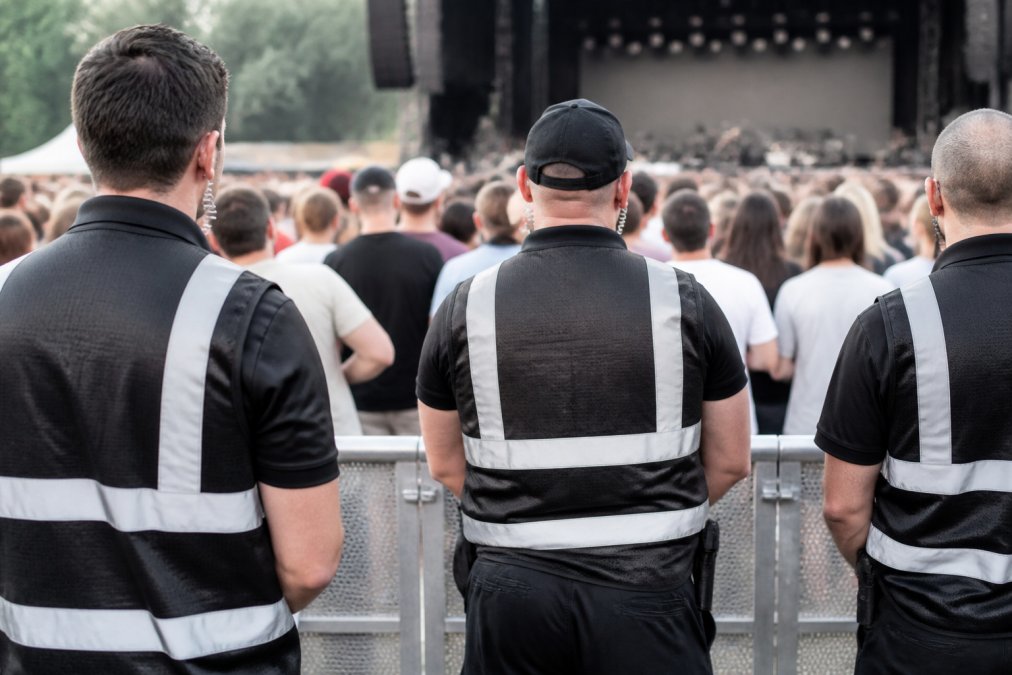
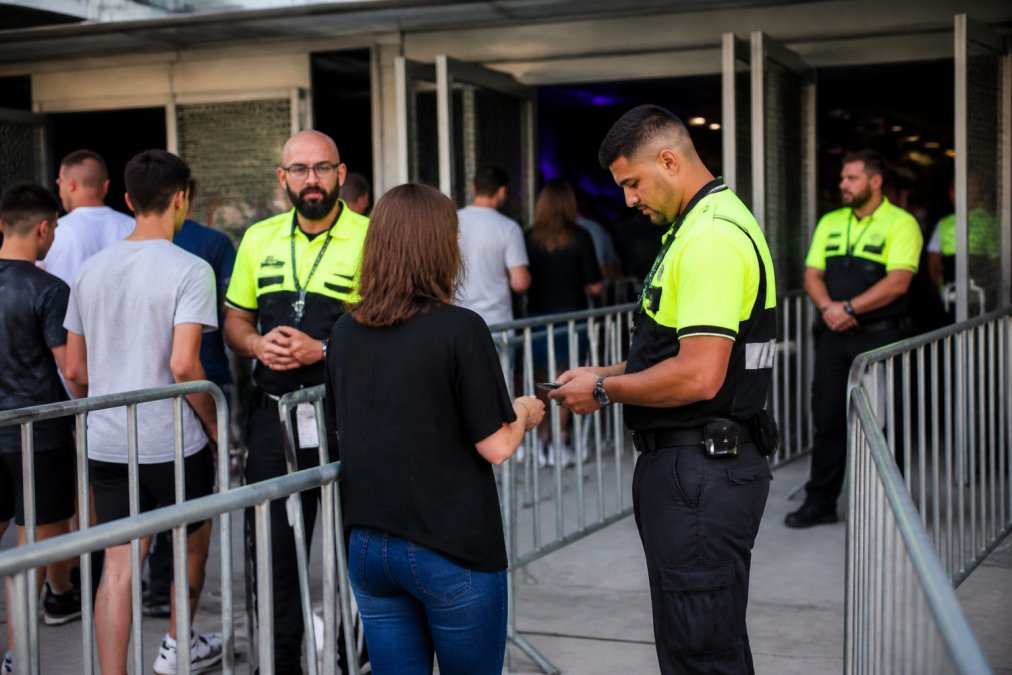
For a general event with moderate risk, aim for approximately 1 security guard per 50-75 attendees. For higher-risk events (large public concerts, festivals, sporting events), increase this to 1 per 30-50 attendees. For VIP events or high-security situations, you may need 1 per 20 attendees or fewer.
This ratio is a starting point. A 500-person seated conference needs fewer guards than a 500-person standing festival. Adjust upward if your venue has difficult layouts, multiple separate areas, or high-risk features. Remember that guards rotate: if your event runs for 8 hours and you need 10 guards on site at any time, you'll need 20 guards total if each works a 4-hour shift.
Position guards at critical zones
Concentrate guards where they matter most. Entry and exit points need guards to check identification and conduct bag screening. Queue management areas need guards to prevent chaos and keep emergency routes clear. High-density areas like stages or bars need guards to monitor crowd density. Perimeter security may be needed to prevent unauthorised entry.
Brief every guard on their specific zone, including the layout, expected crowd size, emergency exits, and communication protocols.
Manage Queue Flow and Prevent Bottlenecks
Establish clear queue barriers using rope, stanchions, or temporary fencing. Create multiple queue lines whenever possible: two queues of 250 people move faster than one queue of 500. Assign a staff member to each queue to keep it organised and moving.
Monitor queue length throughout the event. If a queue is growing too long, open another checkpoint or add staff. If a queue is blocking an emergency exit, reorganise immediately. Communicate with people in queues about wait times and delays, people tolerate long waits better when they understand why.
Install Clear Wayfinding Signage and Access Control
Install directional signage at every decision point. Use colour coding if your venue has multiple areas: green signs for exits, blue signs for facilities, yellow signs for emergency information. Mark emergency exits prominently, they should be lit, clearly labelled, and impossible to miss.
Establish access control at sensitive areas. VIP sections, backstage areas, equipment rooms, and staff-only zones should have clear boundaries using barriers, signage, or staff to prevent unauthorised access. preventing heat stress.
Establish Communication Protocols and Incident Response
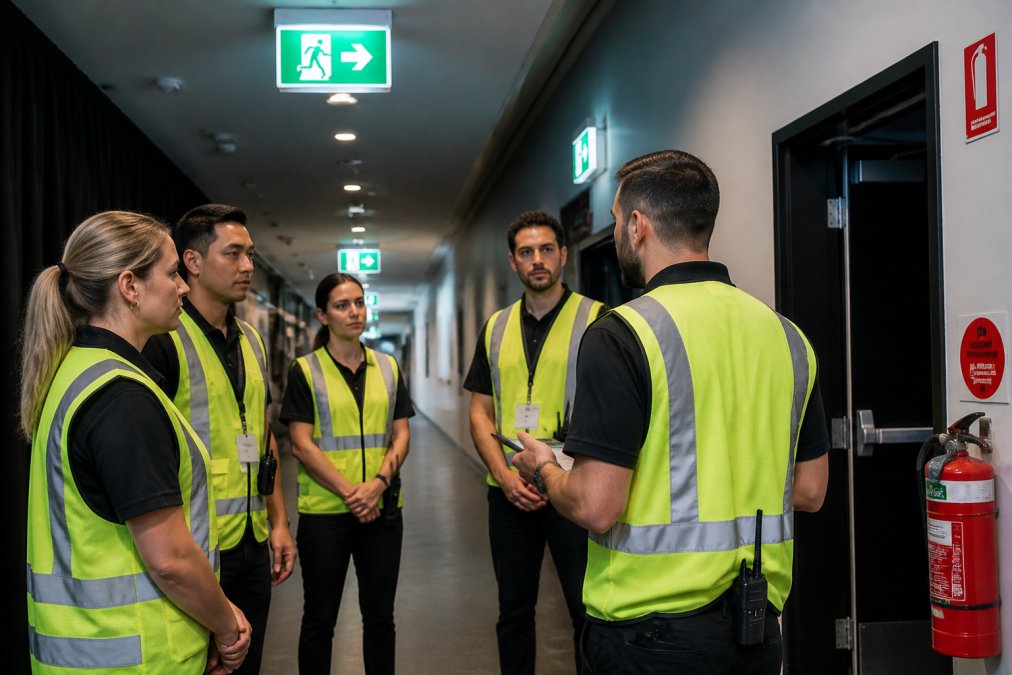
Brief your entire team before the event starts. Every staff member should know basic emergency procedures, how to contact security, and where emergency exits are. Establish a communication system (radio, mobile phones, or combination) and test it before the event to identify dead zones.
Create an incident log to document what happened, when, where, who was involved, and how it was resolved. Establish clear decision-making authority: who decides whether to evacuate? Who calls emergency services? Who communicates with attendees?
Implement Bag Screening and Identification Checks
Set up screening stations at every entry point, approximately 1 station per 100-150 expected attendees. Train screeners on what they're looking for and your specific event rules. Use bag checks as standard procedure, visually inspecting for obvious prohibited items.
Implement identification checks at the entry point to verify attendees match their tickets and identify anyone on a restricted list. Consider metal detection only if the risk justifies the entry delay.
Plan Emergency Evacuation Procedures for Events
An evacuation plan is your insurance policy.
Design evacuation routes and assembly points
Identify multiple evacuation routes from your venue, don't rely on the main entrance. Map these routes on your floor plan and mark them with signage. Calculate how long it takes to evacuate using each route by walking at normal pace, then brisk pace.
Establish assembly points outside the venue at least 100 metres from the building, away from vehicle traffic, with adequate space for your expected crowd. Mark assembly points clearly and ensure adequate lighting if your event runs into evening hours.
Brief staff and conduct drills
Every staff member should know the evacuation procedure. Conduct a practice evacuation if possible, or at least walk through the procedure with your security and staff team. Assign staff members to specific roles during evacuation: some guide people toward exits, some manage assembly points, some account for people, some communicate with emergency services.
Establish a communication system for evacuation using a public address system, staff announcements, or alarm signals that are unmistakable. Document your evacuation plan in writing, including routes, assembly points, staff roles, and communication procedures, and share it with all staff and local emergency services if appropriate.
Event crowd control security succeeds when planning happens before the event, not during it. A risk assessment identifies vulnerabilities. Clear staffing ratios and guard positioning ensure adequate coverage. Queue management and wayfinding keep people moving safely. Communication protocols and incident response procedures prepare your team for problems.
Tupper Security has guided event organisers through this process for years, helping them identify overlooked risks and implement systems that work. Our team conducts independent site risk assessments tailored to your specific venue and event type. We brief your staff, position security personnel strategically, and establish the communication protocols that keep events running smoothly. Request a quote to discuss your event's specific security needs and see how our licensed operators can help ensure your attendees remain safe throughout.
| Security Element | Purpose | Critical Success Factor |
|---|---|---|
| Risk Assessment | Identify vulnerabilities before they become incidents | Realistic capacity planning and bottleneck mapping |
| Guard Deployment | Provide visible security and rapid response | Correct ratio-based staffing and strategic positioning |
| Queue Management | Maintain crowd flow and prevent congestion | Multiple checkpoints and active monitoring |
| Wayfinding Signage | Reduce confusion and guide safe movement | Clear, visible signage at every decision point |
| Screening Procedures | Prevent prohibited items and identify risks | Efficient processes that don't create excessive delays |
| Evacuation Planning | Enable rapid, orderly exit in emergencies | Multiple routes, assembly points, and staff briefing |
| Communication Protocols | Ensure rapid response to incidents | Clear authority, tested systems, and documented procedures |
Frequently Asked Questions
Q: How do you determine the number of security guards required for an event?
A: Guard ratios depend on expected attendance, venue layout, and event type. A standard baseline is 1 guard per 100-150 patrons for general events, with higher ratios (1 per 50-75) for high-risk venues or events with alcohol service. Your event security risk assessment template should account for entry/exit points, VIP areas, and identified bottlenecks. Consult a licensed security provider to calculate staffing for your specific venue and crowd density.
Q: What should be included in an event security risk assessment template?
A: A comprehensive template covers venue floor plan and capacity, entry and exit point analysis, crowd flow patterns, identified bottlenecks, threat assessment and incident history, security personnel deployment, bag screening procedures, communication protocols, emergency evacuation routes, and post-event debriefing requirements. Document each element and assign responsibility. This structured approach reduces gaps and ensures consistent security across all event phases.
Q: What are the key principles of crowd management at events?
A: Effective crowd management combines risk mitigation, clear wayfinding, controlled access, and real-time monitoring. Establish queue management systems to prevent density spikes, deploy security personnel at high-traffic zones, use signage and communication to guide patron flow, conduct bag screening and identification checks at entry, and maintain open communication channels between staff. Regular monitoring allows you to adjust crowd density and respond to incidents before they escalate.
Q: How should emergency evacuation procedures for events be structured?
A: Design evacuation routes that account for venue layout and expected crowd density. Identify assembly points outside the venue, ensure all emergency exits are unobstructed and clearly marked, and brief all staff on their assigned roles. Conduct at least one full drill before the event. Establish communication protocols to alert patrons and coordinate with emergency services. Document the plan and review it with your security team and venue management to ensure rapid, orderly evacuation if needed.
This article was written using GrandRanker