 listicle
Commercial Security System Pricing 2026
Table of Contents
- Commercial Security System Pricing: What You're Actually Paying For
- Factors Influencing Commercial Security System Costs
- Commercial CCTV Installation Cost Breakdown
- Business Alarm Monitoring Fees and Contracts
- How to Verify Alarm Response Times Before Committing
- Total Cost of Ownership: Beyond the Installation Invoice
- Professional Installation vs DIY: The Real Financial Picture
- Conclusion
Last Updated: August 30, 2026
Commercial Security System Pricing: What You're Actually Paying For
Commercial security system pricing in Brisbane 2026 is more complex than a single installation quote. Most businesses discover this too late, after signing a contract that doesn't match their actual needs or budgets. The real cost sits across multiple components: upfront hardware and installation, monthly monitoring fees, maintenance, upgrades, and hidden expenses most providers gloss over until you're locked in.
At Tupper Security, we've spent over a decade helping South-East Queensland businesses decode what they're actually paying for when they invest in security. The difference between a security system comes down to what the system can actually do, how fast someone responds when it triggers, and whether it integrates with the rest of your operation.
This guide breaks down every cost driver so you can compare options with real numbers and understand where your money goes.
Factors Influencing Commercial Security System Costs
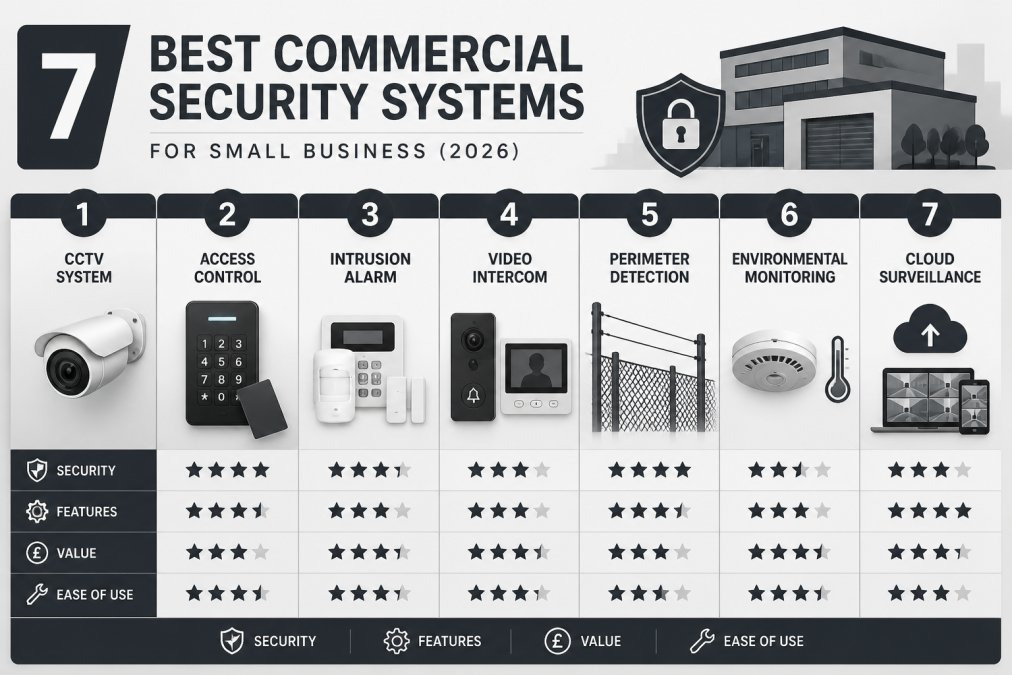
Commercial security system pricing depends on five core variables that stack on top of each other.
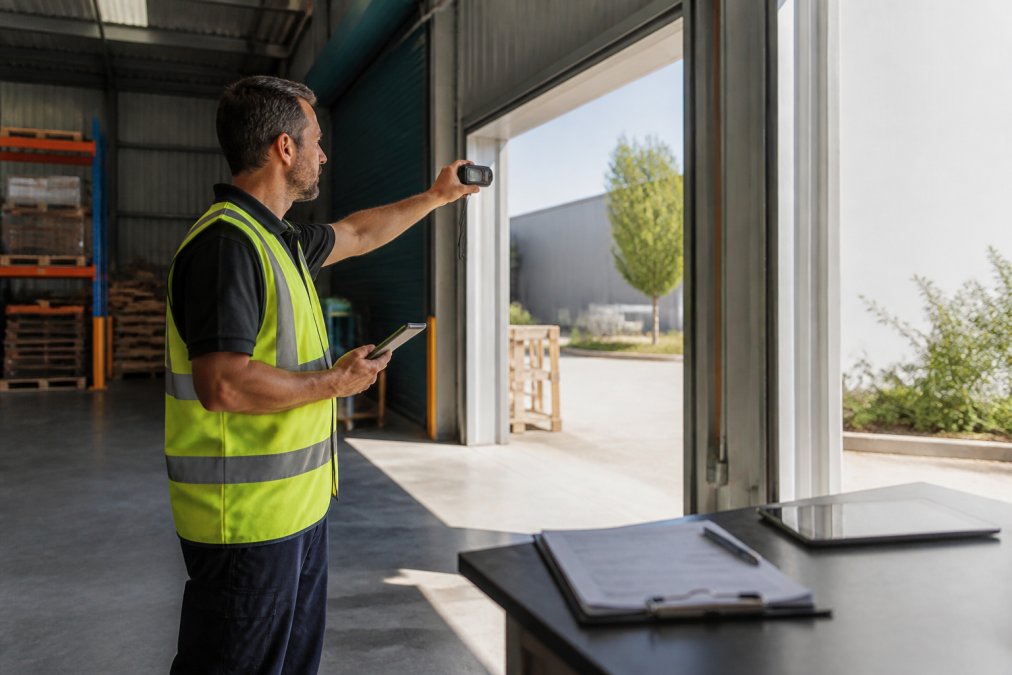
Site complexity often matters more than raw system size. A retail store with one entrance is straightforward. A multi-tenant office building with separate access zones, loading docks, and after-hours protocols is expensive because the system must enforce different rules for different areas. Access control systems that manage who can enter which doors at which times cost substantially more than simple perimeter alarms.
Camera resolution and placement drive costs upward quickly. Standard-definition systems record to a local hard drive. High-definition or 4K systems cost more upfront but capture clearer evidence and often include cloud storage, which adds monthly fees. Outdoor cameras in harsh weather require weatherproofing. The more coverage you want, the more cameras you need, and each one is another installation point.
Integration requirements are where costs escalate. If your building already has access control, fire systems, or building management software, a new security system needs to talk to those systems. Standalone systems are cheaper. Integrated systems cost significantly more to design and install because technicians must understand your entire infrastructure.
Professional installation is essential for commercial systems. A retail store might manage self-installation, but warehouses, offices, and multi-site operations require licensed installers who understand electrical codes, network infrastructure, and compliance requirements. Professional installation typically accounts for 30-50% of the total cost (bls.gov).
Monitoring and response services add recurring costs that often exceed the hardware itself over five years. A system that notifies you via app is cheaper than 24/7 professional monitoring with rapid dispatch. But if no one is there at 2 AM when the alarm triggers, an unmonitored system is just a notification you ignore.
Commercial CCTV Installation Cost Breakdown
CCTV systems are usually the largest visible cost in a commercial security quote.
A basic entry-level commercial CCTV system with four to six cameras, a network video recorder, and professional installation typically starts around $8,000-$12,000 (peer-reviewed research). Mid-tier systems with eight to twelve cameras and higher resolution cost $15,000-$25,000. Premium systems with sixteen or more cameras, 4K resolution, AI-powered detection, and cloud storage can exceed $35,000.
Camera type and resolution drive costs. Standard definition cameras are cheapest. High-definition (1080p) cameras provide clearer images. 4K cameras capture four times the detail and are increasingly common for commercial use, though they require more storage and network bandwidth. A retail store needs to identify faces at the till. A warehouse needs to track movement across large areas. A loading dock needs to capture license plates. Each use case drives different camera selection.
Storage options vary in cost. Local hard drive storage is cheaper upfront but requires you to manage the system yourself. Cloud storage adds monthly fees but provides redundancy and remote access. If your building loses power or someone damages the recorder, cloud-backed footage is still accessible.
Installation complexity affects labour costs. Running cables through walls, across roofs, or through conduit systems adds expense. A single-storey retail space with cable runs along the ceiling is straightforward. A multi-storey office building where cables need to run through walls and comply with electrical codes costs substantially more. Outdoor installations that require weatherproof housings add another layer.
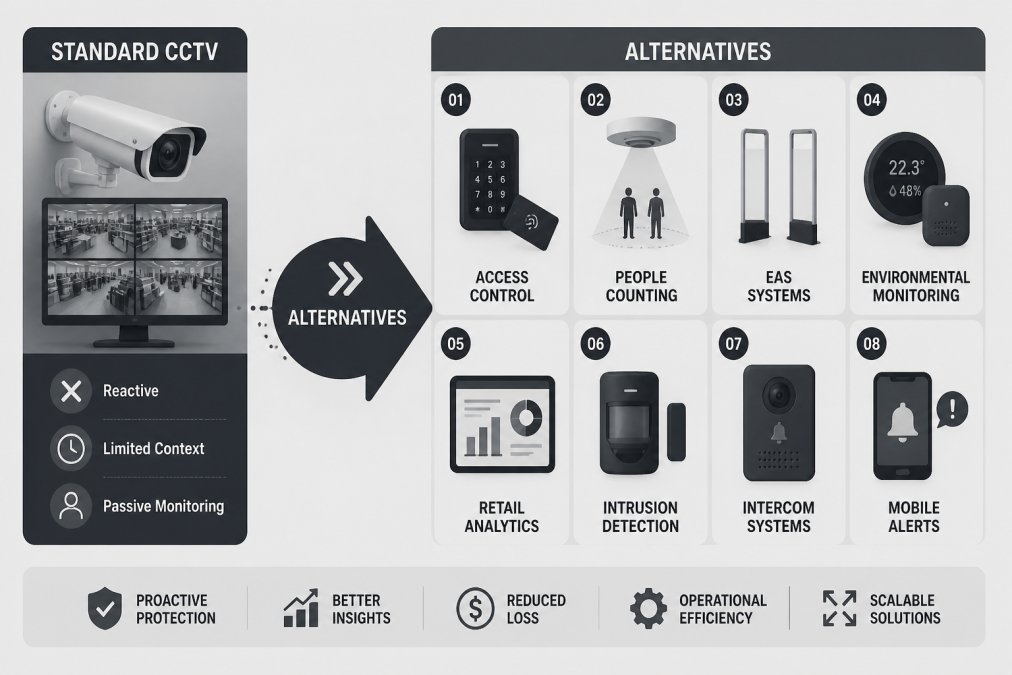
Integration with access control increases costs. If your CCTV system needs to trigger recordings when someone uses a keycard to enter a restricted area, integration costs apply. Standalone CCTV that just records continuously is simpler and cheaper.
Business Alarm Monitoring Fees and Contracts
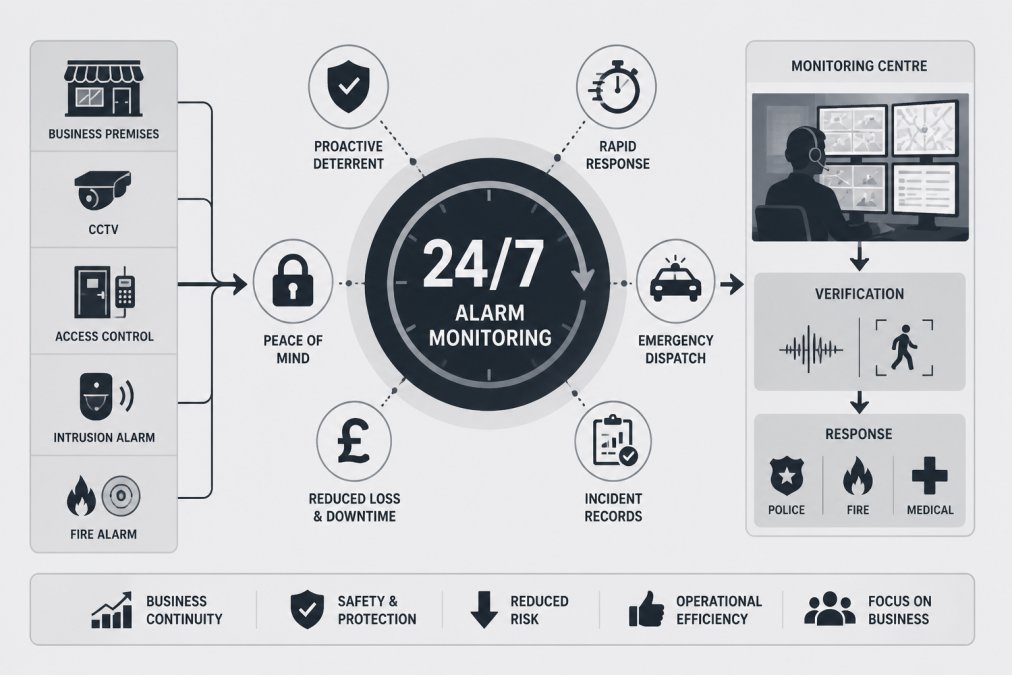
The monthly monitoring fee is where the real ongoing expense lives. Most businesses focus on the installation quote and overlook the contract terms that lock them in for years.
Alarm monitoring typically costs between $50 and $300 per month, depending on the monitoring centre's response model and your contract terms (bls.gov).
Self-monitoring is the cheapest option. Your system sends alerts to your phone or email, and you decide whether to call the police or dispatch your own staff. This works if someone is always available to respond.
Professional monitoring with police dispatch adds cost but removes the response burden from you. A monitoring centre receives the alarm signal, verifies it, and if confirmed, dispatches police. Response times vary by location and police availability.
Professional monitoring with private security dispatch is more expensive but often faster. A private security company's own staff can reach your site in minutes rather than waiting for police availability. This is common for high-value retail, warehouses, and businesses in areas where police response times are slow.
Contract terms are critical. Some providers lock you into 24-month or 36-month contracts with early termination fees. Others offer month-to-month flexibility at a higher rate. If you're testing a new location or unsure about your long-term security needs, flexibility costs more but gives you an exit strategy.
Additional monitoring features add cost. Silent alarms, two-way voice systems, and video verification all add monthly fees.
How to Verify Alarm Response Times Before Committing
Response time promises are easy to make and hard to verify. Many businesses sign contracts based on "15-minute response" claims, only to discover the actual response is 45 minutes or longer.
Ask for response time in writing. Get a specific commitment: "What is your guaranteed maximum response time for a confirmed alarm at my address?" Include it in the contract. If they won't commit to a number, that's a red flag.
Understand what "response time" means. Does it mean time from alarm trigger to arrival at your site? Time from police dispatch to arrival? Time from your call to the monitoring centre to dispatch? Clarify the definition.
Ask about their coverage area and staffing. A company based 20 kilometres away with one vehicle will have slow response times during peak hours. A company with a local depot and multiple vehicles can respond faster. Tupper Security's Silkstone depot location enables rapid response across Ipswich and the immediate corridor.
Test response times before signing. Some providers offer a trial period. Trigger a test alarm during business hours and time how long it takes for someone to arrive or call. Do this multiple times at different times of day.
Check what happens outside business hours. Response times during the day might be fast because more staff are available. Late-night and weekend response times are often slower. Ask specifically about 2 AM and 3 AM response times.
Verify backup systems. What happens if their primary monitoring centre loses power or internet connection? Do they have a backup facility? If a vehicle is already dispatched to another call, how long until a second vehicle is available?
Ask about their licensing and compliance. In Queensland, security companies must hold appropriate licences. Ask to see their Class 2 Firm licence. Verify it's current and covers the services they're offering.
Total Cost of Ownership: Beyond the Installation Invoice
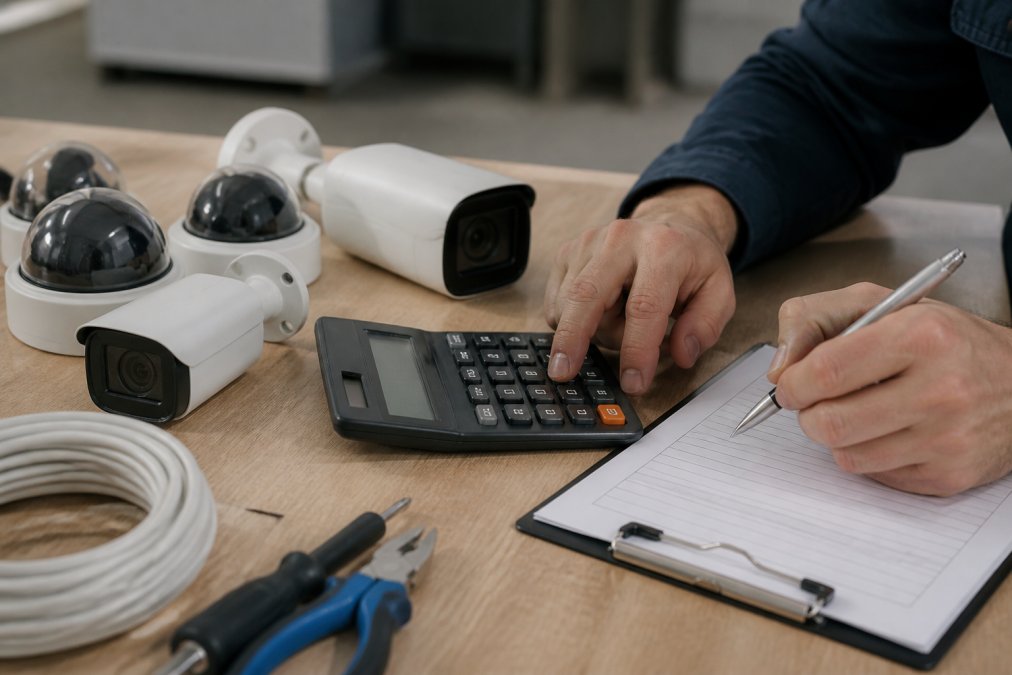
Most businesses make security purchasing decisions based on installation cost alone. Total cost of ownership over five years tells the real story.
Calculate it this way:
Year 1 costs: Installation plus twelve months of monitoring fees, plus any initial maintenance or support contracts.
Years 2-5 costs: Monthly monitoring fees, annual maintenance, system upgrades, and replacement of failed components.
A system that costs $8,000 to install but $150 per month to monitor runs $17,000 over five years. A system that costs $15,000 to install but $80 per month to monitor runs $19,800 over five years. The cheaper installation isn't the cheaper system.
Maintenance costs vary widely. Some providers include basic maintenance in monitoring fees. Others charge separately for technician visits, software updates, and component replacements. A system with a five-year parts warranty costs less to maintain than one with a one-year warranty.
Upgrade costs matter for growing businesses. If you install a four-camera system and later need eight cameras, can you add them to the existing recorder, or do you need a new system? Scalable systems cost more upfront but save money on upgrades.
Insurance premium reduction can offset security costs. Some insurers offer discounts for businesses with monitored alarm systems and CCTV. A 10% reduction on a $5,000 annual premium saves $500 per year. Over five years, that's $2,500 in savings.
Cybersecurity costs are increasingly relevant for IP-based systems. If your CCTV system connects to your network, it needs to be secured against hacking. Budget for these costs separately.
Professional Installation vs DIY: The Real Financial Picture
The temptation to install security yourself is real when you see professional installation costs. The financial picture is more complex than it appears.
DIY installation saves money upfront. You avoid labour costs, which typically account for 30-50% of the total bill. A $10,000 professional installation might cost $4,000-$5,000 in labour.
DIY installation creates hidden costs. If the system doesn't work correctly, troubleshooting takes time and often requires calling a professional anyway. If cables aren't run properly, you might need to rip out walls to fix them. If the system doesn't comply with electrical codes, your building insurance might not cover incidents.
Professional installation includes system design. A professional installer assesses your site, identifies coverage gaps, recommends camera placement for optimal field of view, and designs the system to handle your specific workflows. This expertise prevents costly mistakes.
Licensing matters for compliance. In Queensland, alarm systems connected to monitoring centres must be installed by licensed technicians. If you install it yourself, you can't connect it to professional monitoring without paying for a licensed technician to inspect and certify the installation anyway.
Warranty and support differ. Professional installations typically include warranty coverage and technical support. DIY installations don't. If something fails during the warranty period, a professional installation is covered.
For small retail or home offices, DIY might be acceptable if you're installing a basic alarm and a few cameras with local recording and self-monitoring. For anything larger, multi-site operations, access control, integrated systems, or businesses where security failures have serious consequences, professional installation is the right choice financially.
Conclusion
Commercial security system pricing in Brisbane 2026 reflects the complexity of protecting different types of properties and operations. The cheapest quote isn't the cheapest system over five years, and the most expensive quote often includes features you don't need. The right choice depends on your specific site, your risk profile, and how quickly you need someone to respond when something goes wrong.
At Tupper Security, we design security solutions around how your business actually operates. Our multi-class licensed operators conduct independent site risk assessments to identify what you actually need to protect. We provide 24/7 monitoring and dispatch from our local Silkstone depot, ensuring rapid response times in Ipswich and the immediate corridor. When you need auditable access control, documented shrinkage reporting, or high-resolution remotely accessible IP surveillance, we deliver precision-installed protection built to your requirements.
Request a quote and let us show you what security actually costs when it's designed for your operation, not a template.
The challenge: Getting security right without overpaying for features you don't use or underpaying for coverage that matters. The solution: Work with a provider who understands your site, designs the system to your needs, and commits to measurable response times in writing. Tupper Security delivers auditable access control, documented loss prevention reporting, and rapid alarm response across South-East Queensland. Get started with a tailored security assessment and transparent pricing based on your actual requirements.
Frequently Asked Questions
Q: How much does a commercial CCTV installation cost in Brisbane?
A: Commercial CCTV installation cost varies significantly based on camera count, resolution, and site layout. A free on-site assessment from a qualified installer will provide an accurate quote tailored to your property's specific needs and infrastructure.
Q: What are typical business alarm monitoring fees in Brisbane?
A: Business alarm monitoring fees depend on the monitoring centre's response protocol, whether you include alarm verification, and the complexity of your system. Always confirm response times and escalation procedures before signing a contract.
Q: How do I verify alarm response times before choosing a security provider?
A: Request written response time guarantees in writing, not verbal promises. Ask for references from existing commercial clients and contact them directly to confirm actual response times. Check whether the provider has a local depot (faster dispatch) and ask specifically about response times during peak hours and weekends. Verify their Class 2 Firm licence with the Queensland Government to confirm they're licensed to operate in your area.
Q: What's the difference between upfront costs and total cost of ownership for commercial security?
A: Upfront costs include system installation, hardware, and labour. Total cost of ownership adds monthly monitoring fees, system maintenance, software updates, battery replacements, and potential repairs over 5 years. Factor in warranty coverage, technician certification, and whether your system integrates with existing building management systems to avoid costly retrofits.
This article was written using GrandRanker