 ultimate-guide
Benefits of Auditable Access Control Systems
Table of Contents
- What Are Auditable Access Control Systems?
- Access Control Compliance Australia: Meeting Regulatory Standards
- Real-Time Monitoring and Audit Trails: The Foundation of Security
- How to Perform an Access Control Audit: Step-by-Step Process
- Physical Security Audit Checklist for Your Site
- Key Benefits of Auditable Access Control Systems
- 1. Enhanced Accountability and User Activity Tracking
- 2. Rapid Incident Response and Forensic Investigation
- 3. Automated Alerting and Threat Detection
- 4. Credential Management and Authentication Control
- 5. Risk Mitigation and Security Vulnerability Reduction
- 6. Streamlined Compliance Reporting and Documentation
- Pros and Cons of Auditable Access Control Systems
- Why Auditable Systems Matter for Australian Businesses
Last Updated: August 10, 2026
What Are Auditable Access Control Systems?
Auditable access control systems are security infrastructure solutions that track, record, and verify every access event across physical and logical entry points. They combine authentication mechanisms, real-time logging, and forensic capabilities to create a complete record of who accessed what, when, and from where.
Unlike basic access control that simply grants or denies entry, auditable systems maintain detailed audit trails supporting both immediate threat detection and long-term compliance investigations. These systems integrate credential readers (card readers, biometric scanners, PIN pads), access controllers, and centralised logging platforms. When someone attempts access, the system records identity, timestamp, location, access level, and success or failure status, creating forensic evidence for incident investigations and compliance audits.
Access Control Compliance Australia: Meeting Regulatory Standards
Australian businesses operate under specific compliance frameworks mandating access control documentation. The access control compliance Australia landscape includes requirements under the Privacy Act 1988 (Cth), state-based workplace health and safety legislation, and industry-specific standards.
For retail and hospitality operators, the Liquor and Gaming NSW framework requires documented access controls for restricted areas. Healthcare facilities must comply with NHMRC guidelines specifying that access to sensitive areas be logged and auditable. Property managers across Queensland face obligations under the Work Health and Safety Act 2011 (Qld) to maintain access records.
The critical requirement across all standards is auditability: regulators need evidence that access was controlled and monitored. A system that grants access but creates no record fails compliance. Tupper Security's auditable access control systems are designed with Australian compliance requirements front-of-mind, generating automated reports aligned with regulatory schedules and reducing administrative burden.
Real-Time Monitoring and Audit Trails: The Foundation of Security
Real-time monitoring transforms audit trails from historical records into active security tools. When your access control system processes an access event, that data flows immediately to a monitoring dashboard where security personnel can identify anomalies as they occur.

An audit trail captures the complete sequence: credential presented, identity verified, access granted or denied, timestamp recorded, location logged. In real-time monitoring, this information appears on your security dashboard instantly. If someone uses an access card at an unusual time, in an unusual location, or attempts repeated failed entries, the system can trigger immediate alerts.
This capability separates reactive security from proactive security. Reactive security reviews access logs after an incident occurs. Proactive security uses real-time monitoring to detect suspicious patterns and intervene before loss occurs. A retail manager can see that an employee accessed the stockroom at 2 AM when the store was closed. A property manager can identify that a contractor's credential was used outside their assigned zones.
The audit trail becomes forensic evidence when incidents occur. Instead of relying on memory or partial CCTV footage, investigators have precise digital evidence of exactly when and how access occurred.
How to Perform an Access Control Audit: Step-by-Step Process
How to perform an access control audit is a structured process that verifies your system is functioning correctly and audit trails are reliable.

Step 1: Verify System Integrity and Configuration Review your access control system's core settings. Confirm that all credential readers are connected and reporting data, that the central controller is receiving signals, and that the database is logging events without gaps. Check that access levels are correctly configured; employees should only have credentials granting access to areas they genuinely need.
Step 2: Review Audit Trail Completeness Pull a sample of access logs from the past 30 days. Verify that every access event is recorded with timestamp, credential identifier, location, and success/failure status. Look for gaps in the log; missing hours or days indicate system failure. Check that failed access attempts are recorded alongside successful ones.
Step 3: Test Credential Validity and Revocation Identify credentials that should no longer be active (terminated employees, expired contractor access). Test that these credentials are actually denied access. Revoke a test credential, then attempt to use it at a reader; it should be rejected immediately.
Step 4: Examine Access Patterns for Anomalies Review the audit trail for unusual patterns: after-hours access in unoccupied areas, repeated failed access attempts, or access outside an employee's normal schedule or location. These patterns warrant investigation.
Step 5: Validate Automated Alerting Rules If your system has automated alerting configured, test whether alerts actually trigger. Attempt an access that should generate an alert and verify that the alert reaches the intended recipient with sufficient detail for investigation.
Step 6: Cross-Reference with Incident Records Compare your audit trail against any security incidents from the audit period. If a loss or breach occurred, the audit trail should show relevant access events. Discrepancies warrant investigation.
Step 7: Document Findings and Remediation Record which systems are functioning correctly, which require maintenance, which credentials need revocation, and which access levels need adjustment. Create a timeline for remediation. Critical issues should be addressed within days; lower-priority adjustments can be scheduled over weeks.
Physical Security Audit Checklist for Your Site
A comprehensive physical security audit checklist ensures your access control infrastructure is actually protecting your site.
- All credential readers are functioning and displaying normal indicators
- Reader placement is appropriate and positioned to prevent tailgating
- Backup power (UPS or battery) is installed and tested
- Doors are properly fitted with electronic locks and mechanical backups
- Cabling from readers to controllers is protected and clearly labelled
- Controller hardware is secured in a locked cabinet with restricted access
- Network connections are isolated on a secure network segment
- Biometric readers (if deployed) are clean and functioning
- Manual overrides (emergency exits, mechanical keys) are present and functional
- Audit logs are being exported regularly and stored securely; at least 90 days of history is retained
- Access control system is integrated with alarm monitoring
- Perimeter is physically secure; doors, windows, and other entry points are protected
- Signage clearly indicates controlled areas and access restrictions
- Staff training records show that employees understand credential security
Key Benefits of Auditable Access Control Systems
1. Enhanced Accountability and User Activity Tracking
Auditable systems create an unambiguous record of user activity. Every access event is attributed to a specific credential linked to a specific person. User activity tracking reveals patterns: which employees access which areas, at what times, how frequently. A retail manager can see that an employee consistently accesses the stockroom during their shift (normal) or at 3 AM on a Sunday when the store is closed (anomalous). This tracking supports loss prevention investigations by determining who had access to merchandise when it went missing.
2. Rapid Incident Response and Forensic Investigation
When a security incident occurs, the audit trail becomes the primary forensic evidence. Instead of reconstructing events from memory or incomplete CCTV footage, investigators have a precise digital record of every access event. Incident response becomes faster and more accurate. A loss is discovered; investigators immediately pull the audit trail for the affected area and time period, seeing exactly who had access, when, and from which credential. Forensic analysis extends to understanding how breaches occurred, with audit trails showing which users accessed systems, when, and from which devices.
3. Automated Alerting and Threat Detection
Modern auditable systems analyse access patterns in real-time and alert security personnel when anomalies occur. Automated alerting rules trigger on specific conditions: access outside normal business hours, access to restricted areas by unauthorised credentials, repeated failed access attempts, or access patterns deviating from baseline behaviour. This automation is critical because human security personnel cannot monitor every access event continuously. Automated rules filter data and surface only anomalies warranting attention.
4. Credential Management and Authentication Control
Auditable systems centralise credential management. All access credentials are issued, tracked, and revoked from a single platform. When an employee is terminated or a credential is suspected of being compromised, revocation is immediate and comprehensive. Without centralised management, credentials scatter across systems and revocation becomes impossible. An auditable system prevents this drift by tracking every credential and immediately denying access using revoked credentials.
5. Risk Mitigation and Security Vulnerability Reduction
Auditable systems reduce security risk by eliminating blind spots. Regular review of access logs reveals doors that are propped open, credentials being misused, or access patterns suggesting tailgating. These vulnerabilities can be addressed before they result in loss. Risk is also reduced through accountability and deterrence: when employees know every access is logged and reviewed, they're less likely to misuse credentials.
6. Simplified Compliance Reporting and Documentation
Regulatory compliance requires documented evidence that access was controlled and monitored. Auditable systems generate this documentation automatically. Compliance officers can export audit reports directly from the system, tailored to specific regulatory requirements. Automated reporting reduces administrative burden and the risk of documentation gaps.
Pros and Cons of Auditable Access Control Systems
Pros:
- Comprehensive audit trails support incident investigation, compliance reporting, and forensic analysis
- Real-time monitoring and automated alerting enable proactive threat detection
- Centralised credential management simplifies revocation and prevents credential drift
- Accountability deters misuse and creates evidence if misconduct occurs
- Automated compliance reporting reduces administrative burden
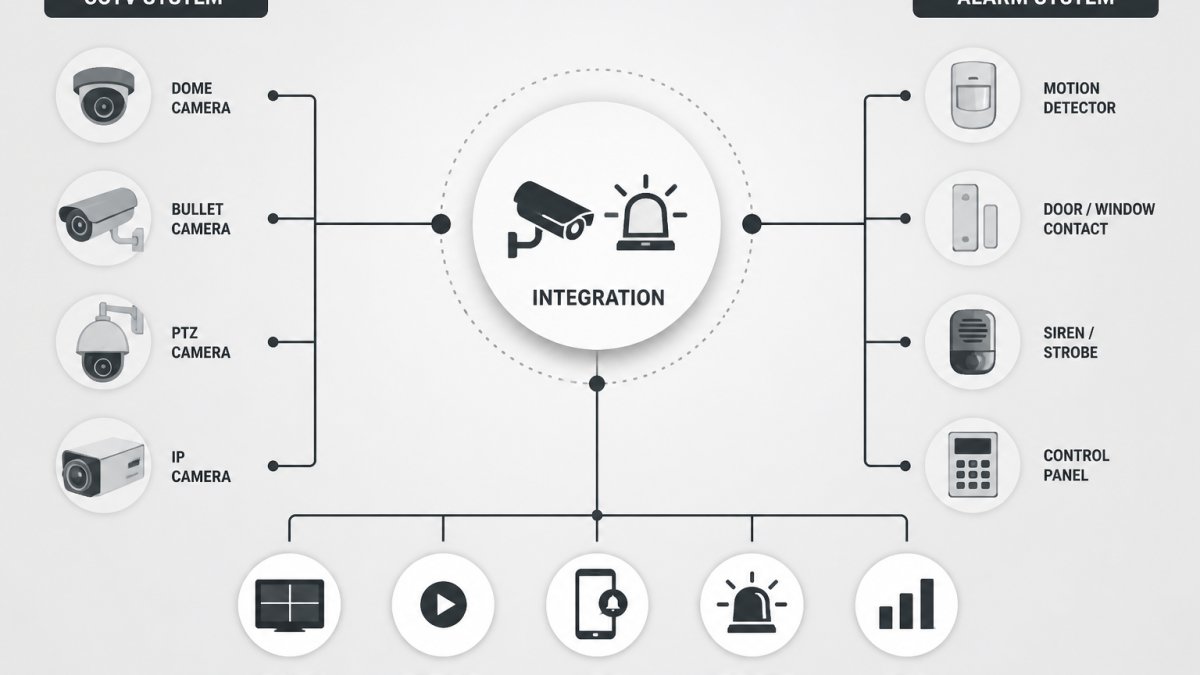
- Integration with alarm systems and CCTV creates a unified security picture
- Scalable to multi-site operations with consistent policies across locations
Cons:
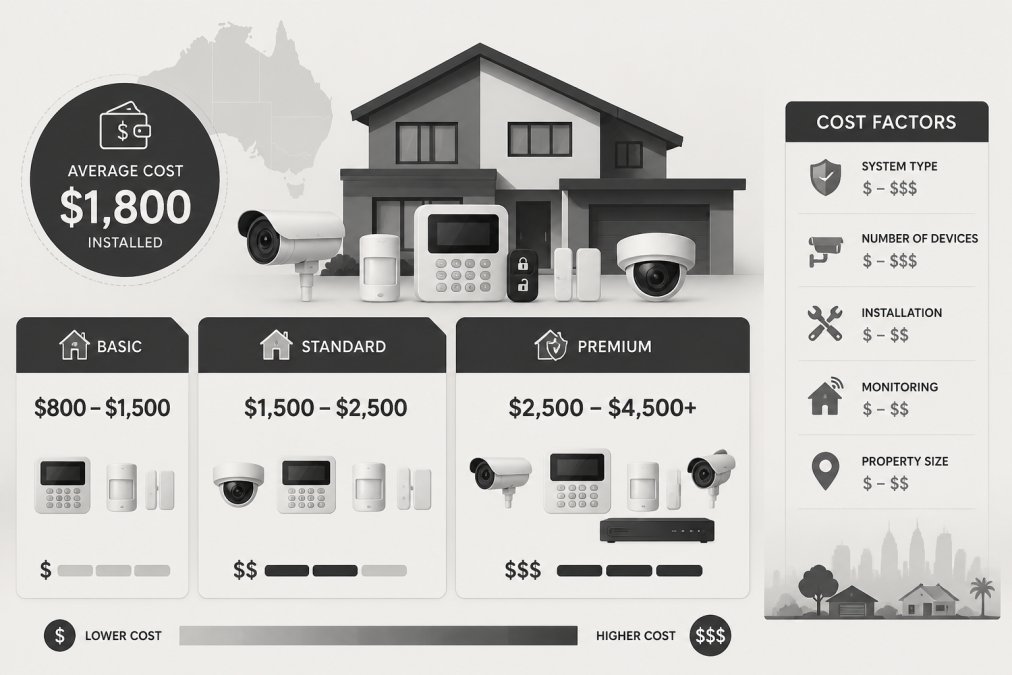
- Upfront capital cost for infrastructure is significant
- Implementation requires planning and coordination
- Ongoing maintenance is required; readers fail, cabling degrades, software requires updates
- Staff training is necessary
- Data storage requirements grow continuously
- Privacy considerations arise; detailed access tracking creates records that must be protected
- System complexity can overwhelm small organisations without dedicated IT staff
- Over-reliance on automated systems can mask manual security lapses
For multi-site operations, retail environments with shrinkage concerns, and regulated industries, the benefits typically outweigh the costs. For small single-location businesses with minimal access control requirements, a simpler system might be appropriate.
Why Auditable Systems Matter for Australian Businesses
Australian businesses face increasing regulatory scrutiny around access control and data security. The Privacy Act 1988 (Cth) requires organisations to protect personal information from misuse and unauthorised access. State-based workplace health and safety legislation requires documented controls over hazardous areas. Industry-specific standards mandate access control documentation.
Beyond compliance, auditable systems address real business risks. Retail shrinkage costs Australian businesses billions annually; access control audit trails support loss prevention investigations. Multi-tenant property managers face liability if unauthorised access occurs; audit trails document that access was controlled. Construction sites face security and safety risks; real-time monitoring enables rapid response.
Tupper Security has supported Queensland businesses across retail, property management, healthcare, and construction sectors in implementing auditable access control systems. These organisations needed more than just a lock on the door; they needed documented evidence that access was controlled, monitored, and auditable. The systems deployed have revealed vulnerabilities that would have remained invisible otherwise and provided forensic evidence needed to investigate incidents and demonstrate compliance.
For Australian businesses, an auditable access control system is no longer a luxury; it's a practical necessity. The cost of implementation is far lower than the cost of a security breach, regulatory violation, or unresolved incident.
Auditable access control systems are the foundation of modern security operations. If your current system doesn't provide detailed audit trails, real-time monitoring, and forensic investigation capabilities, you're operating with significant blind spots. Tupper Security can assess your current access control infrastructure, identify vulnerabilities, and design a system that meets your compliance obligations while protecting your property and assets. Request a quote today to understand how auditable access control can strengthen your security posture.
Frequently Asked Questions
What are the key benefits of implementing an auditable access control system?
Auditable access control systems provide comprehensive tracking of who accesses your premises and when, creating an unalterable record for compliance and investigation. They enable rapid incident response by identifying exactly when and where breaches occur, reduce unauthorised access through credential management and authentication controls, and automate alerting when suspicious activity is detected. For Australian businesses, these systems help meet regulatory standards and provide documented evidence for insurance claims and legal proceedings.
How do auditable access control systems assist with Australian regulatory compliance?
Australian regulations including the Privacy Act 1988 and security standards require organisations to maintain audit trails and demonstrate accountability for data access and physical entry. Auditable access control systems automatically document all access events with timestamps and user identities, providing the evidence regulators expect. This documentation supports compliance reporting, reduces your risk of penalties, and demonstrates due diligence in protecting sensitive areas and information.
What is the difference between standard and auditable access control?
Standard access control systems restrict who can enter specific areas using credentials like keycards or codes. Auditable systems do this plus maintain permanent, tamper-proof logs of every access attempt, successful or failed, including the user, time, location, and outcome. This audit trail transforms access control from a simple gate-keeping tool into a forensic resource for investigating incidents, identifying patterns of unauthorised access, and proving compliance with security policies.
How does an audit trail improve physical security in the workplace?
Audit trails create accountability by recording exactly who accessed which areas at what times. This deters misconduct because employees know their movements are logged, and it enables investigators to quickly identify who was present during theft, data breaches, or other incidents. Real-time alerts can notify security teams of unusual access patterns, such as entry outside normal hours, allowing immediate response before problems escalate. For multi-site operations, centralised audit trails provide visibility across all locations.
What should be included in a physical security audit checklist?
A comprehensive checklist should cover: entry points and their current access control measures, credential distribution and revocation procedures, authentication methods (keycards, biometric, PIN), audit trail storage and accessibility, alert systems and response procedures, user access privileges and their appropriateness, physical barriers and their condition, CCTV integration with access logs, compliance documentation requirements, and incident response workflows. Regular audits using this checklist identify gaps before they become vulnerabilities.
How quickly can auditable systems detect and alert on security threats?
Modern auditable access control systems provide real-time monitoring, detecting unauthorised access attempts immediately and triggering automated alerts to security teams. This allows response within minutes rather than hours, significantly reducing the window of vulnerability. For businesses with mobile patrol or 24/7 alarm response like Tupper Security, these real-time alerts integrate with dispatch systems to deploy personnel to the breach location rapidly, containing incidents before significant loss or damage occurs.
Are auditable access control systems suitable for small retail stores?
Yes. Small retail stores benefit significantly from auditable systems because they provide documented evidence of staff access to stockrooms, cash handling areas, and inventory, critical for loss prevention and shrinkage reporting. They also create accountability records that deter internal theft and help identify patterns of unauthorised access. Scalable systems allow you to start with key entry points and expand as needed, making them cost-effective for businesses of any size.
This article was written using GrandRanker